

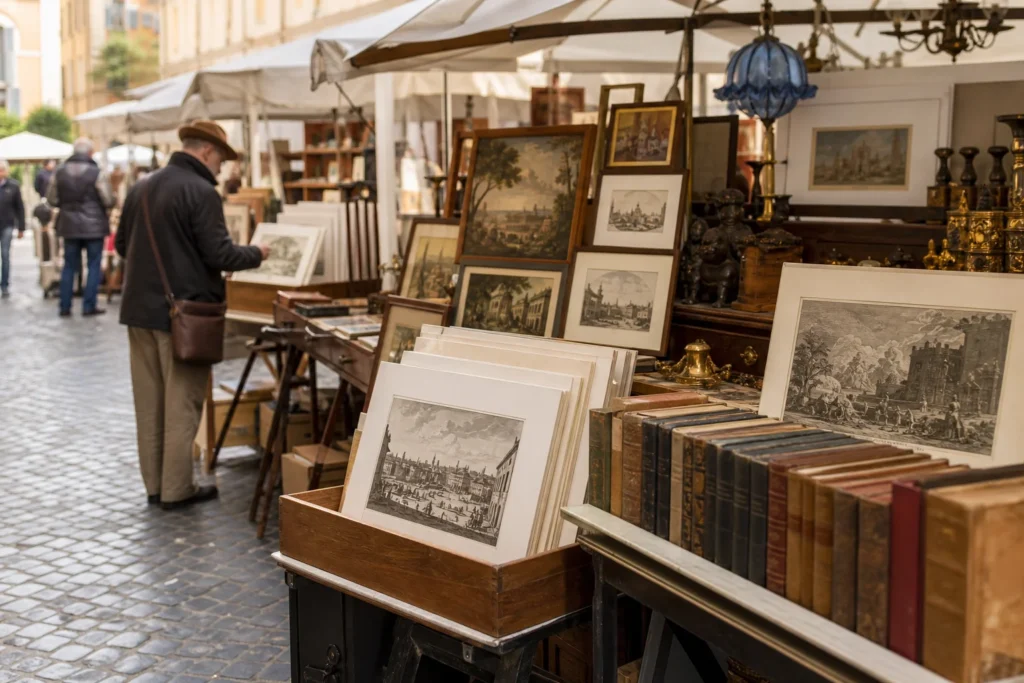

Mercato delle Stampe occupies Largo della Fontanella di Borghese, a calm square in the heart of Rome's historic centre. It is not a general flea market. This is a specialist destination built around antique prints, vintage posters, old postcards and illustrated books — a genuinely focused collection in a city full of more eclectic, noisier markets.
The stalls lean heavily on paper and print. Art Nouveau posters fill window displays, and flat drawers hold layer upon layer of antique engravings, botanical plates and graphic ephemera. Vintage postcards appear in neat stacks alongside illustrated volumes, photography books and mid-century print editions. Most of the books are in Italian, which is honestly part of the character — and it matters less than you might expect, because so much of the stock is image-led. Illustrations, poster art and print collections communicate clearly without a shared language.
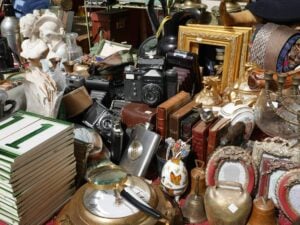
Beyond the paper, a secondary layer of objects fills out the stalls. Small jewellery pieces, decorative glass vases, vintage ornaments and the occasional battered suitcase all turn up here. These feel like supporting acts rather than the headline, and serious browsers tend to keep circling back to the flat files and framed prints.
The market runs Monday through Saturday, opening at 10:00 and closing at 19:00, so there is plenty of time to browse without rushing. It closes on Sundays. The pace suits unhurried looking — this is a market for handling things carefully, holding prints up to the light and spending longer than planned at a single stall. The Ara Pacis Museum sits close by, and the neighbourhood generally rewards slow walking between stops. The Trevi Fountain is within easy reach if you want to bookend the visit with something more iconic.
Mercato delle Stampe suits print collectors and bibliophiles most directly. It also works well for anyone hunting vintage graphic art, Italian illustrated editions or decorative paper goods with genuine age behind them. If you find Rome's larger markets overwhelming in their variety, this one offers a clearer focus and a noticeably quieter atmosphere. The stalls are permanent, the selection is deep, and the market rewards return visits.
Getting here is straightforward. The Fontanella Borghese bus stop, served by bus lines 100 and 119, sits approximately 21 metres from the market — as close as it gets. Spagna station on Metro line A is roughly 728 metres away in a straight line, making it a practical option for those arriving from across the city. For an unusually scenic approach, the Ponte Cavour ferry landing on the Tiber is about 210 metres away — an offbeat but genuinely pleasant way to arrive on a clear day.
Frequently Asked Questions
Q: What is Mercato delle Stampe and how is it different from Rome's other markets?
A: It is a specialist market built almost entirely around antique prints, vintage posters, old postcards, illustrated books and graphic ephemera. Unlike Rome's larger, more eclectic flea markets, the stock here is focused and curated — flat drawers of engravings and botanical plates rather than a broad mix of furniture, clothing and bric-a-brac.
Q: When is the market open?
A: The market runs Monday through Saturday, 10:00 to 19:00. It is closed on Sundays. Check the organizer's official page before you visit in case hours shift around public holidays.
Q: Most of the books are in Italian — is it still worth visiting if I don't speak the language?
A: Very much so. The majority of the stock is image-led: Art Nouveau poster art, antique engravings, botanical plates, photography books and illustrated editions communicate clearly regardless of language. The books in Italian are part of the character, but they are far from the whole story.
Q: How do I get there by public transport?
A: The Fontanella Borghese bus stop, served by lines 100 and 119, is virtually at the market entrance — fewer than 50 metres away. Spagna station on Metro Line A is around 728 metres on foot, making it a practical option if you are arriving from elsewhere in the city. For something more unusual, the Ponte Cavour ferry landing on the Tiber is roughly 210 metres away.
Q: What should serious print collectors focus on when browsing the stalls?
A: Head straight for the flat files and framed print displays, where antique engravings, botanical plates and vintage graphic art are stored in layers. Vintage postcards, mid-century print editions and illustrated volumes reward patient handling. Secondary objects — decorative glass, small jewellery, vintage ornaments — do appear, but the depth of the market is in the paper and print stock.
Marketplace Highlights








Add a review