


Mu Lan Hua Ge Jia Ju Li Curio Company is permanently closed. This listing is retained as an editorial archive of the venue and its distinctive character.
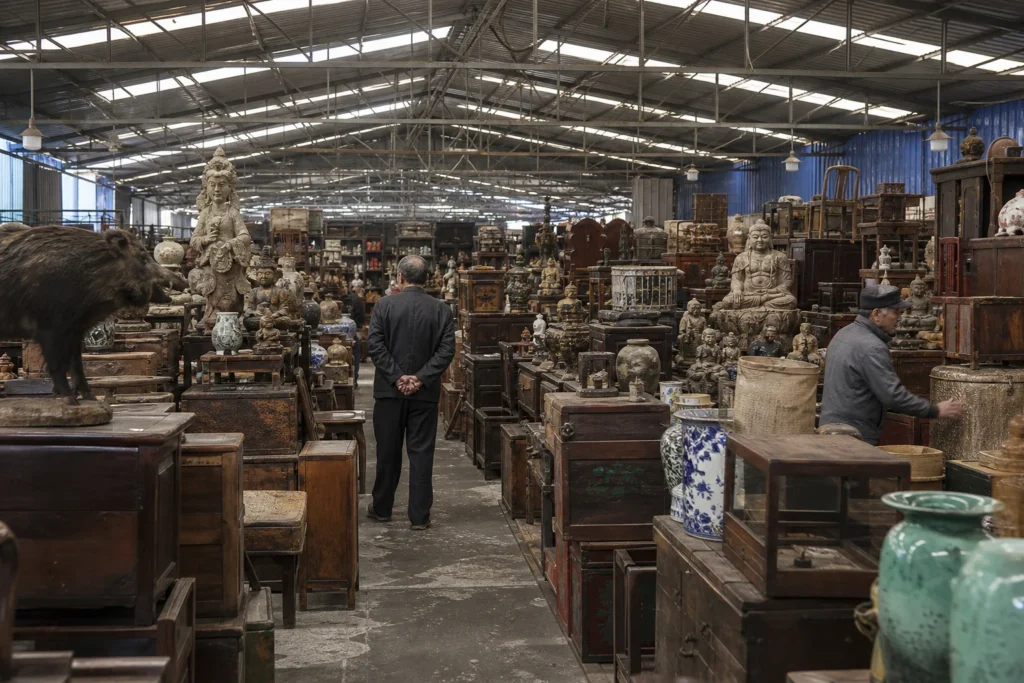
Inside Mu Lan Hua Ge Jia Ju Li Curio Company, the first thing that hit was sheer scale. Narrow paths pushed between floor-to-ceiling stacks of objects with no clear system and no apology for the disorder. That density was not a flaw — it was the entire point.
The stock read like the contents of several households emptied at once and never sorted. Heavy wooden dining tables leaned against iron ladders. Old trunks, carved Buddha figures and taxidermied animals shared shelves with battered televisions and vintage reel-to-reel machines. Wooden stools surfaced beside cracked leather chairs, and the categories shifted without warning as you moved deeper into the building. The inventory turned over constantly, so no two visits produced the same experience.
The dealers matched the atmosphere. They were engaged and talkative, willing to explain a piece's history where they could and enthusiastic about the back-and-forth of negotiation. Prices opened high, and haggling was not optional — it was the expected mode of exchange. Serious collectors also found a practical edge in the restoration dimension. Pieces that needed work — a chair with a broken leg, a cabinet short of its original hardware — could reportedly be repaired or restored on-site, which widened the pool of workable finds considerably beyond what a conventional antique shop would offer.
The warehouse occupied an industrial pocket on the eastern edge of Shanghai, and finding it was part of the challenge. The building blended into its surroundings without signage in English, and the entrance made no effort to announce itself. Visitors who carried the venue's name written in Chinese characters found it far easier to ask for directions from locals. The nearest metro access was on Line 8, in the Lingzhao Xincun area, though even arriving in the right neighbourhood left some navigation to instinct. The physical effort of getting there filtered the crowd — the people who showed up tended to be genuinely committed to the search.
Mu Lan Hua Ge Jia Ju Li Curio Company was not a polished retail environment and never tried to be. It belonged to a particular tradition of Shanghai antique trading — raw, physical, unpredictable — that stood apart from the city's more curated or tourist-facing markets. The hoarder-house density of the stock, the industrial setting and the genuine unpredictability of what surfaced on any given visit gave it a character that collectors remembered long after the specific finds faded. For researchers and enthusiasts tracing Shanghai's secondhand and curio trade, it remains a useful archival marker of that less-tamed end of the city's antique landscape.
Frequently Asked Questions
Q: Is Mu Lan Hua Ge Jia Ju Li Curio Company still open?
A: No. The venue is permanently closed. This listing is maintained as an editorial archive of the warehouse and its character within Shanghai's secondhand and curio trade.
Q: What kind of stock did the warehouse carry?
A: The inventory was broad and unpredictable — heavy wooden furniture, old trunks, carved Buddha figures, taxidermied animals, vintage radios, reel-to-reel machines and battered televisions all surfaced in the same visit. Stock turned over constantly, so no two visits produced the same floor.
Q: Was haggling expected, or were prices fixed?
A: Haggling was entirely expected and central to the transaction. Prices opened high, and dealers engaged enthusiastically with negotiation. Coming prepared to barter was not just useful — it was the normal mode of exchange.
Q: Could damaged or unrestored pieces be repaired on-site?
A: Reportedly yes. The warehouse was said to offer repair and restoration for pieces that needed work — a broken chair leg, missing cabinet hardware — which made it a practical destination for collectors willing to buy raw or imperfect finds with potential.
Q: Where was the warehouse located, and was it easy to find?
A: It sat in an industrial pocket on the eastern edge of Shanghai, close to the Lingzhao Xincun area on Metro Line 8. The building blended into its surroundings with no English signage and no obvious entrance. Visitors who carried the venue's name written in Chinese characters found it significantly easier to navigate the final stretch by asking locals.
Marketplace Highlights








Add a review