


Region
The origin of Antique Alley is, according to local lore, a happy accident. In the 1970s, Parker-French Antiques opened along Route 4 as a seasonal shop selling ice cream, with a few antiques arranged nearby as a secondary attraction. The antiques outsold the cones. Dealers asked to set up their own tables, then more followed, and a roadside novelty gradually became one of New England's most established antique corridors.
Route 4 runs west from the seaport city of Portsmouth to the state capital of Concord, and this stretch of old highway has drawn antique sellers since the early 1900s. Today the corridor operates under the name Antique Alley and draws collectors and dealers from across the country. The scale is considerable, with well over a hundred dealers spread across multiple permanent venues at any given time.
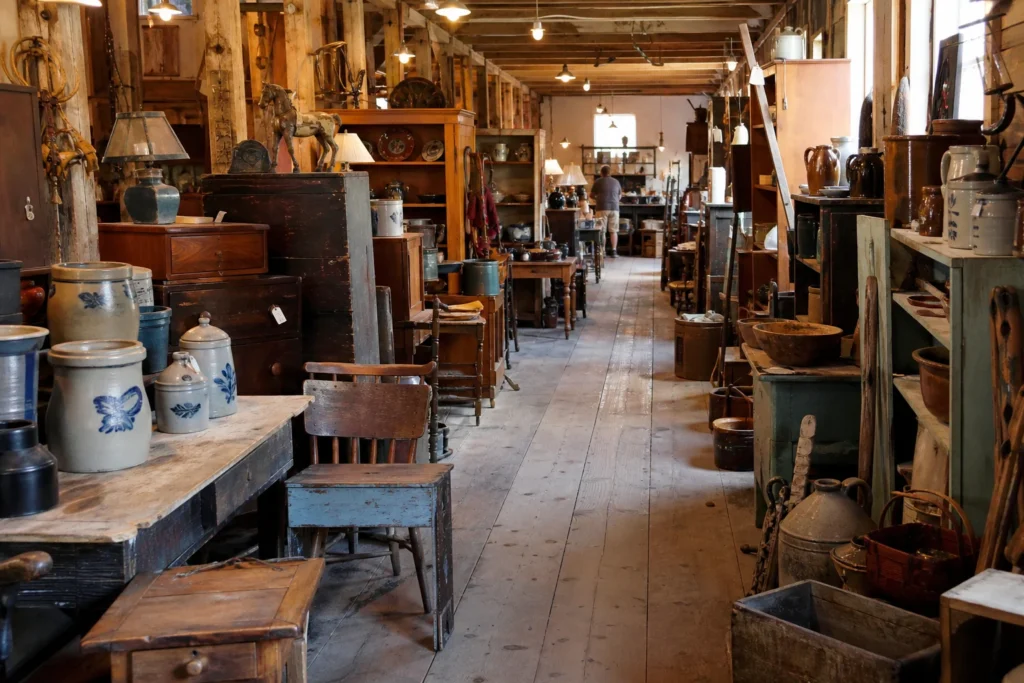
Several anchor venues give the alley its depth and character. Austin's Antiques brings together around fifty independent dealers under one roof, with particular strength in furniture — painted country pieces sit alongside formal period styles, and smaller curiosities fill the gaps between larger showroom items. It is easy to spend an hour without covering much floor. R.S. Butler's Trading Company occupies a two-storey barn where space is part of the appeal. Sellers with large pieces have room to show them properly, and browsers who prefer range over tight curation will find the format rewarding. The Betty House takes a more intimate approach. The building reportedly dates to the 1800s and spreads across several distinct sections, each fitted with antiques that suit the architecture. Moving through its rooms feels closer to exploring a period home than working a retail floor.
The stock across these venues leans practical and regional. Serious collectors come for painted American country furniture, early stoneware, architectural salvage, garden ornaments, fine china and early glassware. A second current of stock runs through everyday rural New England life — kitchen collectibles, textiles, postcards, vintage advertising tins and sports memorabilia. These are domestic objects rather than formal decorative arts, and they reward the collector who already knows what to look for.
Antique Alley runs year-round rather than as a seasonal fair, which sets a different pace from a weekend market. Most venues generally open daily from around 10:00 to 17:00, though hours vary from store to store and it is worth checking ahead with individual dealers. Serious collectors return across seasons because stock turns over continuously. A missed visit can genuinely mean a missed find, and the corridor has sustained that kind of patience for the better part of a century.
Driving along Route 4 is the practical way to visit, and most arrivals come by car. For those arriving by long-distance coach, intercity bus services including Concord Coach Lines routes and Greyhound US0260 serve Concord approximately 6.5 km away in straight-line distance. Local bus route 21 Concord Express also operates from Concord Terminal. Onward travel from Concord to individual venues along Route 4 would require a car or local arrangement; the bus connections suit travellers planning a combined trip rather than a transit-only visit.
Antique Alley suits collectors with a specific target — painted furniture, architectural salvage, stoneware — as well as browsers content to spend a full day working the corridor with no fixed agenda. It suits anyone willing to return across seasons and trust that the inventory will keep shifting. Few antique corridors in New England have held this kind of depth and continuity for this long, and that alone makes Route 4 worth the detour.
Frequently Asked Questions
Q: Is Antique Alley open year-round, or only during certain seasons?
A: The Route 4 corridor operates year-round, which sets it apart from seasonal weekend fairs. Most venues generally open daily around 10:00 to 17:00, though hours vary by individual dealer. Check directly with specific shops before making a long drive.
Q: What kinds of antiques and collectibles can shoppers expect to find?
A: The stock leans practical and regional. Painted American country furniture, early stoneware, architectural salvage, garden ornaments, fine china and early glassware appear regularly alongside everyday rural New England objects — kitchen collectibles, textiles, postcards, vintage advertising tins and sports memorabilia. It rewards collectors who already know what they are looking for.
Q: How do the main anchor venues differ from one another?
A: Austin's Antiques brings around fifty independent dealers under one roof with particular depth in furniture. R.S. Butler's Trading Company occupies a two-storey barn of roughly 3,600 square feet — well suited to large pieces and browsers who prefer space. The Betty House, an 1800s building, arranges antiques to suit its architecture, so moving through its rooms feels closer to exploring a period home than working a retail floor.
Q: Is a car necessary to visit, and where along Route 4 does the corridor run?
A: Driving is the practical way to visit. The corridor follows Route 4 west from Portsmouth toward Concord, with dealers spread across multiple venues along this stretch of old New England highway. Most visitors arrive by car and stop at several venues in a single trip.
Marketplace Highlights










Add a review