


Region
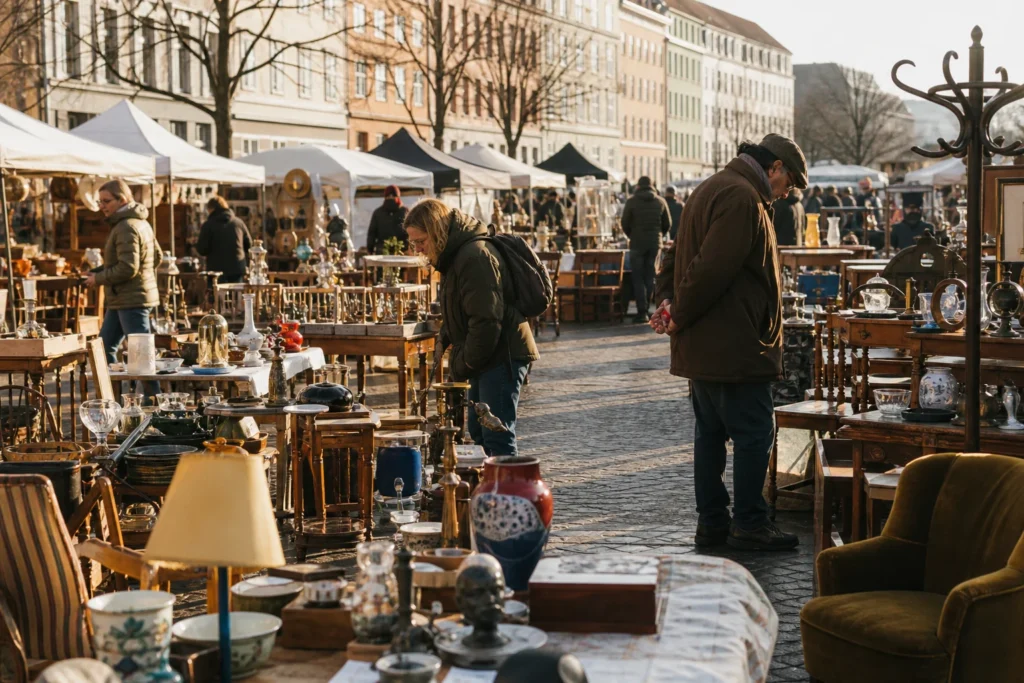
LoppeLinda runs its markets outdoors from March through October, opening at 10:00 and closing at 15:00. It alternates between two Copenhagen locations — Enghave Plads in Vesterbro and Fælledparken in Østerbro — appearing up to twelve times across the season. That itinerant rhythm gives the market a particular energy: a fixed calendar but two genuinely different settings, one an urban square and one a park, each pulling a slightly different crowd.
The market has been part of Copenhagen's secondhand scene since 1986, when it launched under the name Nørrebro Loppemarked. It built its reputation along Stefansgade and grew steadily, eventually stretching close to Ravnsborggade — a street long associated with the city's antique and secondhand trade. That neighbourhood pedigree explains the loyal following the market still carries. The history is a trust signal, not just a footnote.
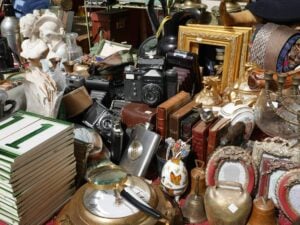
Stock covers a satisfying range of secondhand categories. Vintage furniture and larger antiques reward those who arrive early and have transport sorted. Jewellery, old watches and vintage photographs suit browsers who travel light and take their time. Art turns up regularly too, and the selection shifts from one market day to the next. Repeat visitors often find things they missed the first time — which is part of the appeal.
Arriving at opening is the clearest practical advantage. The best pieces move fast, and a first pass at 10:00 gives you the broadest view of what sellers have laid out. Haggling is normal here and sellers generally expect it. A straightforward, polite offer rarely causes offence and often leads to a conversation. Cash is useful to carry, as card payment is not guaranteed at every stall.
The two locations have meaningfully different atmospheres. Enghave Plads is a compact urban square with the market folding neatly into the surrounding streetscape. Fælledparken is more open and park-like, with a looser, more relaxed feel. Both suit the format well, but the choice of location on any given date is worth checking before you go.
Getting to the Enghave Plads market is straightforward. Metro line M3 stops at Enghave Plads station, roughly 80 metres from the square. Buses 1A, 19 and 23 stop at Enghave Plads St./Flensborggade, at approximately the same distance. Light rail users on lines B, Bx, C or H can alight at Carlsberg station, around 700 metres away. The Fælledparken location in Østerbro sits in a different part of the city, so checking transport connections separately for that date makes sense.
LoppeLinda suits anyone building a serious Copenhagen secondhand itinerary. It is not a tourist-facing antiques fair — it is a neighbourhood-rooted market with a long track record, genuine stock and a loyal seller community. The seasonal outdoor format, the alternating locations and the consistent 10:00 start make it easy to plan around. For dedicated secondhand hunters in Copenhagen, it is one of the better-established options the city offers.
Frequently Asked Questions
Q: When does LoppeLinda run, and what are the opening hours?
A: The market runs outdoors from March through October, opening at 10:00 and closing at 15:00. It appears up to twelve times across the season, alternating between its two Copenhagen locations. Check the organizer's current schedule before you go to confirm the next date and which venue is hosting.
Q: Which locations does LoppeLinda use, and are they very different from each other?
A: LoppeLinda alternates between Enghave Plads in Vesterbro and Fælledparken in Østerbro. Enghave Plads is a compact urban square where the market folds neatly into the surrounding streetscape; Fælledparken is more open and park-like, with a looser atmosphere. Both suit the format, but transport connections differ, so it's worth knowing which location is on before you travel.
Q: What kind of stock does LoppeLinda carry?
A: Expect a genuine mix of secondhand goods: vintage furniture and larger antiques for those who arrive early with transport arranged, and jewellery, old watches, vintage photographs and art for lighter browsers. The selection shifts from one market day to the next, which is part of why regulars keep coming back.
Q: Is it worth arriving at opening time, and should I bring cash?
A: Arriving at 10:00 gives you the clearest run at what sellers have laid out — the better pieces move quickly. Haggling is normal and sellers generally expect it; a polite, straightforward offer rarely causes offence. Carry cash, as card payment is not guaranteed at every stall.
Q: How do I get to the Enghave Plads market by public transport?
A: Metro line M3 stops at Enghave Plads station, around 80 metres from the square. Buses 1A, 19 and 23 stop at Enghave Plads St./Flensborggade at roughly the same distance. Light rail lines B, Bx, C and H serve Carlsberg station, approximately 700 metres away. For the Fælledparken location in Østerbro, check connections separately for that date.
Marketplace Highlights








Add a review