

Region
Tucked into the quiet Achterhoek countryside of the eastern Netherlands, this is not the kind of place you stumble across. Old Goods operates as a private showroom, open by appointment on Tuesdays and Fridays, and that single detail defines everything about it. Visiting requires intention. For collectors who arrive knowing what they want, or at least knowing the territory they are hunting in, that is precisely the point.
The stock arrives from a sourcing network that spans much of continental Europe. The team travels regularly through Belgium, France, Germany and Eastern Europe, moving between dealers, auction houses, antique fairs and private homes. That breadth keeps the inventory genuinely unpredictable. New pieces arrive with regularity, so the range shifts between visits and rewards those who return.
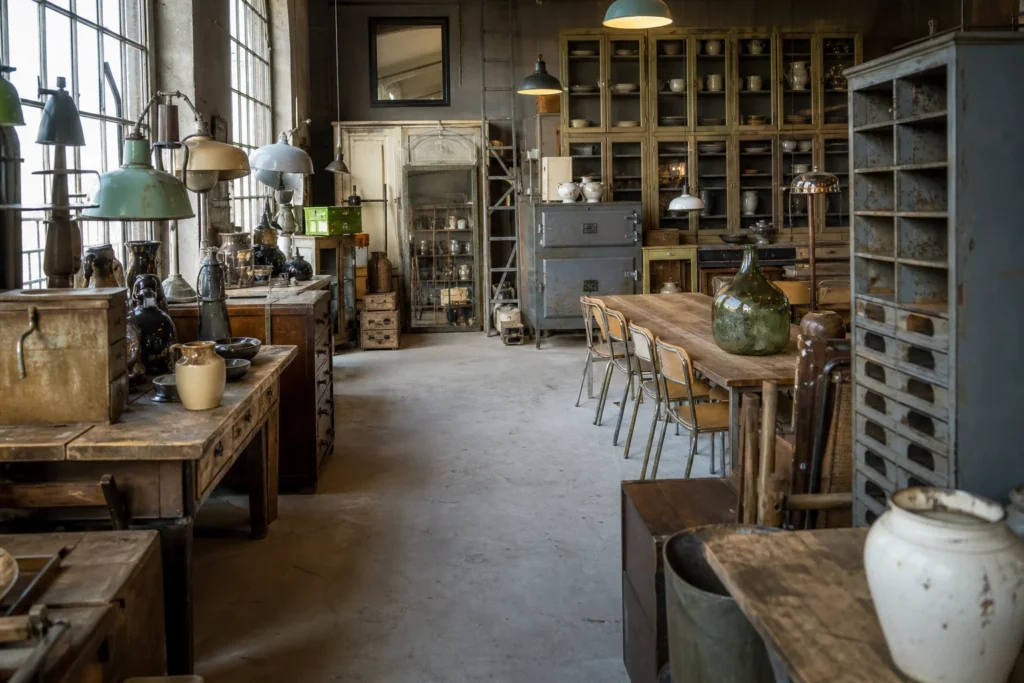
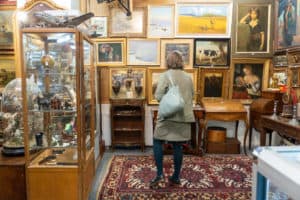
What you find inside leans toward pieces with presence. Functional industrial objects — workshop lighting, architectural salvage, raw-material furniture — sit alongside room-anchoring furniture such as armoires, cabinets, tables and large-scale chests. Decorative finds including clocks, mirrors, ceramics, tapestries and paintings fill the spaces between. The display area is large enough to show substantial furniture properly, and standing at the entrance you can see the collection stretching deep into the building.
Visiting by appointment on Tuesdays or Fridays gives the experience a private, unhurried quality. There is no browsing crowd, no weekend-market noise. The owner can discuss provenance and sourcing directly, which matters when a piece has crossed several borders before arriving here. Contacting the shop ahead of time to arrange a slot is straightforward, and the appointment model means the visit itself is focused rather than rushed.
For collectors who cannot travel to the eastern Netherlands, Old Goods runs a detailed online store. Individual pieces are photographed and listed clearly, and the shop ships internationally. Remote buying is a genuine channel here, not an afterthought. Some buyers may never make the trip to Silvolde and still build a serious working relationship with the shop.
The search-on-request service is perhaps the most distinctive thing Old Goods offers. If a collector is hunting a specific period of industrial lighting, a particular cabinet type, or an unusual piece of architectural salvage, the team will actively search for it across their European network. That moves the shop well beyond passive retail into something closer to a dedicated sourcing partner.
For public transport access, the Markt bus stop is approximately 138 metres away, served by bus lines 197 and 697. Bus line 23 also runs nearby, stopping at Doctor Dreesstraat roughly 328 metres away. Most visitors to this part of the Achterhoek will arrive by car, but the bus connections offer a realistic alternative for those travelling without one.
Old Goods suits collectors at the serious end of the market — people with specific European industrial or decorative interests, or those sourcing a particular piece they cannot easily track down elsewhere. The combination of private access, wide European sourcing and a genuine search service gives it a distinct place among antique destinations in the Netherlands.
Frequently Asked Questions
Q: Do I need an appointment to visit Old Goods?
A: Yes. Old Goods operates as a private showroom rather than a walk-in shop, so all visits are by appointment. The showroom is available on Tuesdays and Fridays. Contact the shop ahead of time to arrange a slot — the appointment model means your visit will be focused and unhurried, with the owner available to discuss pieces directly.
Q: Can I buy from Old Goods if I can't travel to the eastern Netherlands?
A: Yes. The shop runs a detailed online store where individual pieces are photographed and listed clearly. Worldwide shipping is available, making remote buying a genuine option rather than a fallback. Some collectors build a long-term relationship with Old Goods without ever visiting the showroom in person.
Q: What kind of stock does Old Goods carry?
A: The inventory leans toward pieces with presence sourced across Belgium, France, Germany and Eastern Europe. Expect functional industrial finds such as workshop lighting and architectural salvage, room-anchoring furniture including armoires, cabinets and large-scale chests, and decorative objects ranging from clocks and mirrors to ceramics, tapestries and paintings. Stock shifts regularly as new sourcing runs bring in fresh pieces, so repeat visits are worthwhile.
Q: Can Old Goods help me track down a specific piece I haven't been able to find?
A: This is one of the most distinctive things the shop offers. If you're hunting a particular style of industrial lighting, a specific cabinet type, or an unusual piece of architectural salvage, the team will actively search for it across their European sourcing network. That search-on-request service moves Old Goods well beyond passive retail into something closer to a dedicated sourcing partner for serious collectors.
Q: How do I get to Old Goods by public transport?
A: The Markt bus stop is approximately 138 metres away, served by bus lines 197 and 697. Bus line 23 also runs nearby, stopping at Doctor Dreesstraat roughly 328 metres away. That said, most visitors to this part of the Achterhoek arrive by car — the area is rural and driving gives you the most flexibility, especially when transporting larger pieces.
Marketplace Highlights







Add a review