


Region
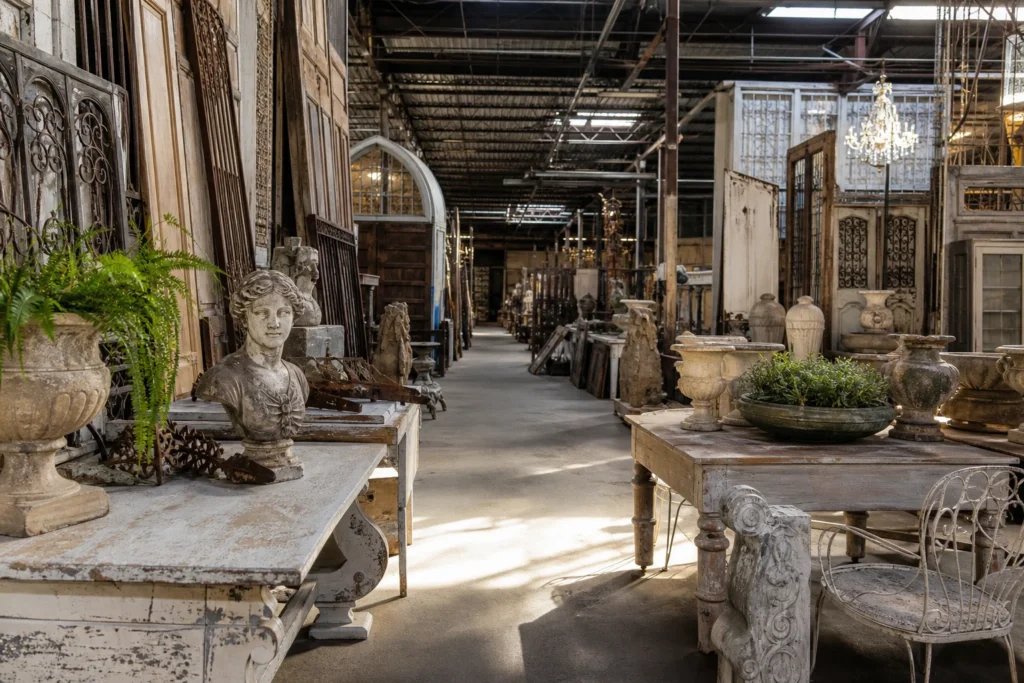
At 400 Gilligan Street in Scranton, Pennsylvania, Olde Good Things occupies roughly 200,000 square feet of warehouse space dedicated to one purpose: saving what demolition would otherwise destroy. This is an architectural salvage operation at genuine scale, not a general antique shop with a few reclaimed accents. The building holds material rescued directly from demolition sites across the country, and the breadth of what survives inside reflects decades of that work.
The floor rewards a slow walk. Structural elements anchor the collection: ornate mantlepieces, panelled doors, decorative ironwork, and period hardware drawn from buildings of different eras and types. Lighting fixtures and window frames sit nearby. Then come the repurposed mirrors — reclaimed metal and wood frames enclosing new glass — and a line of custom furniture built from salvaged components. The most distinctive items are the brand's altered antiques: pieces that fuse historic architectural fragments into something genuinely new rather than simply restored. These are not reproductions. Each one carries the marks of its original building.
The sourcing model explains why the inventory feels the way it does. Olde Good Things began at flea markets, building expertise in salvage and restoration before moving into permanent retail. The founders later developed partnerships with developers to remove valuable fittings before buildings came down. That background gives the Scranton warehouse its character. Browsing the floor feels less like moving through a curated retail selection and more like moving through a cross-section of American architectural history — spanning different periods, different cities and different building types with equal seriousness.
Scranton serves as the national warehouse for the wider operation, which also runs stores in New York City. Visitors here tend to arrive with intent: a room to furnish, a specific period detail to source, or a long-held interest in a particular category of salvage. Interior designers and restorers are regulars. Serious collectors come from well outside the region. Staff know the collection and can offer practical guidance on individual pieces. Pricing reflects the quality and skill involved in restoration, so this is not the place for impulse or budget shopping, though the range of material means different price points exist across the floor.
The warehouse at Gilligan Street opens Monday through Saturday from 9:00 am to 5:30 pm, and on Sundays from 10:00 am to 5:30 pm. A second Scranton address at 300 Brook Street operates by appointment, suited to trade or project-specific visits rather than open browsing.
Given the scale, most visitors arrive by car. The Electric City Trolley Station sits approximately 1.3 km away and operates the Scenic Trolley Excursion heritage service — a local point of interest in its own right, but not a practical route to the warehouse. Scranton's street network is navigable by car, and the Gilligan Street address is easy to locate.
For anyone with a serious interest in American architectural salvage — whether as a collector, a restorer or a design professional working on a period project — the Scranton warehouse occupies a category of its own. Few places in the country offer this combination of scale, sourcing depth and specialist knowledge in a single building.
Frequently Asked Questions
Q: What kind of stock does Olde Good Things Scranton actually carry?
A: The warehouse specialises in architectural salvage rescued from demolition sites across the country. Expect structural pieces — mantlepieces, panelled doors, decorative ironwork, period hardware and lighting fixtures — alongside repurposed mirrors in reclaimed frames, custom furniture built from salvaged components, and the brand's altered antiques, which fuse historic architectural fragments into genuinely new objects rather than straight restorations.
Q: How much time should I set aside for a visit?
A: More than you think. The warehouse covers around 200,000 square feet, and significant pieces sit throughout the building rather than in one curated section. Visitors who arrive with a specific project or category in mind still tend to spend several hours. Come without a tight schedule if you can.
Q: Is Olde Good Things Scranton suited to budget or casual shopping?
A: Not really. Pricing reflects the skill and labour involved in sourcing, restoring and maintaining material at this level. The range of stock means different price points exist across the floor, but this is a destination for people with a genuine project, a specific period detail to source, or a serious interest in architectural antiques — not impulse buying.
Q: When is the warehouse open, and is the Brook Street address the same operation?
A: The Gilligan Street warehouse opens Monday through Saturday from 9:00 am to 5:30 pm and Sunday from 10:00 am to 5:30 pm. A separate Scranton address at 300 Brook Street operates by appointment and is better suited to trade or project-specific visits than open browsing. Confirm current hours directly with Olde Good Things before travelling.
Q: What is the best way to get there?
A: Most visitors arrive by car. The Electric City Trolley near the city centre is a heritage attraction rather than a practical transport option for reaching Gilligan Street, so driving is the straightforward choice.
Marketplace Highlights










Add a review