


Region
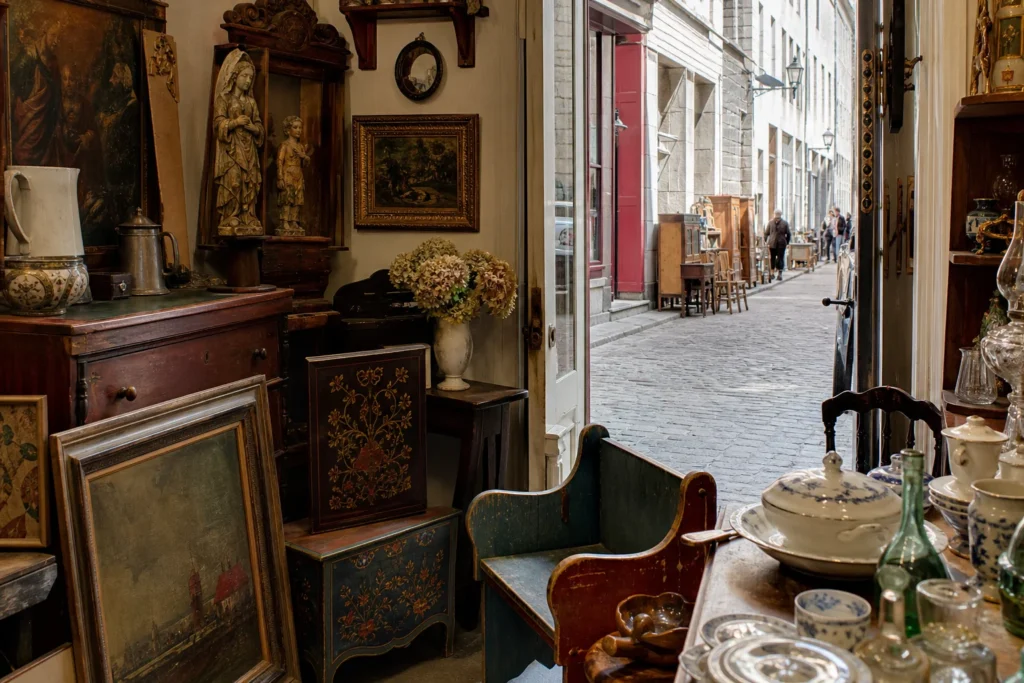
Old silver catches the afternoon light in a shop window on Rue Saint-Paul, and that image says more about Quebec City's antique district than any map description could. Two short streets in the Lower Town — Saint-Paul and Saint-Pierre — hold one of eastern Canada's most concentrated and genuinely rewarding stretches of antique dealers. Stone facades, uneven cobblestones, and a pace far removed from the tourist bustle of the Upper Town give the browsing here a quality that feels earned rather than staged.
Most shops along the district open Monday through Saturday, roughly 10:00 to 17:00, making it easy to spend a full morning or a comfortable afternoon working through both streets. Sunday the neighbourhood quiets down, so plan accordingly. A weekday visit often means more space to move and more time with the dealers themselves.
Rue Saint-Paul carries the core of the action. Bolduc Antiquités draws browsers with silver, decorative glassware and carefully arranged objects — the kind of shop where the display cases reward patience. A few steps along, L'Héritage Antiquité takes a different direction entirely: carved wood, religious artifacts and furniture with the kind of patina that comes from actual use rather than artificial ageing. Each shop on Saint-Paul has its own curatorial logic, and moving between them feels more like a series of small discoveries than a retail stroll.
Cross to Rue Saint-Pierre and the character shifts again. G & M Bourguet Antiquaires has built a lasting reputation among serious collectors, and the stock explains why. The shop focuses on Québecois material: painted storage chests, folk art, early domestic furniture and objects that trace provincial life across several centuries. Quality is consistently high and prices reflect that honestly. The deeper you move into the shop, the more there is to find.
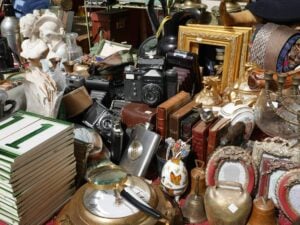
Beyond the named dealers, the district's broader stock runs wide. War medals, oil paintings, brass candlesticks, leather-bound books, vintage cameras, porcelain figurines and early hand tools all surface with some regularity. Not everything is polished or prominently displayed — some of the best pieces sit inside drawers or in corners well past the obvious sightlines. Slow browsers who look past the front tables tend to leave with the most interesting finds.
Dealers across both streets are generally knowledgeable and willing to talk about provenance. Many can trace a piece to a particular region, family or period. That context matters, especially for anyone drawn to Québecois folk art and regional furniture rather than generic decorative antiques.
A practical approach: walk the full length of Rue Saint-Paul first, cross to Rue Saint-Pierre, then double back. Objects glimpsed in windows on the first pass often read differently on the return. Allow at least two hours if you plan to go inside more than a couple of shops. Wear comfortable shoes — the cobblestones are uneven and interiors often involve stairs or tight corridors between display cases. Carry cash; smaller purchases are frequently cash-only and not all shops accept card payments.
Getting to the district is straightforward. The Dalhousie bus stop sits approximately 120 metres away, making it one of the most convenient entry points. The Québec train station is around 800 metres distant, served by multiple regional train lines. For visitors arriving by water, Gare fluviale ferry terminal and the Québec ferry stop for the Québec–Lévis crossing both sit roughly 500 metres away — an atmospheric way to arrive from the south shore. The Musée Civilisation bus stop is also close, at approximately 230 metres.
The district suits seasoned collectors chasing Québecois folk art and signed regional furniture, but it also rewards first-time visitors who simply want to handle objects with genuine age and character. Few corners of Quebec City combine authentic atmosphere and real antique depth as naturally as these two streets do.
Frequently Asked Questions
Q: When are the shops along Rue Saint-Paul and Rue Saint-Pierre generally open?
A: Most dealers in the district keep Monday-to-Saturday hours, roughly 10:00 to 17:00. Sunday the neighbourhood quiets down considerably, so a weekday or Saturday visit gives you the best chance of finding shops open. A weekday morning often means more space and more time with the dealers themselves.
Q: What kinds of antiques and collectibles turn up here?
A: The range is genuinely wide. Québecois folk art, painted storage chests, carved religious pieces, silver, decorative glassware and patinated furniture are the core strengths, but war medals, oil paintings, vintage cameras, leather-bound books, brass candlesticks and early hand tools all surface with some regularity. Not everything is prominently displayed — some of the most interesting pieces sit in drawers or corners well past the obvious sightlines.
Q: Is this district suited to serious collectors as well as casual browsers?
A: Both find their footing here. G & M Bourguet Antiquaires on Rue Saint-Pierre has a lasting reputation among serious collectors, with consistently high-quality Québecois material and stock that rewards deeper exploration. The Rue Saint-Paul shops — including Bolduc Antiquités and L'Héritage Antiquité — tend to suit a wider range of buyers, from decorative hunters to those after specific regional pieces.
Q: Can dealers tell you about the provenance of a piece?
A: Generally yes. Dealers across both streets are knowledgeable and willing to talk — many can speak to where a piece came from, which family or region it traces to, and how it surfaced. That context is particularly valuable if you're focused on Québecois material culture rather than generic decorative antiques.
Q: What's the most practical way to work through the district?
A: Walk the full length of Rue Saint-Paul first, then cross to Rue Saint-Pierre, then double back. Pieces glimpsed in windows on the first pass often look different on the return. Plan for at least a couple of hours, wear comfortable shoes for the cobblestones, and bring cash — not every shop handles cards.
Marketplace Highlights







Add a review