


Finding genuinely beautiful secondhand pieces used to mean knowing the right dealers, the right markets, the right weekends. That frustration is what drove Charlotte Cadé and Maxime Brousse to launch a curated online brocante in 2014 under the name Brocantelab. Two years later, the platform rebranded as Selency, signalling an ambition to bring the French brocante sensibility to buyers and sellers well beyond France.
What makes Selency distinctive is the editorial discipline behind it. The team actively monitors listed items and keeps quality standards consistent across the catalogue. The platform's own positioning — not elitist, just selective — captures this balance honestly. Buyers spend less time filtering through noise and more time encountering pieces with actual character.
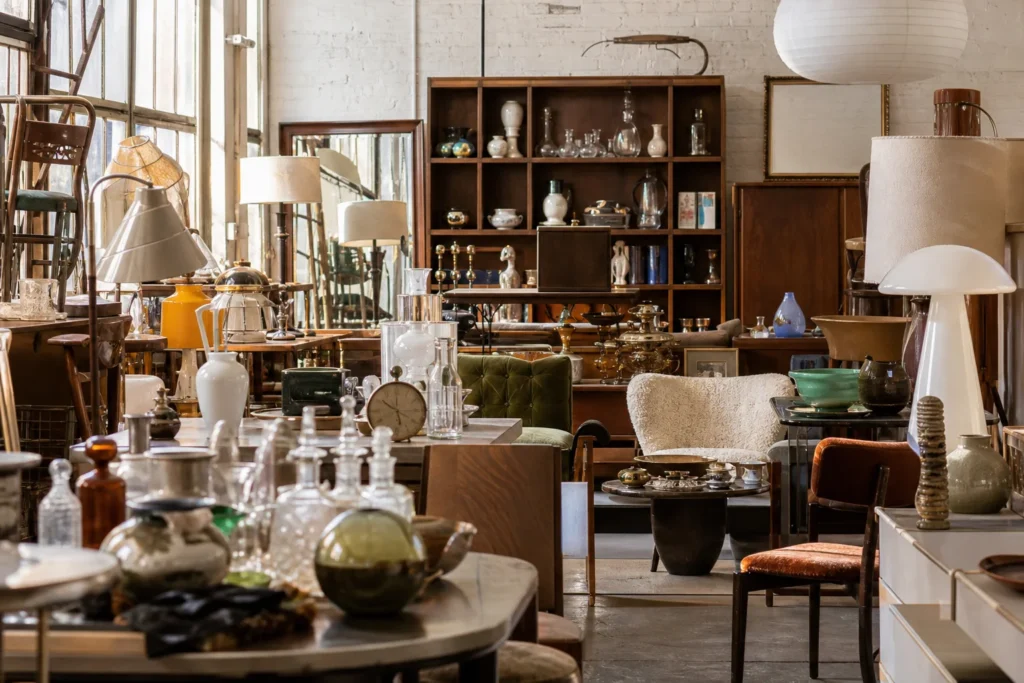
The strongest part of the inventory sits firmly in statement furniture and decorative objects. Mid-century chairs, marble-topped console tables, industrial pendant lights and mirrors with genuine provenance all appear regularly. Broader categories cover lighting, kitchenware and children's pieces too, but the curation is what separates Selency from the sprawl of generalist resale platforms. Volume does not dilute the standard here.
One feature that sets Selency apart from larger marketplaces is direct seller contact. Buyers can message individual sellers, ask about condition, request more photographs or negotiate on price. That conversation mirrors the kind of exchange you would have at a physical antique fair. It also surfaces provenance details that a standard listing rarely carries.
The seller model is structured around a commission-on-sale arrangement, with no upfront listing fee to pay before a piece moves. That structure lowers the barrier for smaller independent dealers and private collectors who would otherwise hesitate to commit to platform costs before a sale is confirmed. The result is an inventory that feels varied and genuine rather than dominated by high-volume commercial stock.
New listings arrive on the platform constantly, giving regular visitors a real reason to check back often. The mix of professional dealers and private sellers keeps the catalogue shifting in unpredictable ways. Dedicated deal sections surface reduced-price listings for buyers willing to act quickly, which adds a rewarding element for those who browse with intent. Patience matters for anyone hunting something specific, but the platform rewards it.
Selency suits collectors who value curation over volume, interior designers sourcing statement pieces, and anyone who wants the feel of a well-run brocante without leaving the house. Its French founding story, selective approach and direct-contact model give it a character that larger, less discriminating secondhand marketplaces rarely match. The marketplace is open around the clock, which means the next find is always only a search away.
Frequently Asked Questions
Q: What kind of pieces does Selency specialise in?
A: Selency is strongest in statement furniture and decorative objects — mid-century chairs, marble-topped console tables, antique mirrors and industrial pendant lights appear regularly, often with genuine provenance. The catalogue also covers kitchenware and children's pieces, but the character of the platform is defined by its curated vintage and brocante-style finds rather than generalist resale volume.
Q: Can buyers contact sellers directly about a piece?
A: Yes. Selency allows direct messaging between buyers and individual sellers, which means you can ask about condition, request additional photographs or discuss price before committing. This mirrors the kind of conversation you would have at a physical brocante fair and often surfaces provenance details that a standard product description would not carry.
Q: How does Selency keep quality consistent across such a large catalogue?
A: The platform's editorial team actively monitors listed items rather than leaving curation entirely to sellers. Selency describes its own approach as not elitist, just selective — a balance that keeps the standard consistent without limiting the catalogue to high-end trade stock only.
Q: How does the seller fee structure work?
A: Sellers list items without paying an upfront fee and pay a commission only when a piece sells. That arrangement lowers the barrier for smaller independent dealers and private collectors, which is part of why the inventory feels varied rather than dominated by high-volume commercial stock.
Q: How often does new stock arrive, and is there a way to find reduced pieces?
A: New listings arrive on the platform constantly, so regular browsing is genuinely rewarded. Selency also runs dedicated deal sections where reduced-price listings are surfaced for buyers willing to act quickly. For anyone hunting something specific, patience and frequent check-ins are the most reliable strategy.
Marketplace Highlights










L. WEN
9th October 2022 at 19:15Do not order from Selency! Their customer service for obtaining refunds for broken/defective items is completely ineffective; I have been waiting over 2 months to receive a refund for a lamp that arrived bent and electrocuted me! Also I’ve discovered that their policy for inspecting items upon receipt for such issues runs counter to what the French Post offices allow.
After this lamp electrocuted me – and shut all the power off in my house – I contacted Selency and they said that they would hold the seller’s payment and that the seller would reach out to me and have me mail the lamp back at the seller’s cost, after which I would receive my refund. A representative of the seller contacted me the next day; I explained to him what happened, and he apologized for the incident and instructed me to NOT send the lamp back and asked if I had a picture of the box it arrived in. I told him I did not because the post office did not allow me to take pictures inside the station, YET Selency’s policy is to immediately open the package and if the item is broken, to reject it and have it sent back through the same delivery service. So I explained to the seller that the post office in my French village is very small, and there were many people waiting in line, so I quickly unwrapped a part of package and the bottom of the lamp looked ok so I took the rest of the package home. After unwrapping it completely at home, I discovered that the lamp arm was bent and that it was dangerous – probably a defective ground in the lamp but it could have killed me. The seller’s representative said he would get me a refund; after 2+ weeks, no refund after which I reached out to him again and he said that he would not be able to get me a refund until the Post office’s insurance paid the seller for defective delivery and that this might take “some time”. A few weeks later, I reached out to him again, and he reported no progress because without a picture of the box’s condition upon arrival to me, they had little leverage with the French Post office. He then asked that I send the lamp back so his boss would have proof of defect and not think that I was keeping what might be a good lamp AND the refund. Clearly, the mutual trust was starting to erode. The representative provided me with the address but not a mailing label. I told him that I was not going to spend more of my money to mail the lamp back at my cost unless it guaranteed me my refund. No response.
That’s when I reached back out to Selency to help resolve this, providing them the history above. All I got was a similar response – that the lamp left the seller in working order etc. and because I did not have a picture of the package on arrival, the seller could not get their refund from the French Post Office and thus the seller would lose their money – never once thinking about me losing MY money, much less my life! Selency does not appear to care about this. So as a last straw, I offered a compromise resolution to both Selency and the seller: That I would not pay my money to ship the lamp back, and that I be refunded HALF the amount so that the seller and I equally share the costs of this unfortunate incident. Again, no response from Selency or the seller.
In the end, all transactions are about trust, and in this case Selency chose to totally trust the seller’s word and not provide me with any. Selency and the seller have basically stolen my money! I feel exploited and taken advantage of and as an architect, I will let all my colleagues and designers know both in France and in America and England to NEVER BUY ANYTHING FROM/THROUGH SELENCY! As to the lamp, I’m throwing it out so that it does never electrocutes anyone else again.
If I could give ZERO STARS here, I would.