

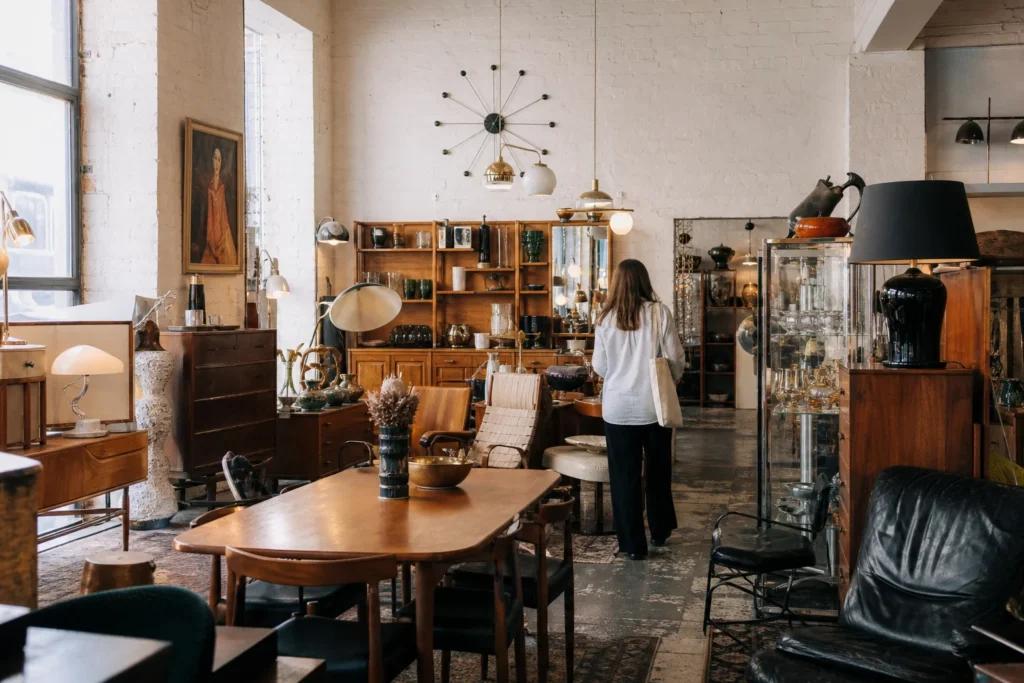
The ground floor announces itself immediately. Mid-century lounge chairs anchor the space in bold, confident arrangements. Sculptural tables and decorative objects fill the gaps between them. The scale alone signals intent: Smith Street Bazaar is a place shaped by dealers who think carefully about design, not a miscellaneous secondhand shop.
A staircase near the rear leads up to a different world. The upper floor divides into intimate alcoves, each one curated by a different dealer. Vintage watches sit alongside glassware and clothing. Smaller curios occupy shelves and surfaces that reward slow attention. The contrast with the ground floor is deliberate — the upper level offers a quieter, more personal browsing experience that many visitors discover only once they climb.
Australian mid-century design anchors the collective's curatorial identity. The names Grant Featherston and Dario Zoureff represent the kind of design history the dealers take seriously. Past stock has reportedly included international pieces by makers such as Gio Ponti and Eero Saarinen. Inventory at this level turns over and varies by visit, so treat any named designer as a signal of curatorial ambition rather than a guaranteed find.
What sets the experience apart is dealer knowledge. The people here understand provenance. Ask about a teak dresser or a particular lamp's finish and you are likely to get a real answer — not a rehearsed pitch, but a genuine account of where a piece has been and how it shows its age. Condition quirks get named honestly. A worn edge or an uneven patina is explained rather than minimised. That candour turns shopping into something closer to a conversation.
The Bazaar opens Monday through Friday from 11:00 to 18:00. On weekends it opens earlier, from 10:30, closing at 17:00 on Saturday and 16:00 on Sunday. The earlier weekend start suits visitors who want to combine a browse with a wider walk along Smith Street, where independent boutiques, galleries, and cafés extend the afternoon naturally.
Getting there by tram is straightforward. Stop 19 on Johnston Street, served by tram route 86, sits approximately 86 metres from the venue — close enough to be the obvious choice for most visitors. Those arriving by train or bus can use the Victoria Park station rail replacement stop, roughly 800 metres away, which serves train lines HBE and MDD as well as bus routes 200, 207, and 241.
Smith Street Bazaar suits collectors with a genuine interest in Australian mid-century design and buyers who want to understand a piece before committing to it. If you prefer to browse without pressure, ask questions freely, and take your time with something that catches your eye, this is the kind of place that earns a return visit.
Frequently Asked Questions
Q: What kind of stock does Smith Street Bazaar specialise in?
A: Australian mid-century design is the curatorial anchor — think Grant Featherston and Dario Zoureff alongside sculptural furniture, decorative objects, and smaller curios including vintage watches and glassware. Past stock has reportedly included international pieces by makers such as Gio Ponti and Eero Saarinen. Inventory rotates between dealers, so treat named designers as a signal of curatorial seriousness rather than a guaranteed find on any given visit.
Q: Is there more to explore beyond the ground floor?
A: Yes — a staircase near the rear leads to a second floor divided into intimate dealer alcoves stocked with vintage watches, glassware, clothing, and smaller objects. The scale is quieter and more personal than the furniture-led ground floor, and it rewards unhurried browsing. Visitors who skip the staircase miss a significant part of what the Bazaar offers.
Q: Can I ask dealers about a piece's history or condition before buying?
A: That kind of conversation is very much part of the experience here. The dealers understand provenance and tend to discuss condition honestly — a worn edge or uneven patina gets named rather than minimised. If you want to know where a teak dresser has been or why a lamp's finish looks the way it does, asking is genuinely worthwhile.
Q: What are the opening hours?
A: Smith Street Bazaar is open Monday to Friday from 11:00 to 18:00. On weekends it opens earlier — from 10:30 — closing at 17:00 on Saturday and 16:00 on Sunday. Check the venue's official page before visiting in case hours have changed.
Q: What is the easiest way to get there by public transport?
A: The most convenient option is tram route 86, alighting at Stop 19 on Johnston Street, which is approximately 86 metres from the venue. Visitors arriving by rail or bus can use the Victoria Park station rail replacement stop, roughly 800 metres away, served by train lines HBE and MDD and bus routes 200, 207, and 241.
Marketplace Highlights










Add a review