


Region
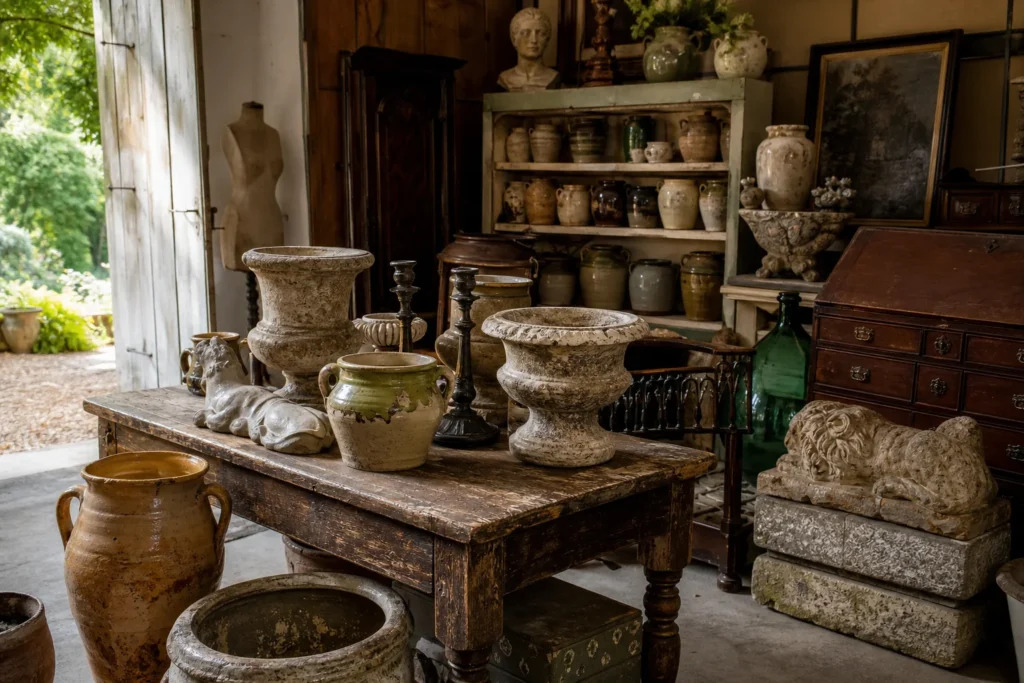
Somewhere in the Culm Valley, among the quiet lanes of Culmstock in Devon, a collection quietly accumulates. Copper milk churns sit alongside original sculptures. A Victorian writing slope shares space with French confit pots and stone garden urns. One past find was a model of the Borrowers' House. Another was a Regency china plate warming cabinet — the kind of object that stops you mid-step. These are not curated categories. Beauty, rarity and eccentricity are the only real criteria at Stag and Squire, and the range reflects that.
This is a by-appointment dealer, not a walk-in shop. Visits happen Monday through Saturday, arranged directly with the owner. Sundays are closed. That single structural choice reshapes the whole experience. There are no crowded shelves, no clock ticking. Buyers who contact in advance get a proper look at the pieces, the space to handle them and the chance to ask questions before anything moves on.
The collection draws on sourcing trips across Britain and the Continent. France, Belgium and the Netherlands are among the regular hunting grounds, and their influence shows in the mix. European country antiques sit alongside British oddities in a way that feels assembled rather than stocked. Some pieces are reworked before sale — not restored in a conventional sense, but given a new practical life. Worth knowing if you want something old that will actually be used.
Stock changes constantly. The named pieces above are illustrative; none are guaranteed to be in the collection at any given time. Following Stag and Squire on social media is the most reliable way to track new arrivals. Sourcing trips, individual finds and fresh stock tend to surface there first. For buyers who cannot travel to Devon, an online option exists, though seeing an antique in person — how it holds light, how it occupies a corner — is a genuinely different experience.
Culmstock is small and rural. The Culm Valley surroundings are unhurried in the way that suits a dealer who values quality over volume. This is not a destination you stumble across. It rewards people who seek it out.
Getting there by public transport takes some planning. Tiverton Parkway station, served by trains and bus line 373, sits approximately 5.7 km away as the crow flies. For most visitors coming from outside the region, a car is likely the more practical choice given the rural location and the by-appointment nature of the visit.
Stag and Squire suits patient, independent collectors — people comfortable arranging a visit rather than browsing on impulse. For anyone drawn to unusual British and European antiques at the more eccentric end of the spectrum, it is worth making contact.
Frequently Asked Questions
Q: How do I arrange a visit to Stag and Squire?
A: Stag and Squire operates by appointment rather than as a walk-in shop, so you need to contact the owner directly to arrange a time. Visits are available Monday through Saturday. Sundays are closed.
Q: What kind of antiques and objects does Stag and Squire typically carry?
A: The collection mixes British and Continental pieces without a fixed theme — beauty, rarity and eccentricity are the guiding criteria. Past finds have included a Regency china plate warming cabinet, copper milk churns, a Victorian writing slope, French confit pots and a model of the Borrowers' House. Some pieces are reworked before sale to give them a new practical life rather than restored in the conventional sense. Stock turns over constantly, so none of these examples are guaranteed to be available.
Q: How can I keep track of new arrivals before making the trip to Devon?
A: Following Stag and Squire on social media is the most reliable way to see what has come in recently. New finds and sourcing trips tend to surface there first, which makes it worth checking before you plan a visit.
Q: Can I buy without visiting in person?
A: An online option exists for buyers who cannot travel to Devon. That said, seeing how an antique holds light and occupies a space is a genuinely different experience from viewing it on a screen — worth bearing in mind for significant purchases.
Q: What is the most practical way to get there by public transport?
A: Tiverton Parkway station, served by trains and bus line 373, is the nearest public transport access point at roughly 5.7 km away. Given the rural location and the by-appointment nature of visits, most people travelling from outside the region find a car the more convenient option.
Marketplace Highlights











Add a review