


Region
Stamford Meadows is permanently closed. the market is retained as an editorial archive of the venue and its distinctive character.
the market is retained as an editorial archive of the venue and its distinctive character.
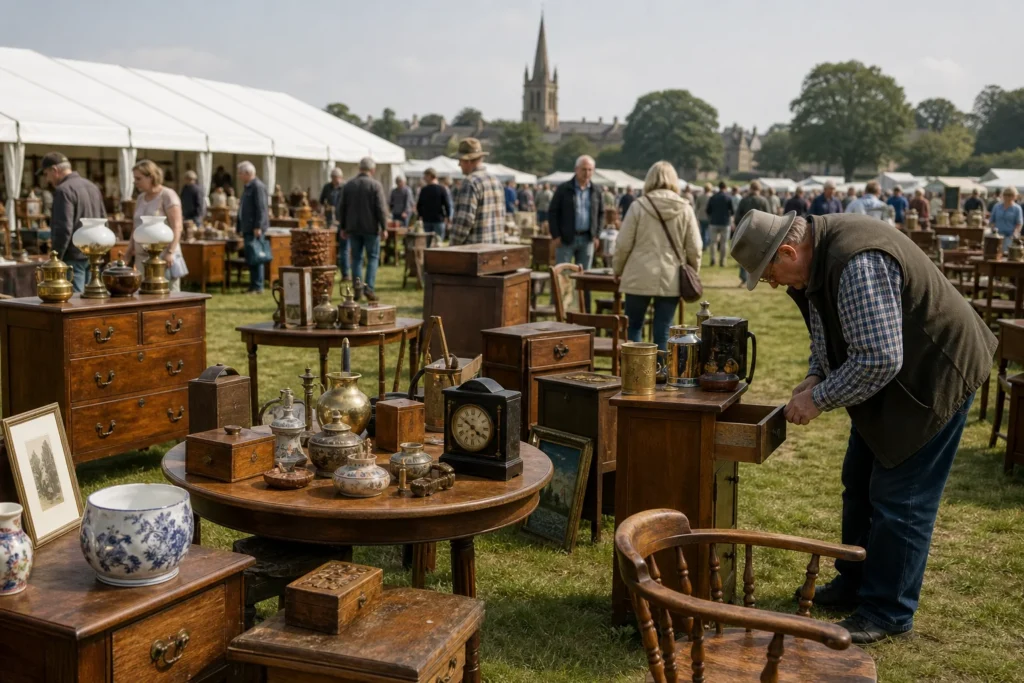
On summer weekends, the fields surrounding Stamford, Lincolnshire took on a different character entirely. More than 150 stalls spread across the open ground, anchored by a large marquee that gave the event a defined centre without confining it. The layout had room to breathe, and so did the visitors who moved through it. Stamford Meadows occupied a specific kind of place in the regional antiques calendar — substantial enough to draw serious trade, relaxed enough to suit a genuinely unhurried day out.
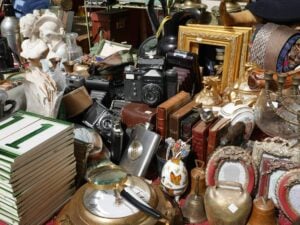
The dealer mix was one of the fair's clearest strengths. Furniture, antique clocks, military memorabilia and jewellery sat alongside glassware, china, artwork and decorative objects. The range rewarded browsers who arrived without a fixed agenda and suited focused collectors chasing particular pieces in equal measure. Vendors generally knew their stock in depth and were willing to talk provenance, which gave the buying experience a considered quality that open-air fairs don't always manage.
Pricing matched that considered tone. The fair didn't carry the inflated premium that larger, more prominent events sometimes attract, which mattered when a relaxed morning browse could easily become an armful of purchases by midday. An early-entry option allowed visitors to pay a small surcharge for access before general admission opened. For anyone serious about the stock, that head start made a genuine difference — the best pieces moved quickly once the crowds arrived.
The practical side of the day was well handled. Breakfast stalls and lunch options kept visitors fuelled across the full run of hours, and homemade cakes gave the event a warmth that felt appropriate to its outdoor setting. Coffee was easy to find. On-site parking removed the usual awkwardness of navigating bulky or fragile purchases back to a distant car. Most visitors found themselves staying longer than intended, and the format made that easy.
Stamford itself extended the day naturally. The town centre sat within a few minutes' walk of the fairground, drawing visitors into streets lined with Georgian architecture and independent shops once the stalls had been thoroughly covered. That proximity felt fitting. Stamford has a long history as a market town, and the fair sat comfortably within that tradition — an outdoor antiques event that matched its host town's character rather than contrasting with it.
Stamford Meadows occupied an honest and well-regarded position on the summer antiques circuit. It drew collectors, casual browsers and families without losing coherence, and it offered stock and atmosphere that justified the journey for visitors from well beyond Lincolnshire. This record stands as a reference for the fair's scale, format and character during its years of operation.
Frequently Asked Questions
Q: What kind of antiques and collectables did Stamford Meadows typically stock?
A: The fair offered a genuinely broad mix. Dealers brought furniture, antique clocks, jewellery, glassware, china, artwork, decorative objects and military memorabilia. The range suited both focused collectors after specific pieces and browsers happy to see what turned up across 150-plus stalls.
Q: Was there an early-entry option, and was it worth using?
A: Yes — visitors could pay a small surcharge to enter before general admission opened. For anyone serious about finding the best pieces, it made a real difference; the most desirable stock moved quickly once the main crowds arrived.
Q: How did pricing compare to larger regional antiques fairs?
A: Stamford Meadows had a reputation for considered rather than inflated pricing, which was part of its appeal. A relaxed morning browse could easily result in several purchases without the premium that more prominent or widely publicised events tend to attract.
Q: Is Stamford Meadows still running?
A: The fair is permanently closed. the market is kept as an editorial archive of the venue and its character for collectors and researchers with an interest in the regional antiques circuit.
Marketplace Highlights








Add a review