


Region
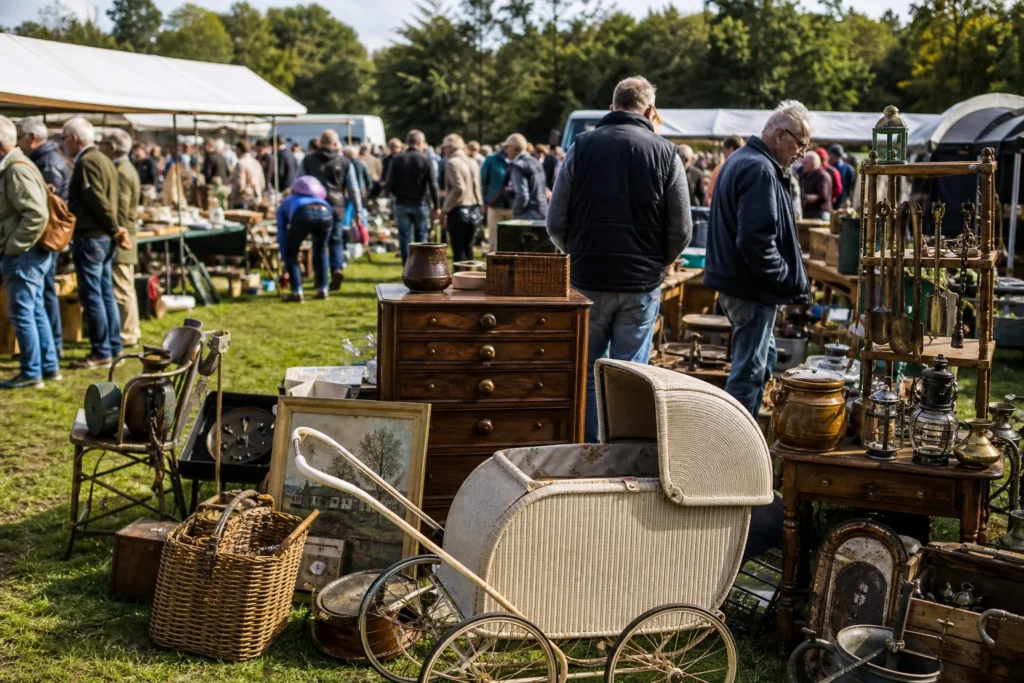
Somewhere in the rural northeast of the Netherlands, three provinces quietly converge. Friesland, Groningen and Drenthe meet near the small village of Bakkeveen — and on selected Saturdays from April through October, that crossroads fills with over 500 traders. Stichting Vlooienmarkt Bakkeveen is one of the largest open-air flea markets in the northern Netherlands, and on a good day it draws several thousand visitors across a sprawling site that opens directly onto countryside.
The seasonal rhythm is worth knowing before you plan a trip. In April the market runs on the first Saturday of the month only. From May through October it opens on the first and third Saturday of each month. Gates open at 7 am and the market closes at 1 pm. Those six hours go quickly, and the best material tends to move early.
Seasoned visitors show up close to opening. Stallholders begin setting up well before dawn, and the most focused hunters are already walking the site by the time the official 7 am start arrives. Arriving early gives you first access to fresh stock — particularly important when 500-plus pitches each arrive with their own haul from cleared homes and estates across the northern provinces.
The merchandise reflects exactly that kind of provenance. Old toys and vintage tools sit alongside military items, advertising memorabilia, radios, telephones and original artwork. Furniture turns up too, ranging from sturdy rural pieces to more decorative finds. Vintage clothing and decorative objects fill the gaps between the collector-grade material. The overall mix feels like a snapshot of three provinces slowly releasing their accumulated possessions — specific, varied and genuinely unpredictable from visit to visit.
The site layout helps. Each vendor holds a dedicated pitch, so the ground plan stays legible even when the market is busy. There is real space between stalls, which is rarer than it sounds at a market this size. The rural setting reinforces the unhurried pace — no tight city-centre streets, no noise bouncing off buildings. Visitors can cover the full site methodically without backtracking or doubling back.
Cross-border visitors are not unusual here. Traders and shoppers travel from Germany and Belgium with some regularity, drawn by the market's scale and its position on the regional road network. For most visitors, the car is the practical choice for reaching Bakkeveen. Those arriving by bus can use the Dwarskamp stop, served by bus line 104 and approximately 450 metres from the market site. The Brink stop, roughly 550 metres away, connects bus lines 14, 84 and 104 and may offer broader connection options from surrounding towns.
Stichting Vlooienmarkt Bakkeveen suits the committed collector who wants genuine scale — not a curated antiques fair, but 500 stalls of variable, surprising stock worth working through properly. Day-trippers from Leeuwarden, Groningen or Assen will find it a manageable destination. For anyone building a regular circuit of northern Dutch flea markets, it belongs near the top of the list.
Frequently Asked Questions
Q: When does Stichting Vlooienmarkt Bakkeveen run, and how often?
A: The market runs on Saturdays from April through October. In April it takes place on the first Saturday of the month only. From May through October it opens on the first and third Saturday of each month. Check the organizer's official page before you go, as seasonal schedules can shift year to year.
Q: What time should I arrive to get the best pick of stock?
A: The market officially opens at 7 am and closes at 1 pm. Stallholders begin setting up well before dawn, and seasoned visitors arrive close to the 7 am opening to get first access to fresh material — particularly important when over 500 pitches are each carrying their own haul from cleared homes and estates across the northern provinces.
Q: What kind of finds can I expect at Bakkeveen?
A: The mix leans toward collector-grade material: old toys, vintage tools, military items, advertising memorabilia, radios, telephones and original artwork all turn up regularly. Furniture, vintage clothing and decorative objects fill out the stalls. The overall stock reflects what surfaces when homes are cleared across three provinces, so the range is genuinely unpredictable from visit to visit.
Q: Can I reach the market by public transport?
A: Yes, though a car is the most practical option for most visitors. The Dwarskamp bus stop, served by line 104, is approximately 450 metres from the market site. The Brink stop, around 550 metres away, connects lines 14, 84 and 104 and may offer broader connections from surrounding towns.
Q: Is the site manageable to cover on foot, even when busy?
A: The layout is straightforward. Each vendor holds a dedicated pitch, keeping the ground plan legible even on a busy day. There is genuine space between stalls, and the rural open-air setting means none of the cramped doubling-back you get at city-centre markets. A methodical walk-through of the full site is realistic within the six-hour window.
Marketplace Highlights








Add a review