


Region
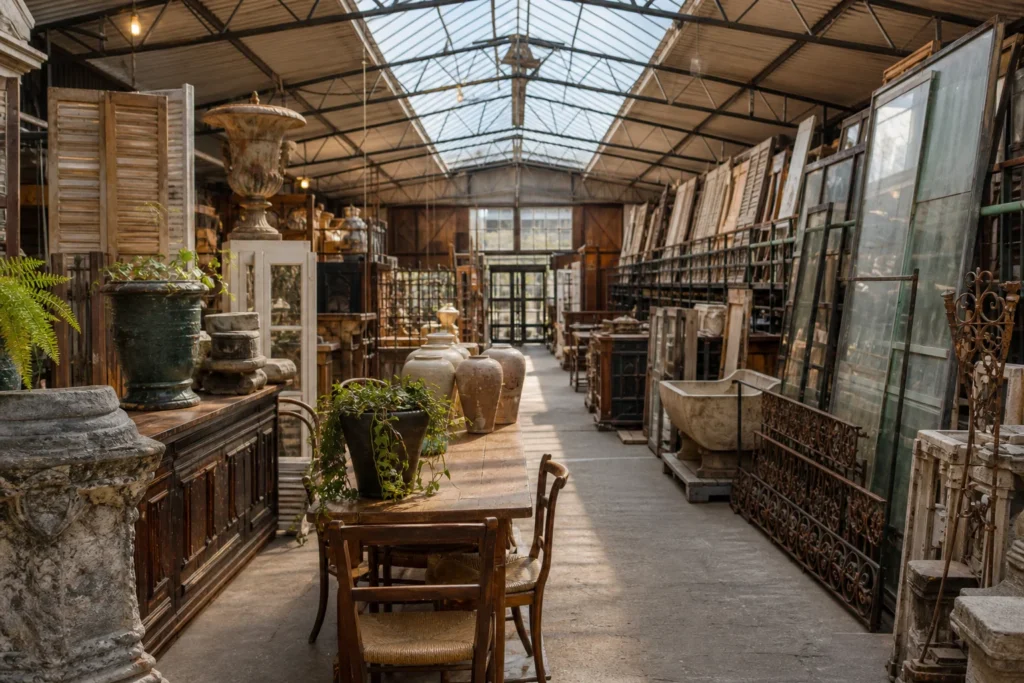
Three hectares of reclaimed architectural material is a serious proposition. At t'Achterhuis on Kreitenmolenstraat in Udenhout, that scale is entirely real — rooms, yards and covered storage filled with salvaged bricks, tiles and stonework sourced from buildings across the Netherlands and further afield. Staff hand visitors a site map on arrival. That small gesture signals what kind of operation this is: methodical, serious and genuinely large enough to get lost in.
The collection earns its reputation above all through tiles and stone. Ceramic floor tiles and natural stone floors appear in quantities that let you visualise them properly before committing — spread across open sections rather than stacked in crates. Façade bricks occupy entire dedicated areas, including handmade historic formats and regional varieties that are increasingly difficult to source through conventional suppliers. Decorative ironwork fittings, corbels, terracotta details and smaller architectural fragments fill the spaces between, offering material for restoration projects where the exact right piece tends to matter enormously. For buyers who cannot visit in person, an online inventory extends the usefulness of the stock beyond the site itself.
The story behind t'Achterhuis is as individual as its contents. Lambert van Alebeek was a baker by trade. Some of his clients settled debts not with money but with old bricks, tiles and salvaged architectural elements. Lambert began collecting and reselling this material around 1965, treating it first as a sideline before committing fully to the trade seven years later. What started informally grew into one of the more respected salvage operations in the country. The family connection has remained central to how the place runs, and that continuity shapes everything from staff expertise to the way the site accumulates stock.
What separates t'Achterhuis most clearly from a standard salvage yard is what happens in its workshop. The team takes on chimney restoration, saws natural stone to specification, cleans and dresses reclaimed bricks, repairs furniture and ironwork, and builds kitchen tables to measure. This is supplier and specialist workshop combined — and the skills on site match the depth of the inventory in a way that architects and restoration contractors notice quickly.
T'Achterhuis opens Tuesday through Friday from 08:30 to 17:30, and Saturday from 10:00 to 16:00. It stays closed on Sundays and Mondays. Given the scale of the site and the nature of the stock, booking an appointment before visiting is worth doing. Staff can then focus time on the sections most relevant to your project and point you toward material that might otherwise stay buried in the volume.
The site sits in Udenhout, and most buyers arrive by car or van — practical given the weight and size of much of the stock. For those travelling without a vehicle, bus stop Groenvelde is approximately 235 metres away and serves bus lines 239, 639 and flex. Bus stop Kastanjelaan, around 272 metres away, offers bus line 9 and flex services as an alternative.
T'Achterhuis suits architects, heritage builders, renovation specialists and private buyers working on period properties. It also draws collectors with a genuine interest in architectural salvage as a discipline. The combination of depth of stock, in-house restoration services and long family expertise puts it in a category where direct alternatives are genuinely hard to find in the Netherlands.
Frequently Asked Questions
Q: How large is t'Achterhuis, and how long should I plan to spend there?
A: The site covers three hectares of rooms, yards and covered storage — large enough that staff hand you a map on arrival. First-time visitors regularly underestimate how long a thorough look takes. Set aside at least a few hours, and consider booking an appointment in advance so staff can walk you through the sections most relevant to your project.
Q: What kind of stock does t'Achterhuis specialise in?
A: Ceramic floor tiles and natural stone floors are the heart of the collection, displayed in open sections where you can visualise them properly before committing. Façade bricks — including handmade historic formats and regional varieties — fill entire dedicated areas. Decorative ironwork, corbels, terracotta details and smaller architectural fragments fill the spaces between. An online inventory also extends access for buyers who cannot visit in person.
Q: Does t'Achterhuis offer services beyond selling salvage materials?
A: Yes, and it's a genuine differentiator. The on-site workshop handles chimney restoration, natural stone sawing to specification, brick cleaning and dressing, furniture and ironwork repair, and bespoke kitchen tables built to measure. It functions as supplier and specialist workshop combined rather than a standard salvage yard.
Q: When is t'Achterhuis open?
A: Tuesday through Friday from 08:30 to 17:30, and Saturday from 10:00 to 16:00. It is closed on Sundays and Mondays. Check the official page before making a special journey, particularly around public holidays.
Q: Is t'Achterhuis suitable for a private buyer, or is it aimed mainly at trade professionals?
A: Both are well served. Architects, restoration contractors and builders are regular visitors, drawn by the depth of specialist stock and the workshop services. Private buyers working on period properties or renovation projects are equally at home here — the scale and variety of the collection makes it genuinely useful for anyone sourcing reclaimed architectural material.
Marketplace Highlights







Add a review