


Târgul Colecționarilor de Antichități is permanently closed. The market is retained as an editorial archive of the venue and its distinctive character.
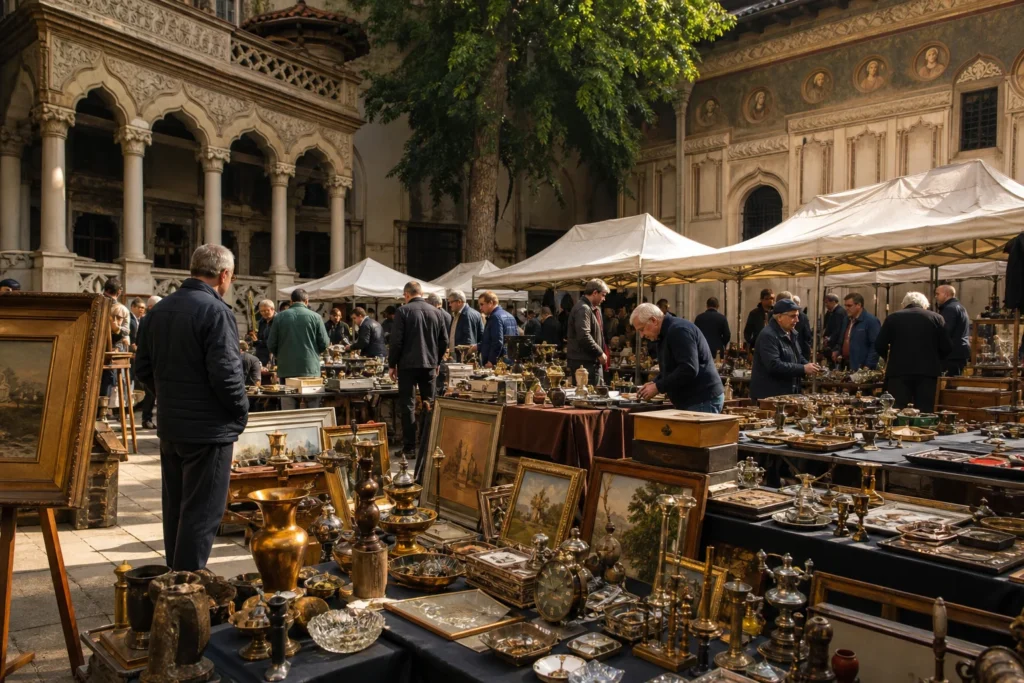
Against the neo-Gothic stonework of Suțu Palace in Bucharest's University Square, a small antiques market once gathered every two months. Târgul Colecționarilor de Antichități — the Antiques Collectors' Market — drew around 25 to 30 specialist exhibitors into this architecturally charged courtyard, creating something closer to a curated collector's event than a conventional weekend fair.
The palace setting carried real cultural weight. Suțu Palace also houses the Museum of Bucharest, and the proximity of market stalls to those museum galleries gave the event an unusual layered quality. Visitors could browse a vendor's tray of old coins in the courtyard, then step inside to trace the broader sweep of the city's history. Few antiques markets in Bucharest offered that kind of accidental dialogue between commerce and institution.
The merchandise leaned heavily toward paper and printed ephemera — the kind of stock that rewards patience and a sharp eye. Old Romanian banknotes and coins carried the marks of different monetary eras. Postcards and photographs offered fragmentary social histories: street scenes, formal portraits, handwritten messages on the reverse. Stacks of old books appeared at most stalls, ranging from illustrated volumes to worn paperbacks with Ceaușescu-era imprints.
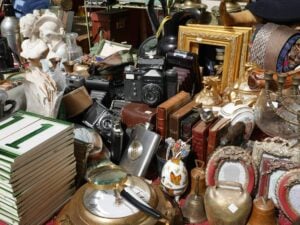
Alongside the paper goods, the market offered a cluster of tactile, handleable objects. Analogue cameras, enamel badges and antique silver jewellery were the kind of items that benefited from being turned over in the hand at a small, unhurried market. Dealers also brought ceramics, vinyl records and the occasional piece of painted furniture — objects that gave the event a broader visual range without straying far from its specialist character.
The bimonthly schedule shaped the atmosphere noticeably. Running every two months rather than weekly, each edition carried a mild sense of occasion. Sellers tended to know their stock in detail, and the compact scale — a couple of dozen stalls at most — meant conversations with exhibitors came naturally. Browsing moved at a deliberate pace, partly because the courtyard setting encouraged it and partly because the goods rewarded close inspection rather than quick scanning.
Within Bucharest's collector scene, the market occupied a specific niche. It was not a sprawling general flea market but a focused gathering oriented around genuine collectibles and Romanian historical material. The Suțu Palace courtyard gave it one of the city's most architecturally distinguished settings for any outdoor market. As a record of how Bucharest's collector community gathered and traded, the market's history reflects both the depth of local expertise in Romanian antiques and the appetite for a more curated, occasion-driven format in the capital's market culture.
Frequently Asked Questions
Q: What kinds of antiques and collectibles did Târgul Colecționarilor de Antichități specialise in?
A: The market leaned strongly toward paper and printed ephemera — old Romanian banknotes, coins, postcards, photographs and books were staples across most stalls. Alongside those, dealers brought tactile handleable pieces: analogue cameras, enamel badges and antique silver jewellery. At the broader end of the scale, painted furniture, ceramics and vinyl records appeared occasionally, giving the event more visual range without losing its specialist character.
Q: How large was the market, and what was the atmosphere like?
A: Around 25 to 30 specialist exhibitors gathered in the courtyard of Suțu Palace, making it a compact, deliberate event rather than a sprawling weekend fair. The modest scale meant conversations with sellers came naturally, and the palace courtyard setting encouraged unhurried browsing — particularly useful for stock like paper ephemera and small objects that reward close inspection.
Q: How often did the market run?
A: It ran every two months rather than weekly, which gave each edition a mild sense of occasion and tended to attract sellers who knew their stock in detail.
Q: What made the Suțu Palace location significant for a collectors' market?
A: Suțu Palace in University Square also houses the Museum of Bucharest, so the courtyard market sat in direct proximity to the city's civic history collections. Visitors could handle a dealer's old coins or postcards at a stall and then step inside to see the broader sweep of Bucharest's documented past — an accidental dialogue between commerce and institution that few antiques markets in the city could offer.
Q: Is the market still running?
A: Târgul Colecționarilor de Antichități is permanently closed. This record is retained as an editorial archive of the market and its place in Bucharest's collector scene.
Marketplace Highlights







Add a review