

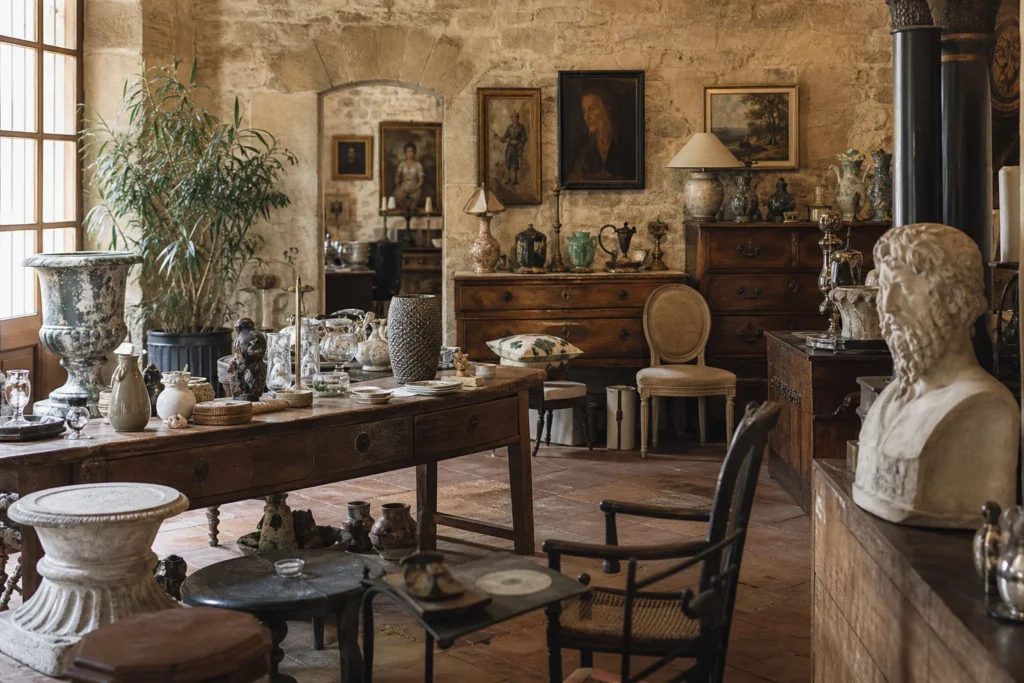

Anyone who has spent time browsing online antique platforms knows the feeling. The photographs are flat, the provenance notes are vague, and the seller's background is a mystery. That erosion of trust has become one of the defining frustrations of buying antiques and vintage pieces on the open internet. The Bruno Effect was built as a direct answer to that problem — an invitation-only e-marketplace, available around the clock, where the selection process begins long before a buyer ever arrives.
Every dealer on The Bruno Effect earns their place by invitation. Longevity in the trade matters. So does physical retail presence, a track record at trade shows, and the quality of the inventory itself. None of that is visible to the buyer as a badge or a label, but it shapes everything they encounter. Browsing here means browsing professionals who have already been assessed by people who know the trade.
The commercial model is equally deliberate. No commission changes hands at any point in a transaction. Prices are listed openly, and buyers contact dealers directly to discuss terms or make an offer. There is no integrated checkout, which keeps the exchange between buyer and dealer clean and unmediated. That directness is a design choice, not a gap in the platform's features.
Inventory spans more than ten countries and covers serious ground. Furniture and interior objects form one natural cluster — seating, tables, storage, lighting and decorative pieces across antique, vintage and contemporary categories. A second, deeper cluster serves specialist collectors. Taxidermy, rugs and carpets, musical instruments, maps and globes, toys and games, photography — the subcategory list runs well beyond what most curated platforms attempt. An international dealer base explains much of that breadth.
Documentation quality sets the standard here. Every listing carries multiple high-resolution photographs, showing each piece from several angles, alongside detailed written descriptions. For a buyer who cannot handle an object in person, that combination does real work — it reduces the uncertainty that makes online antique buying feel like a gamble. Provenance context and condition visibility are not afterthoughts.
Buyers without a fixed target should spend time in the Inspiration section. It organises thousands of listings by creator, era or room type, which makes it genuinely useful for anyone building a room scheme rather than tracking a specific object. It also surfaces pieces that a keyword search would never reach — and those are often the most interesting finds.
The Bruno Effect suits collectors who have grown tired of anonymous listings and thin provenance data. It also works well for interior buyers who need something specific and credible, not just something available. The platform's clearest distinction is structural: trust is built into the model from admission through to transaction, not added as a reassurance feature after the fact.
Frequently Asked Questions
Q: How does The Bruno Effect decide which dealers can sell on the platform?
A: Every dealer is admitted by invitation only. The selection process considers longevity in the trade, physical retail presence, trade show attendance and the quality of the inventory itself. That means buyers are browsing established professionals rather than casual or anonymous sellers.
Q: Does The Bruno Effect charge a commission on purchases?
A: No commission changes hands at any point in a transaction. Prices are listed openly, and buyers contact dealers directly to discuss terms or make an offer. There is no integrated checkout — the exchange stays between buyer and dealer throughout.
Q: What kinds of pieces can I find here?
A: The inventory spans antique, vintage and contemporary pieces across more than ten countries. Furniture and interior objects — seating, tables, storage, lighting — form one strong cluster. A second runs deeper into specialist territory: taxidermy, rugs and carpets, musical instruments, maps and globes, toys and games, and photography, among others.
Q: How useful is the photography and description quality for buying without seeing a piece in person?
A: Each listing carries multiple high-resolution photographs from several angles, paired with detailed written descriptions covering provenance context and condition. For buyers who cannot handle an object physically, that level of documentation does real work in reducing uncertainty.
Q: What is the Inspiration section and who is it useful for?
A: The Inspiration section organises thousands of listings by creator, era or room type rather than keyword. It suits buyers building a room scheme or exploring without a specific target — and regularly surfaces pieces that a search box alone would never reach.
Marketplace Highlights







Add a review