

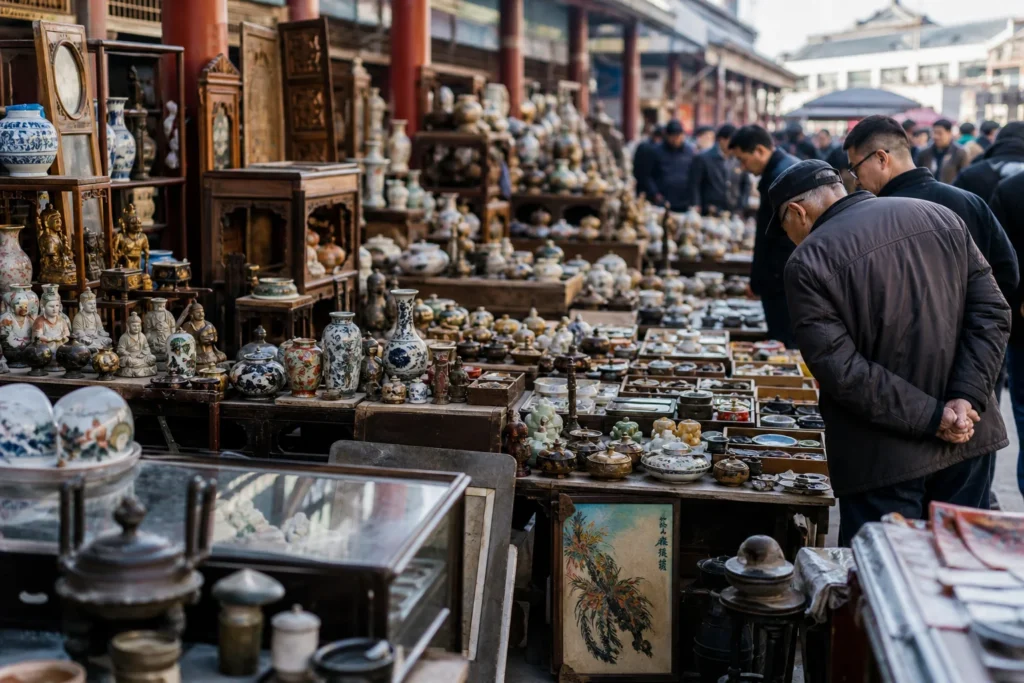

Tianjin Antique Market on Shenyang Road in Heping District stands among the most substantial antiques destinations in northern China. This is not a curated heritage attraction or a weekend craft fair. Dedicated antique shops line the surrounding streets, permanent open stalls occupy every available run of pavement, and independent vendors spread their goods directly on blankets between them. The layered result is a working collectors' market where serious dealers and casual browsers occupy the same ground without any clear boundary between them.
The depth and range of stock here is genuinely unusual. Mao-era material forms one of the market's strongest draws: badges, propaganda posters, enamel mugs and the distinctive aluminium lunch boxes of that period, which have developed a devoted following among international collectors. A separate current runs through classical Chinese decorative arts — jade carvings, blue-and-white porcelain, painted scrolls, lacquerwork, copper and silverware spanning several dynasties. A third layer of curiosity fills the gaps: vintage board games, old musical instruments, heavy furniture, decorative clocks and finely worked woodwork that refuses easy categorisation. The concentration of specialist dealers means that genuine period pieces surface regularly within that broader mix.
The market opens daily from 10:00 to 17:00, seven days a week. That consistent schedule removes the single-market-day planning that governs so many antiques destinations and makes it straightforwardly easy to fit into a Tianjin itinerary. Arriving earlier in the day tends to give a wider pick before serious trade thins out the best stock, though the market remains active throughout its opening hours.
Many vendors speak little or no English, and the stories that give individual pieces their real value — provenance, regional origin, dynasty, period — require Mandarin to unlock fully. A knowledgeable local guide is worth arranging in advance, particularly for anyone buying rather than browsing. A good guide reads the market's internal geography, distinguishes period pieces from skilled reproductions, and makes a direct difference to what a buyer actually takes home. This is practical advice, not a caution: the market rewards preparation.
Bargaining is standard throughout. Vendors expect negotiation and opening prices are rarely the closing ones. Patient, unhurried engagement works better than pressing quickly for a number. Even a basic Mandarin greeting shifts the dynamic noticeably — sellers respond to the effort, and the conversation that follows often produces a better outcome than any technique.
This is a market that rewards specificity. Focused collectors chasing particular categories of Chinese antiques or Mao-era memorabilia will find the specialist depth hard to match elsewhere in northern China. First-time visitors to the country who want the most direct encounter with Chinese material history available outside a museum will find something here that no museum visit quite replicates — because everything is touchable, negotiable and potentially yours.
Getting here by public transport is straightforward. Hepinglu station on subway lines 3 and 4 sits approximately 400 metres away and provides the most direct connection from central Tianjin. The bus stop at 赤峰道山东路, served by bus lines 1, 35, 50 and 190, lies approximately 200 metres from the market and suits visitors arriving from nearby neighbourhoods. An alternative metro approach comes via Yingkoudao station on lines 1 and 3, roughly 800 metres distant.
Frequently Asked Questions
Q: What kinds of antiques and collectibles can I expect to find at Tianjin Antique Market?
A: The market covers a wide range across three rough categories: Mao-era social history material (badges, propaganda posters, enamel mugs and the aluminium lunch boxes that have a strong international collector following), classical Chinese decorative arts (jade carvings, blue-and-white porcelain, lacquerwork, painted scrolls, copper and silverware), and a broader layer of everyday vintage — old musical instruments, vintage board games, clocks, heavy furniture and decorative woodwork. The concentration of specialist dealers means genuine period pieces surface regularly within the mix.
Q: Do I need to speak Mandarin to shop here effectively?
A: Many vendors speak little or no English, and the details that give individual pieces real value — provenance, regional origin, dynasty — require Mandarin to unlock. Arranging a knowledgeable local guide in advance makes a practical difference, particularly if you plan to buy rather than browse. Even a basic Mandarin greeting shifts negotiations noticeably in your favour.
Q: Is bargaining expected, and how should I approach it?
A: Bargaining is standard throughout the market. Vendors expect negotiation and opening prices are rarely the final ones. Calm, unhurried engagement works better than pushing quickly for a number — taking time to handle pieces and show genuine interest tends to produce better outcomes than any particular technique.
Q: When is the market open, and is there a best time to visit?
A: The market opens daily from 10:00 to 17:00, seven days a week, with no single market day to plan around. Arriving earlier in the day generally gives you a wider pick before the best stock thins out through active trade, though the market remains active throughout its hours.
Marketplace Highlights







Add a review