

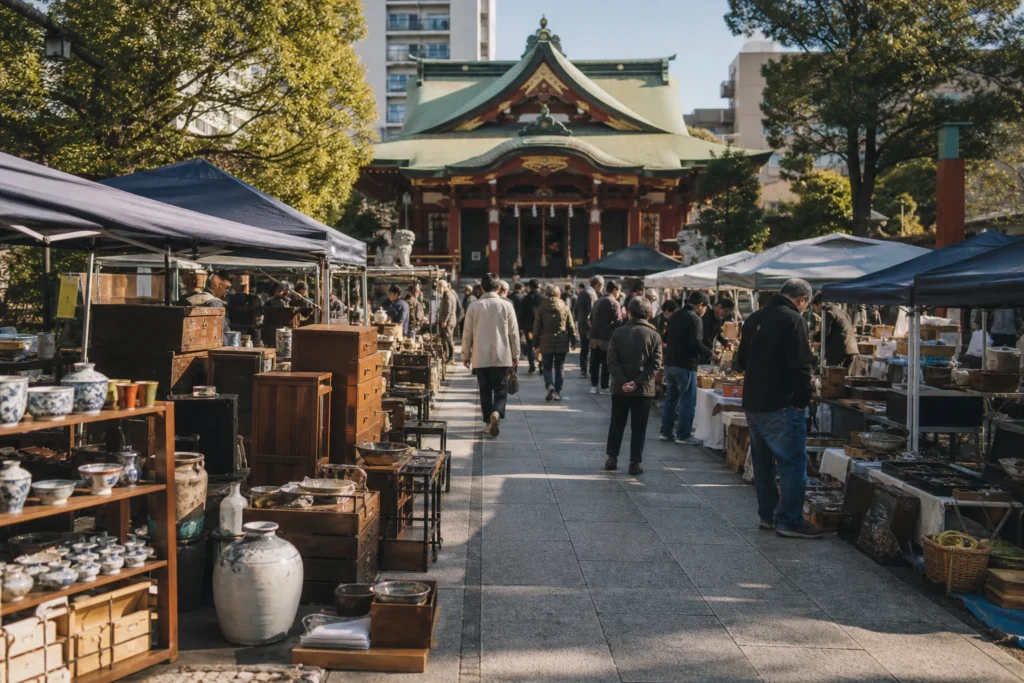

Tomioka Hachimangu has stood in Fukagawa since 1627. It is the largest Hachiman shrine in Tokyo, and on certain Sundays the grounds transform into one of the city's most atmospheric antique markets. Dealers set up among the stone lanterns and shrine buildings, and the scent of incense drifts past trays of Imari porcelain and folded silk kimonos. It gives the whole event a sense of occasion that a street market or car-boot sale cannot replicate.
The market runs on two separate formats. The antique fair takes place on the 1st, 2nd, 4th and 5th Sundays of each month, from 08:00 to 18:00. The flea market follows on the 15th and 28th of each month, also from 08:00 to 18:00 — note that these fixed-date events fall on whatever day of the week those dates happen to land. Around 120 stalls fill the grounds across both formats, and the tone is set by professional dealers who run established shops rather than occasional sellers clearing out a spare room.
That distinction matters when browsing. Ceramics and textiles form one natural cluster: Imari ware from different periods, pieces of Kutani, and traditional kimonos folded flat beneath protective glass. Wooden furniture, carpentry tools and well-worn domestic objects occupy another corner of the market, appealing to buyers who lean toward functional Meiji and Edo-era design. A third stream runs through paper and ephemera — 19th-century postcards, old books, coins and vintage toys that reward slow, patient looking.
Some dealers are happy to discuss individual pieces in English, which makes the fair genuinely approachable for international visitors. A knowledgeable seller can explain the firing style of a particular Imari bowl or the period a tansu chest was likely made. That kind of exchange is harder to find at larger, noisier markets, and it reflects the professional-dealer character of the event.
The shrine itself adds cultural depth beyond the stalls. Tomioka Hachimangu served as the official sumo venue during the Edo era, and the connection to that history still feels tangible in the scale and dignity of the grounds. The shrine also houses a celebrated portable mikoshi, notable for its size and craftsmanship. Visitors who want to extend the day into the neighbourhood should consider the Edo Fukagawa Museum nearby, where life-size reconstructions of Edo-era streetscapes put the antiques market in vivid context.
The fair suits collectors of Japanese ceramics and pre-modern objects, as well as visitors building a broader Fukagawa cultural itinerary. Casual browsers welcome at the twice-monthly flea market days will find a lower-pressure entry point into the same grounds. Either way, arriving early in the morning gives the best selection and the most peaceful atmosphere before the shrine draws its afternoon visitors.
Getting here is straightforward. Monzen-nakacho station on subway lines E and T sits approximately 200 metres away and offers the most convenient access for most visitors. Bus routes 東22 and 都07 stop at Fudoson-mae, which is roughly 75 metres from the site — the closest public transport point of all. Those arriving by JR can use Etchūjima station on line JE, approximately 500 metres away. All three options place the shrine well within easy reach from central Tokyo.
Frequently Asked Questions
Q: What is the difference between the antique fair and the flea market held at Tomioka Hachimangu?
A: The antique fair runs on the 1st, 2nd, 4th and 5th Sundays of each month, staffed by professional dealers who run established shops. The flea market takes place on the 15th and 28th of each month — falling on whatever day of the week those dates land — and offers a lower-pressure, more casual browsing experience on the same shrine grounds.
Q: What kinds of items can I expect to find at the market?
A: The stalls lean toward Japanese antiques and pre-modern objects: Imari and Kutani ceramics, folded kimonos, wooden furniture, Meiji and Edo-era domestic tools, and a strong thread of paper ephemera including 19th-century postcards, old books, coins and vintage toys. The professional-dealer character of the fair means most items come with context and knowledge behind the price.
Q: Is this market accessible to international visitors who don't speak Japanese?
A: Some dealers can explain pieces in English — including the period and firing style of individual ceramics — which makes the fair genuinely approachable for non-Japanese speakers. It is one of the more internationally navigable antique markets in Tokyo, though language ability varies by stall.
Q: When is the best time to arrive, and how many stalls are there?
A: Both formats run 08:00 to 18:00, and arriving early gives the best selection and a quieter atmosphere before the shrine draws larger crowds through the day. Around 120 stalls fill the grounds across both market formats. Check the organizer's official page before you go to confirm the schedule hasn't changed.
Q: Is there anything worth seeing at the shrine itself beyond the market stalls?
A: Tomioka Hachimangu was the official sumo venue during the Edo era, and the grounds carry that historical weight. The shrine also houses a celebrated portable mikoshi noted for its size and craftsmanship. The nearby Edo Fukagawa Museum, with life-size reconstructions of Edo-era streetscapes, pairs well with a market visit for anyone building a fuller Fukagawa itinerary.
Marketplace Highlights








Mandy Murphy
22nd June 2015 at 06:04We went to Tomioka Hachiman Shrine on a Sunday, and there was a market going. We were there at around 3 pm, and vendors were packing the market down, but we still got to see and buy some cool stuff. A lot of tea-related things like pots and bowls. Really nice place!