

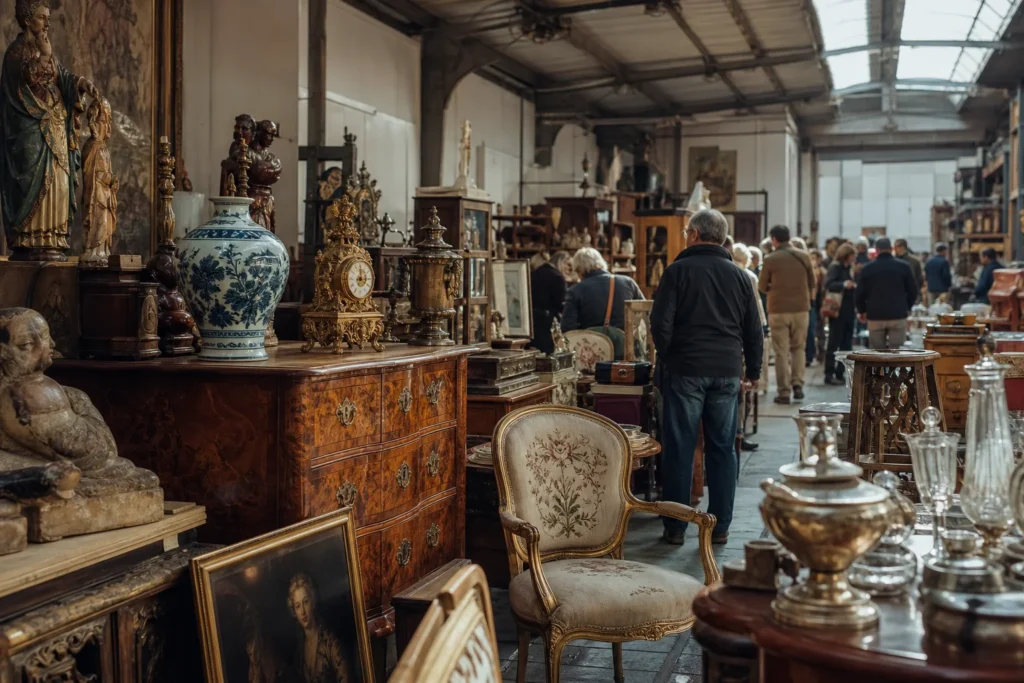

Twice a year, Madrid's IFEMA exhibition complex becomes a hunting ground for serious collectors. Antik Passion Almoneda has been running since 1991, making it one of Spain's longest-established antiques fairs. That track record shapes everything about how the event feels: the dealers are seasoned, the buyers know their eye, and the atmosphere carries the unhurried confidence of a fair that has earned its reputation.
Each edition runs over five consecutive days, opening at 11:30 and closing at 20:30. The winter and spring calendar means most visitors have only two chances a year to attend. That compressed schedule gives the fair a different energy from a weekly street market. Collectors plan around it. Dealers bring their best stock. It rewards forward planning rather than impulse visits, and exact dates shift between editions, so checking the schedule before you travel is worth the effort.
The merchandise spans roughly three centuries. Furniture is the spine of the fair. Walking the floor, you move past tallboys, leather armchairs, writing desks, sofas, drinks cabinets and floor lamps — pieces with genuine decorating utility, not just display value. If you are furnishing a home with character, this is productive ground. The selection skews toward objects that have been lived with, not preserved untouched behind glass.
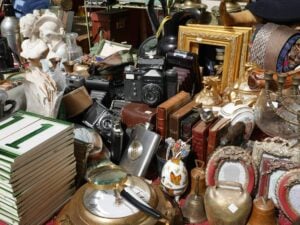
Step away from the furniture runs and the fair opens into a wider collector's circuit. Typewriters, early cameras, vintage toys and travel posters share space with militaria, scientific instruments, nautical equipment and sporting antiques. Siphon bottles sit near stacks of old postcards. One find tends to pull you toward another. The overall effect is less a curated gallery and more a serious specialist floor where the logic of the collection belongs to whoever assembled it.
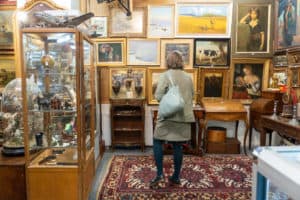
Vintage fashion and art hold their own here too. Clothing, accessories and textiles appear with enough regularity to draw dedicated fashion collectors. Art works across a range of periods and styles rather than a single specialised slot, and neither category feels like an afterthought alongside the heavier antique furniture.
The dealer mix is predominantly professional. Many vendors return edition after edition and talk openly about provenance, condition and context. Newcomers with genuine curiosity are welcome. Someone arriving without prior expertise will leave with a clearer sense of what they are looking at and why it matters. The conversation at the stalls is part of what makes the fair worth the trip.
Getting there is straightforward. Metro line L8 stops at Feria de Madrid, approximately 270 metres from the venue — the clearest route in from central Madrid. Bus lines 112 and 828 stop at Partenón-Hamburgo, effectively at the door. Additional bus services including routes 73, 112, 122, 828 and the night bus N3 also serve the nearby Feria de Madrid bus stop, making the site accessible at various hours across the fair's late afternoon and evening session.
Antik Passion Almoneda suits serious collectors, interior decorators sourcing character pieces, and antique-focused travellers with a Madrid trip to build around. Its limited annual schedule means it is the kind of event worth anchoring an itinerary to — not a casual detour, but a destination in its own right.
Frequently Asked Questions
Q: How often does Antik Passion Almoneda take place, and how long does each edition run?
A: The fair runs twice a year — once in winter and once in spring — each edition lasting five consecutive days. Hours run from 11:30 to 20:30 daily. Because there are only two chances a year to attend, it rewards planning ahead rather than a spontaneous visit.
Q: What kinds of antiques and collectibles can buyers expect to find on the floor?
A: Furniture forms the backbone — writing desks, armchairs, tallboys, drinks cabinets, lamps and rugs, most of it genuinely usable rather than purely decorative. Away from the furniture runs, the floor opens into a collector's circuit: typewriters, early cameras, vintage toys, travel posters, siphon bottles, old postcards, scientific instruments, nautical equipment and militaria. Vintage fashion, textiles and art across a range of periods and styles also appear with enough regularity to draw dedicated buyers. The span runs roughly from the 18th century through to the 1970s.
Q: Is the fair suitable for first-time antiques buyers, or does it skew toward experienced collectors?
A: Both are well served. The dealer mix is predominantly professional — many vendors return edition after edition — but they tend to talk openly about provenance, condition and context. Someone arriving with genuine curiosity and no prior expertise will leave having learned something useful rather than feeling out of place.
Q: How do I get to IFEMA from central Madrid?
A: Metro line L8 stops at Feria de Madrid, roughly 270 metres from the venue. Bus lines 112 and 828 stop at Partenón-Hamburgo, effectively at the door. Both options make it an easy connection from central Madrid without needing to drive.
Q: Do the fair's dates change between editions?
A: Yes — exact dates shift from one edition to the next. Check the organizer's official schedule before you travel to confirm the current edition's dates.
Marketplace Highlights








Add a review