

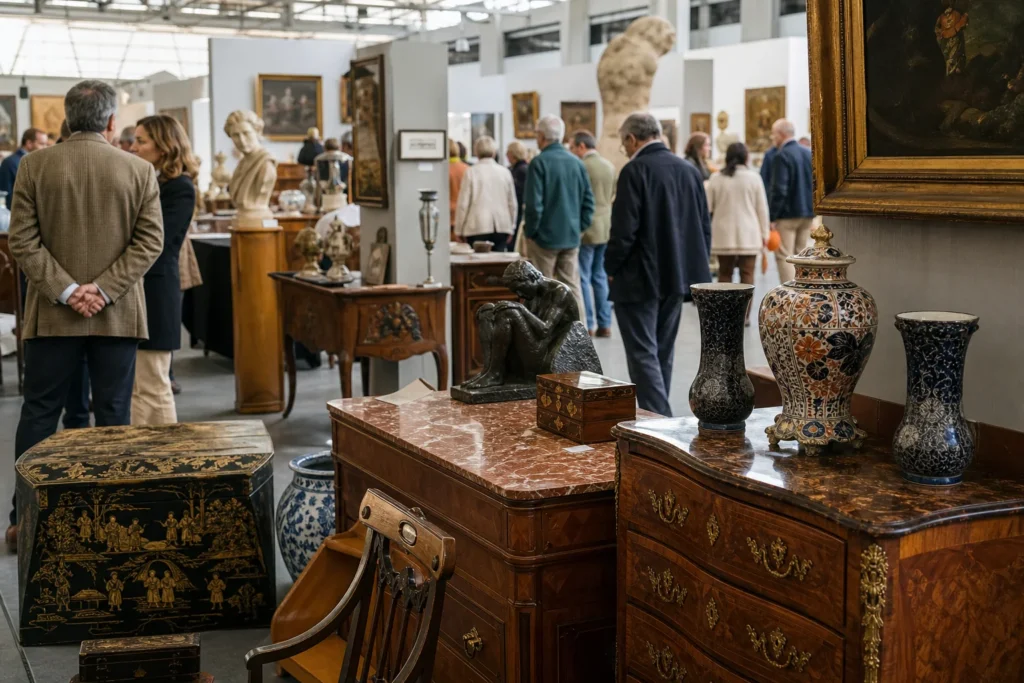

Each November, IFEMA Madrid clears space for one of Europe's most carefully assembled antiques and art fairs. Feriarte arrives on a roughly eight-day run, typically starting on the second or third Saturday of the month, and the halls open daily from 11:30 to 20:30. The event has anchored the Spanish art trade's autumn calendar for over four decades.
What distinguishes Feriarte most sharply is its authentication process. A committee of more than fifty specialists examines every piece before the fair opens to the public. That level of scrutiny is rare. For buyers, it translates into genuine confidence in provenance — dealers present documented, considered stock rather than volume. The atmosphere that results feels closer to a curated exhibition than an open-floor market.
The range of material on offer is genuinely broad. One part of the fair draws collectors focused on historical depth: archaeological pieces, pre-Columbian works, Oriental art and antiquities sit alongside each other in a way that rewards slow looking. A second cluster covers applied arts — antique furniture, decorative objects and jewellery, much of it from Spanish dealers presenting their strongest inventory. Rare books, maps and twentieth-century design occupy another strand, aimed at the collector who prefers the connoisseur's corner of the room. Contemporary art galleries take their place beside classical antiquity dealers throughout, which prevents the fair from feeling like a single-era time capsule.
The professional audience is conspicuous. Gallery owners, interior designers and museum directors travel from across Spain and abroad specifically for Feriarte. Conversations at stands tend to run long. Serious negotiation happens quietly in the aisles. The fair works as a trade meeting point as much as a public shopping event, and that dual function gives it an energy that purely retail antiques fairs rarely match.
Feriarte suits collectors ready to invest in vetted, documented work rather than visitors hoping to uncover an overlooked bargain. The breadth is genuinely useful but can feel overwhelming on a first visit. Arriving with a category in mind — archaeological material, Spanish furniture, early printed books — helps enormously. Leaving room to wander outside that shortlist tends to produce the most rewarding results.
IFEMA sits in the north of Madrid and connects well by public transport. The closest option is Feria de Madrid station on metro Line L8, approximately 450 metres from the venue. Several bus routes also serve the area: lines 73, 112, 122, 828 and night bus N3 all stop at Feria de Madrid-Puerta Norte, roughly the same distance away. Valdebebas station on train line C-1 offers an alternative for visitors arriving from further afield, at approximately 1.6 kilometres from the fair entrance.
For anyone seriously engaged with art and antiques in Spain, Feriarte earns its place on the autumn schedule. The authentication rigour, the calibre of exhibitors and the depth of material make it the kind of fair that rewards a return visit — not because the stock repeats, but because the standard it sets is genuinely hard to find elsewhere.
Frequently Asked Questions
Q: What makes Feriarte different from a general antiques market?
A: Every piece on the floor has been reviewed by a committee of more than fifty specialists before the fair opens. That authentication process means buyers can approach provenance with genuine confidence — dealers present considered, documented stock rather than volume. The atmosphere sits closer to a curated exhibition than an open-floor market.
Q: What kinds of material can collectors expect to find?
A: The range is genuinely broad. Archaeological pieces, pre-Columbian works and Oriental art anchor the historical depth end. Antique Spanish furniture, decorative objects and jewellery represent the applied arts strand. Rare books, maps and twentieth-century design occupy a separate collector's corner, and contemporary art galleries exhibit alongside classical antiquity dealers throughout.
Q: Is Feriarte mainly a trade event or is it open to the public?
A: Both. Gallery owners, interior designers and museum directors travel from across Spain and abroad specifically for it, and serious professional negotiation runs throughout the aisles. The fair is also open to the public, and the well-considered layout and generous circulation make browsing comfortable even on busy days.
Q: When does Feriarte take place and how long does it run?
A: It is an annual November event at IFEMA Madrid, running for approximately eight days. The start date falls on the second or third Saturday of the month depending on the year. Daily hours are 11:30 to 20:30. Check the official IFEMA programme for confirmed dates before each edition.
Q: How do I get to IFEMA Madrid by public transport?
A: The most direct option is metro Line L8 to Feria de Madrid station, roughly 450 metres from the venue. Bus lines 73, 112, 122, 828 and night bus N3 all stop at Feria de Madrid-Puerta Norte, a similar distance away. Valdebebas station on train line C-1 offers an alternative for visitors arriving from further afield.
Marketplace Highlights











Add a review