

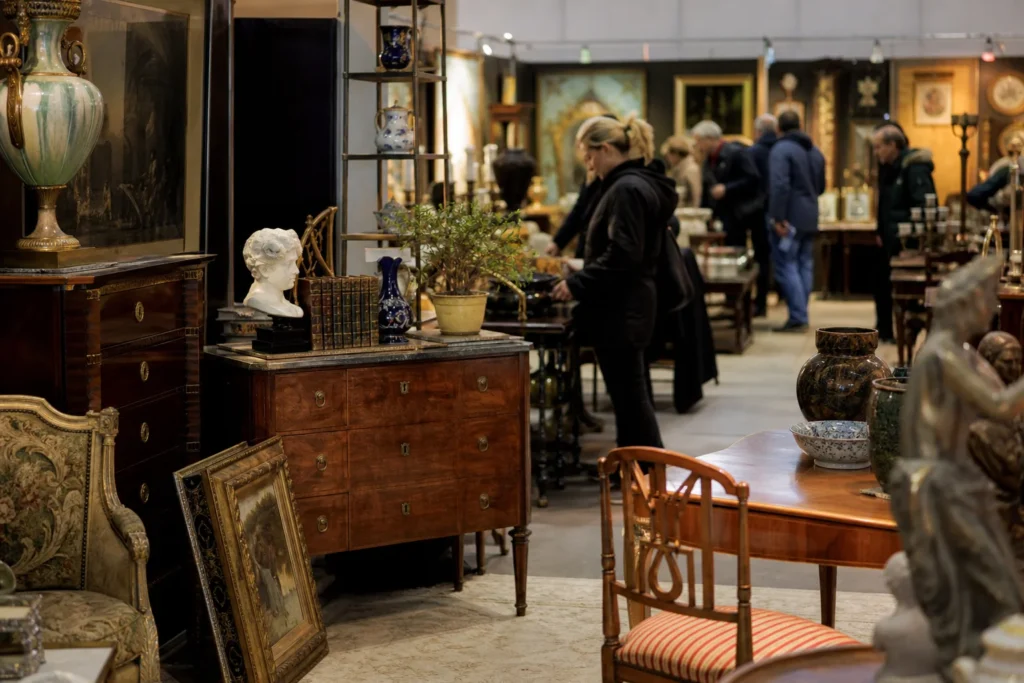

Since 1978, Antikmässan has shaped how serious collectors across northern Europe think about antiques fairs. Few events on the Nordic calendar have run for nearly five decades without losing their edge. That longevity is a credibility signal in itself — and the fair has earned its reputation as a flagship event in the regional market.
The exhibition floor covers around 4,500 square metres and brings together several hundred specialist exhibitors for five days each year. The scale feels generous without becoming exhausting. Several hundred stands means genuine variety, but the indoor layout keeps the experience navigable and relatively unhurried even when attendance climbs above 20,000 visitors across the run.
What sets Antikmässan apart is the breadth of what dealers bring. Fine art anchors one end of the spectrum: Old Master paintings, antique bronzes, marble sculpture and terracottas appear throughout the floor. Decorative arts fill another register entirely — fine carpets, ornate antique clocks and intricate lighting fixtures. Mid-century modern furniture and Scandinavian design objects complete the picture. Few venues in the Nordic region cover all three of these collecting worlds under a single roof at once.
The fair also functions as a learning environment, which distinguishes it from most weekend antique markets. Each year Antikmässan adopts a central theme that runs through the exhibitions and wider programme. Open lectures, talks and curated discussions give visitors a framework for engaging with collecting history and current market thinking. Someone attending without plans to buy can still leave with a richer sense of the field. For a newer collector, that intellectual layer makes the event genuinely useful.
Exhibitors tend to be approachable. Most welcome conversation about specific objects, provenance and the broader context of their specialism. An experienced buyer will find the concentration of quality justifies the trip. A first-timer will find it easy to ask questions and hard to leave quickly.
Tickets must be purchased online in advance. The fair does not sell tickets at the door. Checking the official Antikmässan website before your visit is essential — both to secure entry and to review the current year's dates, theme and programme.
For visitors arriving by public transport, Älvsjö station sits approximately 250 metres from the venue. Train lines 40, 41, 42X, 43, 43X and 44 call there, alongside a wide range of bus services including routes 142, 143, 144, 145, 161, 161X, 163, 167, 173 and 190. Prästgårdsgärdet bus stop, served by buses 142, 144, 145, 190 and 803, is roughly 350 metres away and offers a useful local alternative. Those arriving from further afield by subway can reach Hagsätra on metro line 19, approximately 1.7 kilometres from the venue.
Frequently Asked Questions
Q: Do I need to buy tickets in advance, or can I pay at the door?
A: Tickets must be purchased online before you arrive. Antikmässan does not sell entry at the door, so securing your ticket ahead of time is essential. Check the official website for the current year's ticketing.
Q: What kinds of antiques and objects will I actually find on the floor?
A: The range is genuinely broad for a single venue. Expect Old Master paintings, antique bronzes, marble sculpture and terracottas alongside fine carpets, antique clocks and ornate lighting. Mid-century modern furniture and Scandinavian design objects are also well represented — few Nordic fairs cover all three of these collecting worlds under one roof.
Q: Is Antikmässan worth attending if I'm not planning to buy?
A: Yes. Each year the fair runs a central theme across its exhibitions and programme, with open lectures, talks and curated discussions included. Visitors who come to learn rather than buy will leave with a richer grounding in collecting history and current market thinking.
Q: How easy is it to reach the venue by public transport?
A: The venue is well served. Älvsjö station is approximately 250 metres away, with multiple train lines calling there. Several bus routes also stop nearby, including at Prästgårdsgärdet, roughly 350 metres from the entrance.
Q: Is the fair accessible for first-time collectors, or does it skew toward experienced buyers?
A: Both find it worthwhile. Exhibitors are generally approachable and willing to discuss provenance, context and the specifics of individual pieces. The atmosphere is professional without being intimidating, which makes it a practical learning environment for anyone new to collecting seriously.
Marketplace Highlights








Add a review