

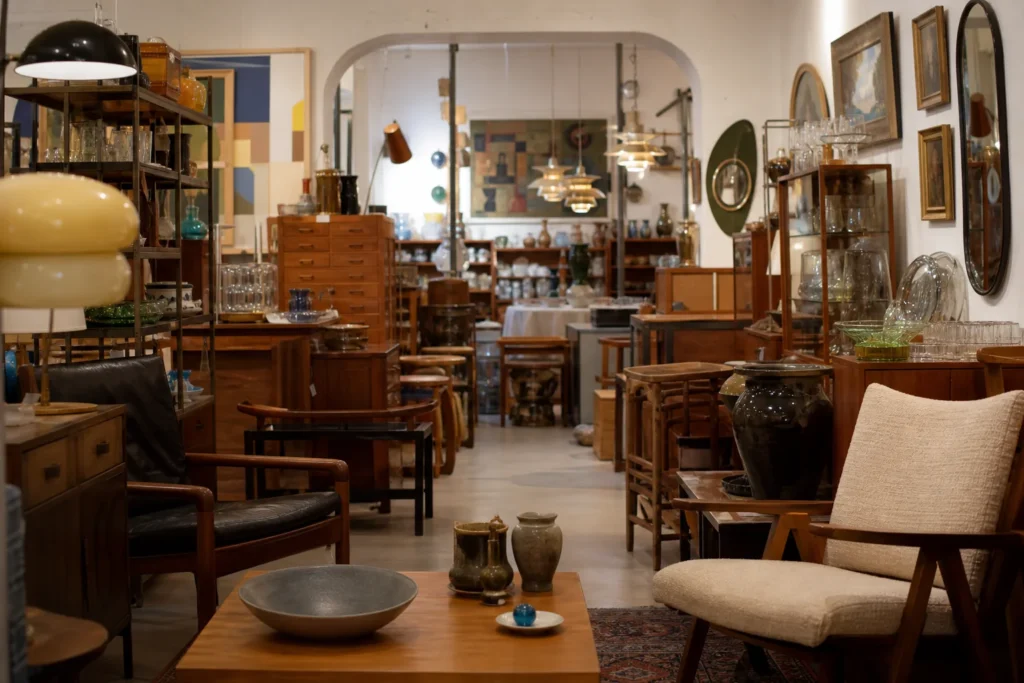

Upplandsgatan does not try to impress anyone. The street runs through a quiet residential stretch of Vasastan, north of the city centre, and the antique shops here announce themselves with little fanfare. What they offer instead is density and quality in a neighbourhood that most tourists never reach. For collectors and dedicated vintage hunters, that combination is genuinely appealing.
Three shops give Upplandsgatan its reputation among Stockholm's antique regulars. HB Antique & Quriosashopen, Bacchus Antik and Domino Antik all operate along this stretch, each with its own character and stock. Moving between them takes minutes. That compactness creates real momentum — you finish one shop and step almost directly into the next, without losing the thread of what you were looking for.
The neighbourhood's particular strength is mid-century Swedish design. Pieces from the 1950s and 1960s appear regularly across the shops here, and the quality can be genuinely high. Collectors chasing clean Scandinavian lines, specific periods of Swedish interior design, or decorative objects from the postwar decades will find Vasastan more productive than many better-known parts of the city. The dealers tend to know their stock well, and conversations here can be worth the time.
A few streets over, near Odenplan, the tone shifts. The shops in that zone carry a looser, more eclectic mix: vintage objects, secondhand curiosities and the kind of finds that resist easy categorisation. Nothing feels curated in a gallery sense. These are browsing shops, best approached without a fixed list and with a genuine willingness to be surprised. They complement the more focused Upplandsgatan cluster well, and together the two areas make for a rewarding half-day circuit.
Vasastan suits a particular kind of shopper — someone who prefers discovery over destination retail. The neighbourhood does not perform for visitors. It gets on with being a working Stockholm district that happens to have a strong concentration of serious antique and secondhand traders. That unselfconsciousness is a significant part of its appeal.
Most shops in the area open on weekdays during daytime hours, broadly Monday through Friday. Saturdays and Sundays are typically quieter or closed, so a weekday visit makes the most sense. From Vasastan, it is straightforward to continue south through Norrmalm toward Södermalm, picking up different styles and price points as you go — the district works well as the first stop on a wider Stockholm antique tour.
Getting here is easy. Odenplan station sits essentially on the doorstep of Upplandsgatan, roughly 38 metres away, and serves metro lines 17, 18 and 19 alongside numerous bus routes including lines 2, 4, 6, 50, 53 and 67. Travellers arriving from further afield can also use Stockholm Odenplan commuter rail station, approximately 194 metres away, which connects regional lines including J40, J41, J43 and J44. Vasastan rarely announces itself as an antique destination — but for shoppers who have done their research, Upplandsgatan consistently rewards the visit.
Frequently Asked Questions
Q: Which shops make up the Upplandsgatan antique cluster in Vasastan?
A: Three shops sit close together along the street: HB Antique & Quriosashopen, Bacchus Antik and Domino Antik. Each has its own character and stock, but the short distances between them mean you can move through all three in a single focused visit without losing momentum.
Q: What kind of stock is Vasastan particularly strong for?
A: Mid-century Swedish design is the neighbourhood's clearest strength. Pieces from the 1950s and 1960s — furniture, decorative objects and Scandinavian design from the postwar decades — turn up regularly, and the dealers tend to know their stock well. Collectors chasing clean Swedish lines will often find this area more productive than better-known parts of the city.
Q: Are the shops open at weekends?
A: Most shops in the area open on weekdays during daytime hours. Weekends are typically quieter or closed, so a weekday visit makes the most practical sense. Check with individual shops before making a special trip, as hours can vary.
Q: How easy is it to reach Upplandsgatan by public transport?
A: Odenplan station is effectively on the doorstep, roughly 38 metres from Upplandsgatan, and is served by metro lines 17, 18 and 19 as well as bus routes including lines 2, 4, 6, 50, 53 and 67. It is one of the more straightforward antique destinations to reach in Stockholm.
Q: How does Vasastan compare to other Stockholm antique areas?
A: Vasastan is quieter and more residential than Gamla Stan or Östermalm, with little tourist foot traffic. That works in a shopper's favour — the focus is on stock and dealer knowledge rather than atmosphere. It also sits conveniently north of the city centre, making it a natural first stop before continuing south toward Södermalm for a broader Stockholm antique circuit.
Marketplace Highlights







Add a review