

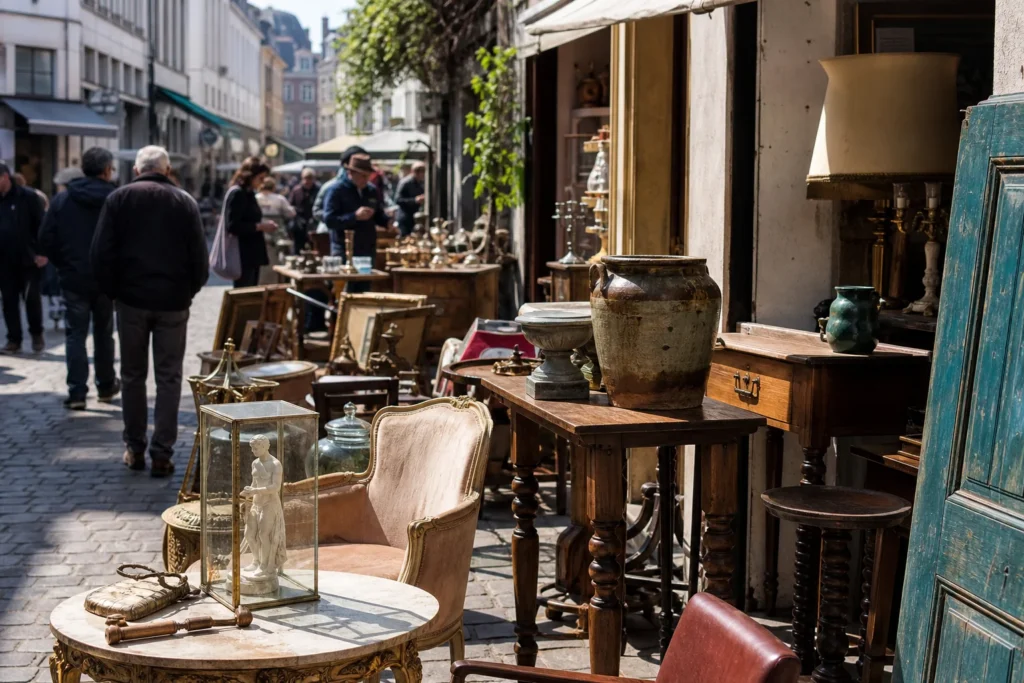

Antwerp quietly holds one of northern Europe's most rewarding antique scenes. Rather than a single market square, the city spreads its dealers and collectors across two distinct corridors. Each suits a different kind of shopper, and together they make a compelling case for a dedicated visit.
Kloosterstraat runs roughly a mile through the southern city, linking residential streets to the centre. Antique shops and second-hand stores line almost every block, interrupted by art galleries and independent cafés. The atmosphere is creative and slightly dishevelled — less a formal antique quarter, more a neighbourhood that built itself around a shared fondness for old things. Artists, dealers and designers all browse the same stretch, giving the street an energetic mix you rarely find in tidier antique districts.
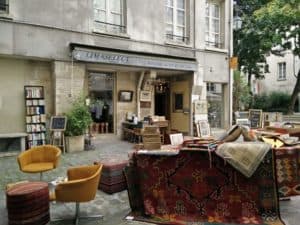
Sundays change the character of Kloosterstraat entirely. Shop owners move stock onto the pavement, trestles appear, and the street takes on the feel of an open-air market that nobody quite planned but everyone seems glad exists. Browsers spill into one another comparing pieces, and the whole block hums with the relaxed energy of unhurried negotiation. At the southern end, the Sint-Jansvliet Antique Market adds a natural extension to the day. Combining both in a single Sunday visit is the most rewarding way to experience this part of the city.
One note worth keeping in mind along Kloosterstraat: stock quality varies considerably. Genuine antiques sit alongside reproduction pieces, sometimes within the same stall. Asking direct questions and bringing a clear sense of what you are looking for pays off here more than almost anywhere else in Antwerp. The street rewards both the experienced eye and the patient browser willing to dig.
The Leopoldstraat and Mechelsesteenweg area, closer to the theatre district, runs to a different standard. Locals know this neighbourhood as the Quartier Latin, and the name fits both the architecture and the dealers. Shops here stock higher-grade pieces and sit alongside interior design studios. A well-chosen mid-century sideboard or vintage lamp moves comfortably between both worlds. Expect prices that reflect the quality, and expect stock that justifies them. Each shop tends to show a distinct point of view, and the window displays alone are worth the detour for anyone decorating seriously.
Most antique shops across both corridors open Tuesday through Sunday from 13:00 to 18:00, closing on Mondays. The afternoon-only rhythm suits a leisurely start and a long lunch before browsing — which may be exactly the point.
Antwerp's compact geography makes visiting both corridors in an afternoon entirely practical. Kloosterstraat suits the browser drawn to discovery and chance finds. Leopoldstraat and Mechelsesteenweg suit the collector who arrives knowing what a good piece looks like. The city is generous enough to offer both on the same day.
For public transport, tram 4 and bus lines 18, 18a, 18b, 18c and 22 all serve Sint-Andries, approximately 300 metres from Kloosterstraat. Groenplaats, roughly 600 metres away, adds metro access alongside the same tram and bus connections — a useful arrival point for visitors coming from further afield or from Antwerp Centraal.
Frequently Asked Questions
Q: Which day is best for visiting the Antwerp Antique District?
A: Sunday is the standout day for Kloosterstraat. Shop owners move stock onto the pavement, the street takes on an informal open-air market atmosphere, and the Sint-Jansvliet Antique Market at the southern end makes a natural extension of the same visit. For a quieter browse through open shops without the street-market energy, any day Tuesday through Sunday works — Monday is a dead day across both corridors.
Q: What are the two main areas to know, and how do they differ?
A: Kloosterstraat is the browser's street — a mile-long run of antique shops, second-hand stores, galleries and cafés with a creative, neighbourhood feel and stock that ranges from genuine antiques to reproduction pieces. Leopoldstraat and Mechelsesteenweg, the area locals call the Quartier Latin, runs to a higher standard: dealers here stock more consistently quality pieces alongside interior design studios, and prices reflect that. One suits discovery; the other suits collectors who arrive knowing what they want.
Q: Should I be cautious about what I buy on Kloosterstraat?
A: Yes — stock quality varies considerably from one shop or stall to the next. Reproduction pieces can sit alongside genuine antiques, sometimes within the same display. Asking direct questions and going in with a clear sense of what you are looking for pays off here more than almost anywhere else in Antwerp.
Q: When are the antique shops open?
A: Most shops across both corridors open Tuesday through Sunday from around 13:00 to 18:00, with Monday as a general closing day. The afternoon-only rhythm is worth building your day around — a long lunch before browsing fits the pace naturally. Confirm individual shop hours before making a special trip.
Q: Are both corridors easy to reach by public transport?
A: Kloosterstraat and the Sint-Andries neighbourhood are served by tram and bus connections, with Groenplaats offering a useful hub for visitors arriving from further afield. The two corridors are compact enough that combining both in a single afternoon is practical on foot once you are in the area.
Marketplace Highlights








Peter Brown
21st June 2019 at 12:32WE were on a Gate 1 river cruise and we stopped here, on the Sunday and were we glad . While not obsessive we enjoy a market and have picked up some enjoyable pieces in various countries. While we were early the place was not existent, it was only later that it came to life. The various antique furniture shops, the record shops , the atmosphere all made for a most enjoyable day. So much so, years later, that we are driving from Calais to Italy via these markets. Antwerp has a life that is unique and hopefully we will find again. It will cost us petrol, a hotel, time (is of the essence) but it will return that and more ( I hope) That’s good going to Antwerp says my wife, ( she does not know I am writing this ) so Antwerp it is July 6/7 don’t let us down I know you will not