


Armazém is permanently closed. The market is retained as an editorial archive of the venue and its distinctive character.
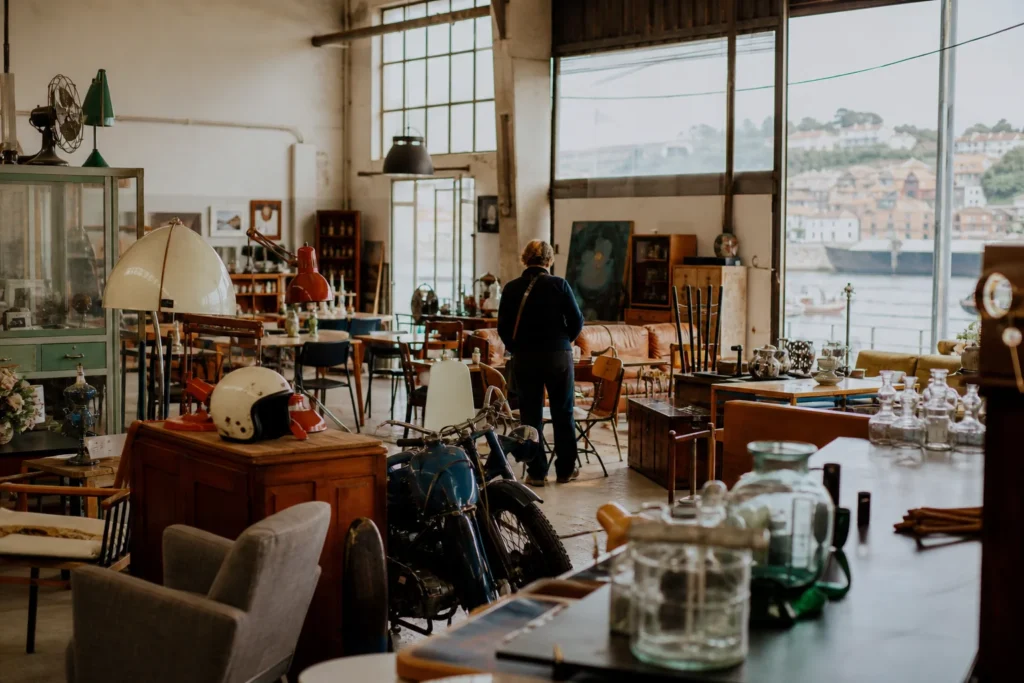
Inside Armazém, the first thing you noticed was the refusal to resolve. The space operated at once as an antique shop, a gallery and a café, and none of those identities dominated the others. A framed photograph hanging above a weathered leather suitcase next to a vintage moped — that kind of layering was everywhere. The converted warehouse near Porto's Douro riverside held it all without strain.
The largest objects claimed the floor first. Vintage furniture spread across the open plan in loose arrangements. Bicycles leaned against columns. Mopeds occupied corners. On the right visit, a vintage car sat among the furniture as though it had always been there, neither for display nor entirely for sale in any conventional sense. The scale of these pieces gave the space its warehouse character, but they were never the whole story.
A second, quieter layer rewarded slower browsing. Old luggage, framed photographs and collections of aged magazines surfaced between the larger objects. Hand tools, curios and scattered personal effects filled the gaps. These were the items that disappeared on a fast pass and revealed themselves only to visitors who stayed with the space. The combined effect felt closer to an edited personal collection than to a secondhand shop organised for turnover.
Artwork ran throughout. The warehouse walls functioned as exhibition space rather than backdrop. Each piece carried its own context, and the overall arrangement meant the room shifted register from browsing to looking without ever announcing the transition.
The café gave the visit its tempo. At Armazém, a drink or a snack was not an afterthought. It was where the hybrid model held together. You could pause, sit with what you had seen, and decide whether to go back in. That option turned what might have been an overwhelming accumulation of objects into something manageable and genuinely pleasurable. The space rewarded the visitor who treated it as a destination rather than a stop.
Armazém suited collectors chasing specific categories and browsers with no fixed agenda in equal measure. Someone after mid-century furniture found the trip worthwhile. So did a visitor simply looking for a souvenir with some genuine history behind it. The range of objects and price points kept the experience open rather than exclusive.
Porto has no shortage of vintage and antique destinations. Few managed this density of objects across such a wide span of categories in a single continuous floor near the riverfront. The warehouse name was accurate. What it held inside was anything but ordinary.
Frequently Asked Questions
Q: What kind of place was Armazém?
A: Armazém occupied a converted warehouse near Porto's Douro riverfront and refused to settle into a single category. It functioned simultaneously as an antique shop, a gallery and a café, with none of those roles dominating the others. The result felt closer to an edited personal collection than a conventional secondhand market.
Q: What kinds of objects did Armazém stock?
A: The inventory ranged widely. Large vintage furniture, bicycles and mopeds spread across the open warehouse floor, and on occasion a vintage car appeared among them. A quieter second layer — old luggage, framed photographs, aged magazines, hand tools and scattered curios — rewarded slower browsing between the bigger pieces. Artwork hung throughout, treating the walls as genuine exhibition space.
Q: Was Armazém worth visiting for serious collectors as well as casual browsers?
A: Both found it worthwhile. Someone hunting a specific category such as mid-century furniture could make a focused trip. An equally valid visit involved no fixed agenda at all — the range of objects and price points kept the experience open rather than exclusive, and the café gave longer stays a natural rhythm.
Q: Is Armazém still open?
A: Armazém is permanently closed. It is retained here as an editorial archive of a distinctive Porto venue that combined antiques, art and a café under one warehouse roof.
Marketplace Highlights







Add a review