


Region
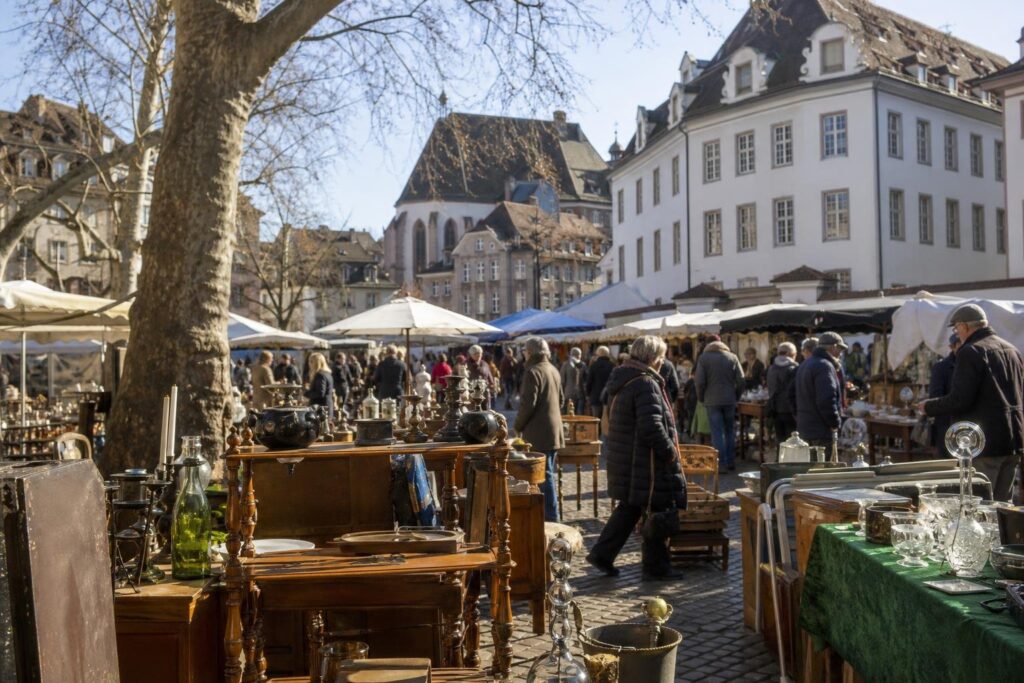
The Gothic facade of the Barfüsserkirche rises over Barfüsserplatz on market mornings, giving this Basel flea market a backdrop that stops you mid-browse. The church — now home to the Basel Historical Museum — has stood here since the fourteenth century. Vintage glassware and old photography spread out on trestle tables beneath its stonework. The effect is grounding in a way that a car park or a weekend fairground cannot replicate.
The market runs on the second and fourth Wednesday of each month, opening at 07:00 and running through to 19:00. That long window suits both early-rising collectors and those who prefer a mid-morning start. Come early if you want the best pieces. By late morning, the most interesting finds have usually changed hands.
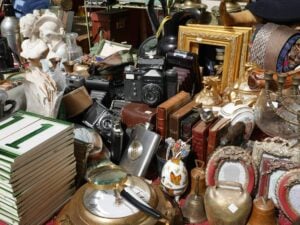
The stock reflects Basel's unusual geography. The city sits at the meeting point of Switzerland, Germany and France, and the tri-border catchment gives the market a genuinely mixed character. Paper-hunters find vintage photography, rare books and old printed ephemera. Home-focused collectors pick through decorative glassware, household ornaments and antique record players. Nostalgia-driven browsers turn up vintage toys and curiosities that cross national collecting traditions in ways you rarely see at a single-country market.
Barfüsserplatz is worth distinguishing from Flohmarkt Petersplatz, Basel's other well-known flea market. Petersplatz draws bigger crowds and a broader general audience, especially at weekends. Barfüsserplatz runs less often, and that lower frequency shapes the atmosphere. Sellers here tend toward the specialist end — curators of a category rather than general clearance vendors. For a collector who can align travel with a Wednesday, that distinction matters.
The square itself is ringed by cafés, so a mid-browse coffee requires no planning. When you want a longer pause, the Rhine is a short walk away. The riverbank gives you a quiet place to sit and think over a potential purchase before heading back in. The Old Town surrounding the square is compact and walkable, and the market fits naturally into a full day exploring Basel on foot.
Getting here is straightforward. The Barfüsserplatz tram stop sits effectively on the square itself, served by tram lines 3, 6, 8, 11, 14, 15, 16 and 17 — arguably the most direct public-transport access of any market in the city. Visitors arriving by rail will find Basel SBB approximately 800 metres away, with regional and international connections including IC, EC and ICE services. Bus line 30 stops at Steinenschanze, roughly 300 metres from the square, as a further alternative.
Barfüsserplatz Flohmarkt suits the collector who values atmosphere as much as the find itself. The setting is specific, the sellers are often knowledgeable, and the Wednesday schedule keeps it quieter than the city's weekend markets. If your Basel trip falls on the right Wednesday, it is a morning well spent.
Frequently Asked Questions
Q: When does the Barfüsserplatz Flohmarkt take place?
A: The market runs on the second and fourth Wednesday of each month, from 07:00 to 19:00. That long window suits different schedules, but arrive early — the most interesting pieces tend to change hands before late morning.
Q: What kind of stock should I expect to find?
A: The mix reflects Basel's position where Switzerland, Germany and France meet. Paper-hunters find vintage photography, rare books and printed ephemera; home-focused collectors browse decorative glassware, ornaments and antique record players; vintage toys and general curiosities turn up regularly too. Sellers here tend toward the specialist end rather than general clearance.
Q: How does this market differ from Flohmarkt Petersplatz?
A: Petersplatz runs more frequently and tends to draw a broader general audience. Barfüsserplatz meets less often, which shapes the atmosphere — stalls feel more curated and sellers are often specialists. For a collector who can align travel with a Wednesday, that distinction is worth knowing before you plan.
Q: How easy is it to reach by public transport?
A: Very straightforward. The Barfüsserplatz tram stop sits on the square itself and is served by eight tram lines. Basel SBB railway station is around 800 metres away, with regional and international rail connections.
Q: Are there places to eat or take a break nearby?
A: Cafés ring the square, so a mid-browse coffee needs no planning. The Rhine riverbank is a short walk away if you want a quieter pause — useful if you want to think over a potential purchase before heading back in.
Marketplace Highlights








Add a review