


Region
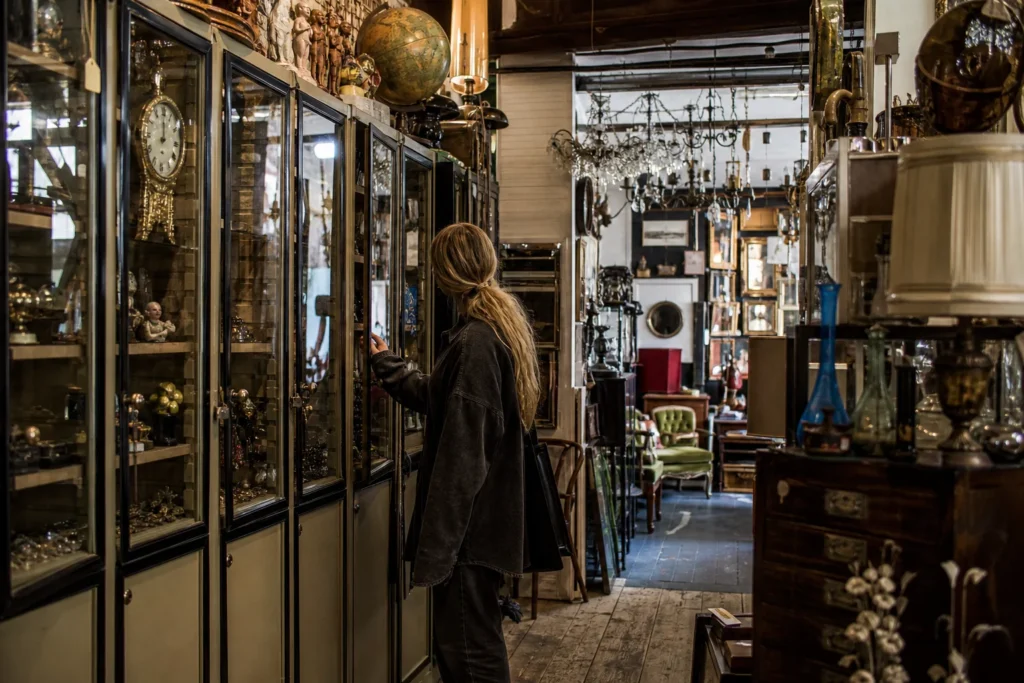
On Upper St. James's Street in Brighton, a pink-painted shopfront makes the location easy enough to spot. Brighton Flea Market at number 31A is a permanent indoor venue spread across two floors, and its bold exterior gives an honest signal of what waits inside: a dense, cabinet-lined space where individual sellers display their finds behind numbered cases.
The numbered cabinet format defines how a visit works here. Each case belongs to a specific dealer who chose and arranged every item on display. Staff circulate the floor and manage the cabinets on behalf of their absent owners. Nothing sits behind glass as a deterrent — ask a team member to open any cabinet that interests you and they will. The browsing stays hands-on and unhurried, closer in feel to a curated antique centre than an open-stall market.
The stock groups naturally into a few distinct territories. On the decorative and collectable side, expect vintage jewellery, ornamental ceramics, antique clocks, artwork and period lamps. Printed and ephemera collectors tend to do well with comics and original marketing signage. Larger, more theatrical pieces — chandeliers, taxidermy mounts and furniture — add scale and a certain drama that feels well-suited to Brighton's character. Because sellers update their stock independently, the offer shifts regularly. Return visits often surface things that were not there before.
The market runs every day of the week, which sets it apart from the weekend-only model common to many flea markets. Weekday hours run from 10:00 to 17:00, and weekend hours open slightly later at 10:30 with the same 17:00 close. That daily rhythm makes Brighton Flea Market a practical stop on any day of the trip, not just a Saturday outing.
Getting there by public transport is straightforward. Bedford Street bus stop sits approximately 33 metres from the market and serves buses 12, 12A, 14, 27, 27B, 37, 37B, 47 and 52. Aquarium train station is approximately 400 metres away and gives an easy walking approach from the seafront direction.
The venue suits a broad range of visitors without feeling stretched trying to please everyone. Collectors who prefer to work through stock methodically will find the cabinet format congenial. Design-led shoppers sourcing a statement lamp or an unusual prop tend to do well here given the breadth and visual range of the stock. Casual browsers face no pressure and can move between floors at their own pace.
For anyone building a secondhand sourcing day across East Sussex, Lewes Flea Market operates on a similar cabinet-dealer model a short distance along the coast. The two venues pair well for a deliberate regional trip, and Brighton Flea Market makes a confident starting point.
Frequently Asked Questions
Q: How does the numbered cabinet system work for shoppers?
A: Each cabinet belongs to an individual dealer who selected and arranged everything inside it. The cases are locked, but that is not a barrier — ask any staff member on the floor and they will open whichever cabinet you want to look at more closely. It keeps the browsing genuinely hands-on without requiring the seller to be present.
Q: What kinds of things does Brighton Flea Market typically stock?
A: The range runs from vintage jewellery, antique clocks, ornamental ceramics, artwork and period lamps through to comics and original marketing signage. Larger and more theatrical pieces — chandeliers, taxidermy mounts and furniture — appear regularly too, giving the market a visual scale that suits browsers sourcing statement items as much as dedicated collectors.
Q: Is Brighton Flea Market open during the week, or mainly at weekends?
A: It runs seven days a week. Weekday hours are 10:00 to 17:00; Saturday and Sunday open slightly later at 10:30 with the same 17:00 close. That daily schedule makes it a practical stop on any day of a Brighton visit, not just a weekend outing.
Q: How easy is it to reach by public transport?
A: Straightforward. The Bedford Street bus stop is roughly 33 metres from the market and is served by multiple routes including the 12, 14, 27 and 52. Aquarium train station is around 400 metres away, giving a walkable approach from the seafront direction. The pink shopfront on Upper St. James's Street at number 31A is easy to spot once you are in the area.
Q: Is it worth visiting more than once, or does the stock stay the same?
A: Because each cabinet is managed independently by its own dealer, sellers update their stock at different times. Return visits regularly surface pieces that were not there on a previous trip, which makes the market worth revisiting rather than treating as a one-time browse.
Marketplace Highlights









Add a review