

Region
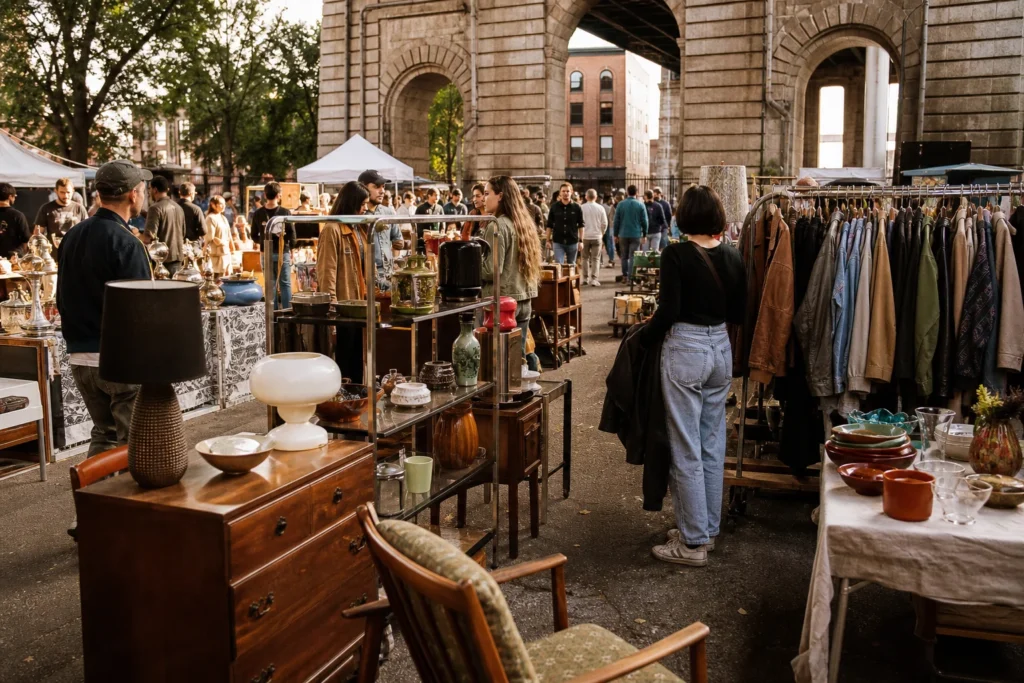
On a clear Sunday morning in DUMBO, the Manhattan Bridge arches frame a row of vendors unpacking mid-century chairs, crates of vinyl, and racks of carefully chosen denim. It is one of the better settings for a flea market anywhere in New York. Brooklyn Flea has occupied this particular stretch of Brooklyn since Jonathan Butler and Eric Demby launched it in April 2008. What began as a single outdoor market has become one of the city's most respected weekends out.
The setup runs across two locations. Saturdays bring the market to Fort Greene, while Sundays belong to DUMBO with that unmistakable backdrop of brick and bridge. Both days open at 10:00 and run until 17:00. When colder weather arrives, Brooklyn Flea shifts indoors. The winter venue has changed over the years, so checking the official site or the market's Instagram account, @bkflea, is the most reliable way to confirm the current arrangement before you visit.
On a typical weekend, somewhere between 60 and 100 vendors fill the floor. The emphasis here is on curation rather than volume. Dealers tend to know exactly what they're selling — where a piece came from, its approximate age, and a fair sense of its value. That depth of knowledge changes the whole feel of the market. Conversations replace quick haggling, and you leave with a better sense of what you bought.
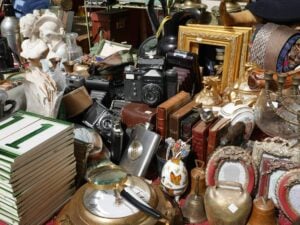
The merchandise splits roughly into a few distinct corners. Furniture hunters gravitate toward the mid-century end: side tables, armchairs, lamps, and decorative objects with real provenance. Collectors work the record crates, vintage camera stalls, print ephemera, and original photography. The clothing section pulls in serious vintage shoppers hunting selvedge denim, leather jackets, and pieces from earlier decades that have held up well.
Brooklyn Flea shares its founders with Smorgasburg, the street food market that runs separately nearby on selected days. The two were designed to complement each other, and combining a visit to both in a single morning is easy enough when the schedules align. Food options at the Flea itself vary by season and location.
A few practical habits help. Arriving early gives first access to freshly laid-out stock before the crowd builds. Cash is worth carrying, as not every vendor uses a card reader. A roomy tote bag earns its keep once you start finding things. The market's Instagram, @bkflea, posts vendor highlights and schedule updates ahead of each weekend — following it takes the guesswork out of planning.
Brooklyn Flea has been running since 2008 and rewards anyone who comes back more than once. Vendor lineups rotate, seasonal locations shift the atmosphere, and the stock turns over constantly. It suits mid-century furniture hunters, serious vintage clothing collectors, and anyone who prefers a flea market that feels edited and considered rather than sprawling.
Getting to the DUMBO Sunday location is straightforward. York Street subway station, served by the F train, sits approximately 150 metres away and makes it the easiest option from most of Manhattan and central Brooklyn. Bus routes B67 and B69 stop at Sands Street and Pearl Street, roughly 300 metres from the market. Visitors arriving from the water have a further option: the DUMBO/Fulton Ferry landing, served by ferry routes ER, ERA, and ERB, is approximately 700 metres away and makes for a particularly good approach on a clear weekend morning.
Frequently Asked Questions
Q: Where does Brooklyn Flea set up, and does the location change by day or season?
A: The market runs at two outdoor locations during warmer months — Fort Greene on Saturdays and DUMBO on Sundays, with the Manhattan Bridge arches forming the backdrop for the Sunday site. In winter, Brooklyn Flea moves indoors to a venue that has shifted over the years. Check the official site or follow @bkflea on Instagram before any cold-weather visit to confirm where the market is running.
Q: What kinds of things can I actually find there?
A: The vendor mix leans toward curated vintage rather than bulk resale. Mid-century furniture — chairs, side tables, lamps — sits alongside crates of vinyl, vintage cameras, print ephemera, and original photography. The clothing end attracts serious hunters after selvedge denim, leather jackets, and pieces from earlier decades. Ceramics, jewellery, and handmade objects fill out the rest.
Q: How many vendors show up on a typical weekend?
A: Somewhere between 60 and 100 vendors set up on a given day. The lineup rotates, so stock turns over regularly — one of the reasons repeat visits tend to pay off.
Q: Should I bring cash, or do vendors take cards?
A: Bring cash. Not every vendor uses a card reader, and having it on hand keeps things straightforward when you find something worth buying. A roomy tote bag is worth packing too, especially if you end up with anything awkward to carry.
Q: Is Smorgasburg at the same location?
A: Smorgasburg is a separate food market run by the same founders and operates nearby on certain days, making it easy to combine both in a single morning when the schedules align. Confirm current Smorgasburg days and locations via official channels before planning a joint visit.
Marketplace Highlights








Add a review