


Region
Chelsea Antiques & Fine Art Fair is permanently closed. The event is retained as an editorial archive of the venue and its distinctive character.
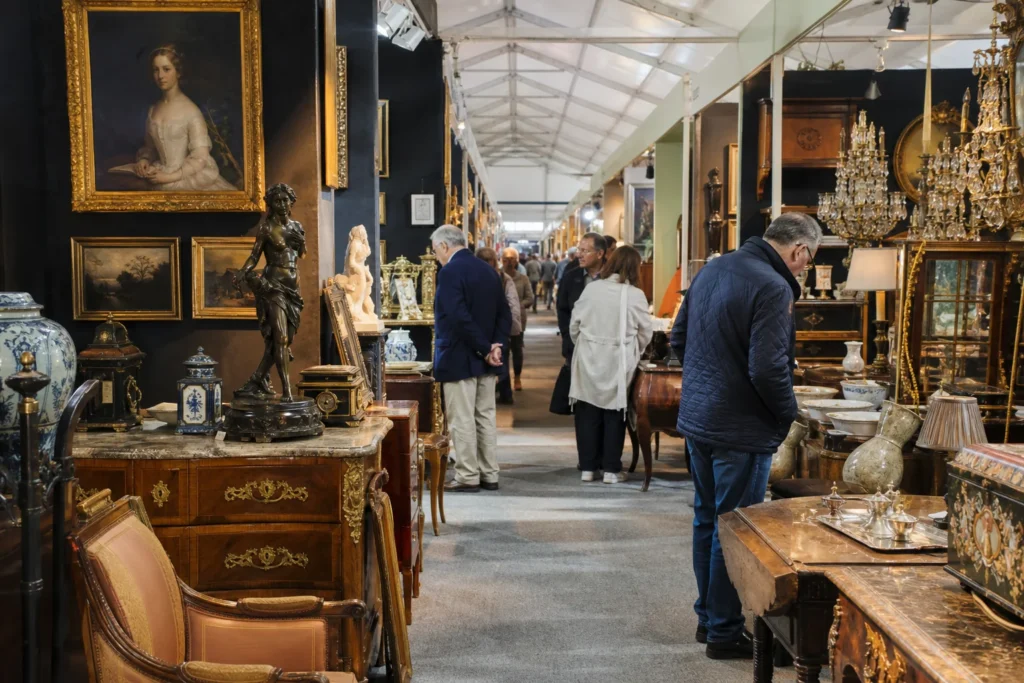
Chelsea Antiques & Fine Art Fair occupied a distinctive place in the UK calendar. Around forty specialist dealers gathered twice a year to present objects selected with unusual care. This was not a sprawling trade fair where quantity carried the day. The scale was deliberate — intimate enough that visitors could spend real time at each stand and leave knowing something they hadn't before.
The merchandise ranged widely while remaining consistently serious. Furniture and decorative objects formed the backbone: mirrors, clocks, globes, statues and sculpture sat alongside pieces of Continental and British cabinet-making. Jewellery, textiles, carpets and rugs occupied their own considered corner of the floor. Paintings, lighting and works on paper completed the picture. Grouped together, these objects created something closer to a curated survey of decorative history than a market in the ordinary sense.
The atmosphere reinforced that impression. Dealers tended to know their pieces well — not just as stock to be shifted, but as objects with histories worth explaining. Browsing the stands sharpened the eye in ways that a more crowded or hurried event would not. A single afternoon here could clarify what you actually thought about a particular period of English furniture, or introduce you to a regional textile tradition you hadn't considered before. That quality of engagement was part of what made the fair worth attending even for those who left without buying.
From 2021, the organiser 2Covet shaped the fair's direction, steering it toward a smaller and more selective dealer format. That shift reflected a broader movement within UK antique fairs, where serious collectors increasingly preferred focused, well-edited events to the kind of sprawling shows that demand endurance rather than attention. Chelsea's response was to lean further into curation and depth, qualities the fair had long valued.
The fair traced its history back to 1951, which placed it among the most established events of its kind in Britain. That longevity gave it a reputation the short-run fairs could not easily replicate — specialist dealers returned edition after edition, and collectors planned visits into their calendars well in advance. The twice-yearly rhythm meant each edition carried its own character, shaped by the particular mix of dealers and objects that arrived.
For serious collectors, interior designers sourcing for specific periods, or anyone wanting to handle dateable antique pieces rather than browse photographs, Chelsea offered something genuinely rare. The gallery-standard presentation, the depth of specialist knowledge on the floor, and a history stretching back more than seven decades combined to make it one of the more substantial antique fair experiences London produced.
Frequently Asked Questions
Q: Was Chelsea Antiques & Fine Art Fair suitable for first-time antique buyers, or did it cater mainly to serious collectors?
A: The fair worked well for both. The intimate scale — around forty specialist dealers — meant visitors could take their time at each stand and have real conversations with dealers who knew their pieces in depth. That environment was genuinely useful for anyone wanting to develop an eye for a particular period of furniture, a jewellery style, or a textile tradition, whether or not they intended to buy.
Q: What kinds of objects did the fair typically include?
A: The range covered furniture, mirrors, clocks, globes, statues and sculpture, alongside jewellery, carpets, rugs and textiles. Paintings, works on paper and lighting completed the mix. The curation was deliberately tight — the emphasis was on depth and selectivity rather than volume, so pieces tended to earn their place on the stand.
Q: How did Chelsea Antiques & Fine Art Fair differ from larger UK antique trade fairs?
A: Scale and editorial focus were the defining differences. Where larger trade fairs rewarded endurance, Chelsea rewarded attention. The deliberate limit on dealer numbers created a gallery-like atmosphere, and dealers generally presented their stock as objects with histories worth understanding rather than items to be turned over quickly. That quality set it apart in the UK calendar.
Q: Is Chelsea Antiques & Fine Art Fair still running?
A: The fair is permanently closed. The event is maintained as an editorial archive of the event and its character for researchers, collectors and anyone with a historical interest in the London antiques calendar.
Marketplace Highlights







Add a review