

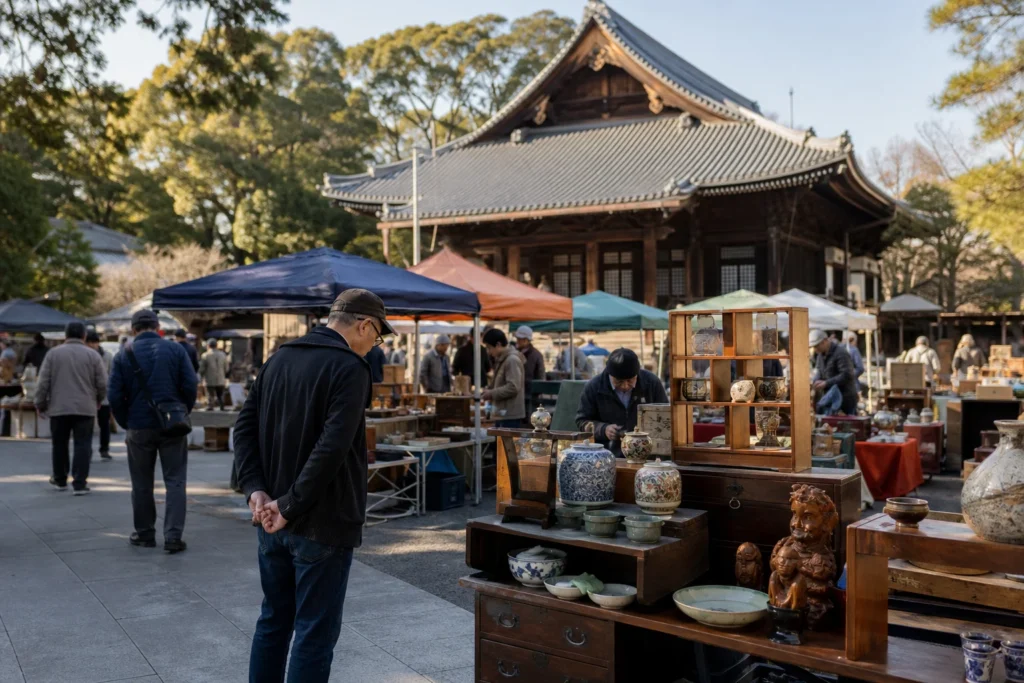

Gokokuji Temple has stood in Tokyo's Bunkyo ward since 1681. It was built at the request of Keishoin, the mother of the fifth Tokugawa shogun, Tsunayoshi, and its main hall remains one of the oldest surviving wooden structures in the city. On the second Saturday of each month, from 07:00 to 15:00, this Edo-period compound becomes the setting for one of Tokyo's more quietly compelling antique markets.
The fair draws roughly 25 to 40 vendors specialising in traditional Japanese goods. Expect ceramics, lacquerware, folded textiles, small bronze pieces and decorative objects accumulated across generations. The mix leans toward genuinely Japanese material rather than tourist novelty, which makes it worth the early start for anyone serious about finding something specific.
In recent years the number of vendors and visitors has eased. The result is an unhurried atmosphere that larger weekend markets rarely offer. Dealers at a market this size tend to have time to talk — about where a piece came from, what period it represents, or simply how to identify good lacquer. That kind of exchange is often the most valuable thing a visitor takes home.
The temple compound itself deepens the experience in ways that an open car park or exhibition hall cannot. The main hall survived both the Great Kanto Earthquake of 1923 and the destruction of the Second World War. Handling a piece of Meiji-era ceramics inside a structure that predates the Meiji era by nearly two centuries gives the browsing a different texture. The setting is not just backdrop — it is part of the visit.
This fair suits collectors and cultural travellers with patience for a smaller-scale event. It rewards those who arrive early, when selection is fullest and the compound is still quiet. Anyone expecting a sprawling urban flea market should look elsewhere; anyone who finds that kind of scale exhausting will feel at home here.
Getting to Gokokuji is straightforward by public transport. Shin-otsuka station on subway line M sits approximately 350 metres away and serves as the most practical entry point for most visitors. Gokokuji station on subway line Y is approximately 450 metres away — its shared name with the temple makes it a natural orientation landmark for first-time visitors. The closest stop of all is 大塚四丁目, served by bus line 都02, approximately 150 metres from the site. All three options place the temple within easy reach without needing to navigate a transfer.
Frequently Asked Questions
Q: When does the Gokokuji Temple antique market take place?
A: The market is held on the second Saturday of each month, running from 07:00 to 15:00. Arriving early gives you the best selection and the quietest atmosphere in the compound.
Q: What kind of goods can I expect to find here?
A: Vendors specialise in traditional Japanese material — ceramics, lacquerware, folded textiles, small bronze pieces and decorative objects. The stock leans toward genuinely Japanese antiques and vintage goods rather than tourist novelty.
Q: How big is the market, and is it worth a dedicated trip?
A: The fair draws roughly 25 to 40 vendors, making it a smaller, unhurried event. It suits collectors and cultural travellers who prefer a focused browse over a sprawling market. Those expecting a large-scale flea market should look elsewhere.
Q: How do I get to Gokokuji Temple by public transport?
A: Three options are within easy walking distance: Shin-Otsuka station (subway line M, approximately 350 m), Gokokuji station (subway line Y, approximately 450 m), and the bus stop 大塚四丁目 on bus line 都02, which is the closest at around 150 m from the site.
Q: Is there an entry fee to browse the market?
A: Check the organiser's official page or the temple's current notices before you visit, as admission conditions can change.
Marketplace Highlights








Add a review