

Region
Nordhavn was industrial land not so long ago — cranes, container yards, a working harbour edge. Today it is one of Copenhagen's most considered neighbourhoods, and somewhere along that waterfront sits a showroom that predates the whole reinvention. Green Square Copenhagen has been trading since 1974, originally as a specialist wholesale dealer before evolving into the retail destination it is now. That early wholesale foundation matters. It shaped a buying network and a level of market knowledge that most retail antique shops simply never accumulate.
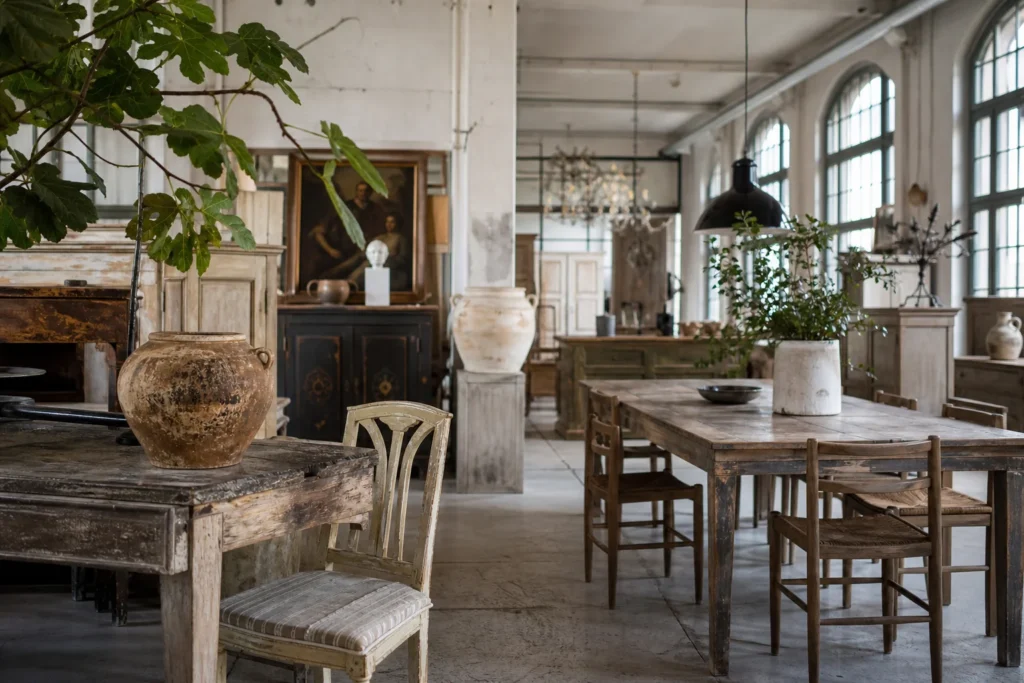
The collection centres on high-quality European antiques, with particular depth in Scandinavian and Continental pieces from the eighteenth and nineteenth centuries. Gustavian furniture appears regularly: pale painted finishes, clean-lined chests of drawers, and the restrained ornament that defines Swedish neoclassical craft at its best. These sit alongside grander southern European work — Spanish colonial tables, heavily carved case furniture, decorative objects with real presence. The contrast between quiet Nordic forms and bolder Continental pieces is not incidental. It is editorial.
That contrast reflects something Green Square states directly and models in its own displays: antique pieces work best beside contemporary design, not locked inside a period interior. A Gustavian chest beside modern art, a colonial table anchoring an otherwise spare room — the showroom actively encourages these pairings. For buyers furnishing a contemporary home who want depth and history alongside new things, this is a genuinely practical position. It also explains why the store built an international following long before online platforms made cross-border discovery easy.
International collectors and interior buyers now find the showroom through visits to Copenhagen, through trade connections that stretch across the Atlantic, and through digital platforms that give the inventory wider reach. The physical showroom remains the more rewarding experience. Pieces are displayed generously, with enough space around each item for it to read clearly rather than compete. The pace is unhurried, the welcome genuine, and the depth of knowledge behind each piece is available to anyone who wants it. These are not bargain finds — the stock is curated and priced accordingly — but repeat customers return because the quality and the expertise consistently justify it.
The showroom opens Monday to Friday from 10:00 to 17:30 and Saturday from 10:00 to 15:00. It closes on Sundays. Visitors arriving midweek have the full afternoon to browse, while Saturday visits suit a shorter, more focused call. The address sits in Nordhavn at Sundkaj 161.
Getting here by public transport is straightforward. Orientkaj metro station, served by the M4 line, sits approximately 660 metres away and connects directly to central Copenhagen. Bus 25 also stops at Orientkaj St. at a similar distance. For those arriving by light rail, Nordhavn station — served by lines A, B, Bx, C and E — is around 900 metres away, a walk that passes through a neighbourhood worth seeing at ground level.
The showroom rewards visitors who want to engage seriously with Scandinavian and Continental antiques, collectors working at the considered end of the market, and anyone in Copenhagen who finds design culture more alive in a working showroom than behind a museum label. Fifty years of buying experience and a clear point of view about how old things live alongside new ones — that is what Green Square brings to Nordhavn.
Frequently Asked Questions
Q: What kind of antiques does Green Square Copenhagen specialise in?
A: The showroom focuses on high-quality European antiques, with particular strength in Scandinavian and Continental pieces from the eighteenth and nineteenth centuries. Gustavian furniture — pale painted chests of drawers, clean-lined forms, neoclassical restraint — sits alongside grander southern European work such as Spanish colonial tables and heavily carved case furniture. The contrast between the two traditions is deliberate and worth experiencing in person.
Q: Do I need to be decorating a period interior to buy here?
A: Not at all. Green Square actively encourages mixing antique pieces with contemporary design — a Gustavian chest beside modern art, a substantial colonial table in an otherwise spare room. The showroom models these pairings in its own displays, which makes it a practical destination for buyers furnishing a modern home who want historical depth alongside new things.
Q: When is the showroom open?
A: Green Square Copenhagen opens Monday to Friday from 10:00 to 17:30 and Saturday from 10:00 to 15:00. It is closed on Sundays. Midweek visits allow the most time to browse; Saturday suits a shorter, more focused call. Confirm current hours on the store's official page before travelling.
Q: How do I get to the Nordhavn showroom by public transport?
A: Orientkaj metro station on the M4 line is the most direct option from central Copenhagen, sitting roughly 660 metres from the showroom at Sundkaj 161. The walk from the station through Nordhavn is straightforward and the neighbourhood itself is worth the approach.
Q: Is this a place to hunt for bargains, or is it pitched differently?
A: Green Square is a curated specialist, not a bargain market. The store has been building its buying network since 1974 — originally as a wholesale dealer — and the stock reflects that depth of expertise. Prices are set accordingly, but repeat customers return because the quality and the knowledge behind each piece consistently justify the investment.
Marketplace Highlights









Add a review