


Region
Loppemarked i Tap 1 is permanently closed. This listing is retained as an editorial archive of the venue and its distinctive character.
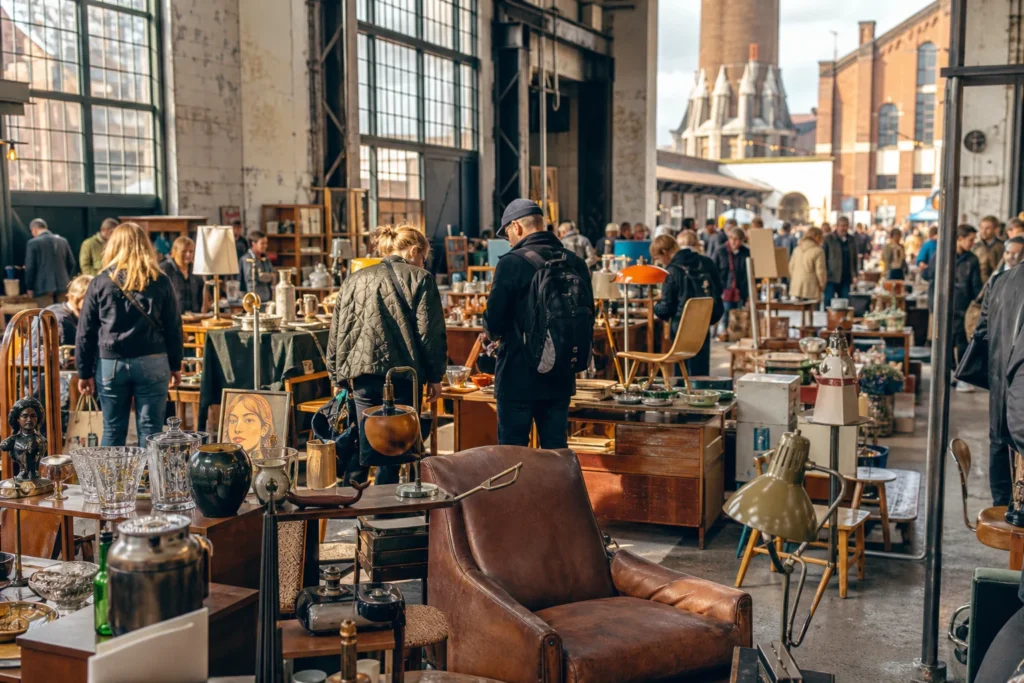
Few Copenhagen flea markets could claim a setting quite like this one. Loppemarked i Tap 1 occupied a vast industrial hall inside the Carlsberg brewery district, one of the Danish capital's most architecturally compelling neighbourhoods. The scale alone set it apart — and for the shoppers who found it, that scale was the first thing they noticed.
The market spread across roughly 4,500 square metres, with more than 200 stalls filling both indoor and outdoor areas. That footprint demanded some organisation, and the layout delivered it. Separate zones for clothing and furniture kept the browsing practical rather than overwhelming. Visitors who came for a mid-century sideboard or a set of old dining chairs could head straight to the furniture section. Those hunting coats, scarves and vintage denim had their own territory to work through.
The merchandise reflected the breadth of a serious quarterly market. At the heavier end sat vintage furniture — armchairs, floor lamps, wooden cabinets — the kind of pieces that serious collectors and interior enthusiasts came early to secure. Lighter browsing filled the clothing rails and the table stalls: paperback novels, jewellery, ceramic odds and ends, the sort of accumulated domestic life that flea markets exist to redistribute. Sellers at a four-times-a-year event tend to prepare carefully, and the stalls here had that considered quality — more curated than a typical car-boot clearing.
The Tap 1 building itself contributed something that the merchandise alone could not. According to the listing's earlier description, the hall had previously served as part of the bottling operation within the historic Carlsberg complex. Whether or not every architectural detail carried a direct brewing connection, the industrial bones were unmistakable: high ceilings, solid masonry, the particular atmosphere of a working building repurposed rather than demolished. The Carlsberg district had been undergoing transformation for years, and events like this market were part of how the area found a new social life alongside its built heritage.
The quarterly rhythm mattered too. A market held four times a year is an occasion, not a weekly errand. Regulars planned around it. Dealers arrived with their best stock. The two-day weekend format gave the event a proper unhurried pace — enough time to revisit a stall, negotiate, or simply sit with a decision. An admission of DKK 40 covered both days, which by the standards of the time made the whole weekend an accessible outing for collectors, browsers and the casually curious alike.
Formerly known as Loppemarked På Carlsberg, the market built a following by combining genuine scale, a sensibly organised layout and a setting that doubled as a small piece of Copenhagen's industrial history. For anyone researching the city's flea market culture, it remains a meaningful reference point — a market that understood the value of its own surroundings.
Frequently Asked Questions
Q: What kind of goods were sold at Loppemarked i Tap 1?
A: The market covered a wide range at its quarterly events. Serious collectors came for vintage furniture — armchairs, floor lamps, wooden cabinets — while lighter stalls offered clothing, paperback books, jewellery and ceramic odds and ends. Because it ran only four times a year, sellers tended to bring well-prepared stock rather than casual clearouts.
Q: How was the market laid out inside the Tap 1 building?
A: It spread across roughly 4,500 square metres with more than 200 stalls, using both indoor and outdoor areas. Separate zones for clothing and furniture kept navigation practical at that scale — shoppers hunting mid-century pieces could head straight to the furniture section rather than working through the entire floor.
Q: Why was the Tap 1 venue itself considered part of the appeal?
A: The hall reportedly served as part of the bottling operation within the historic Carlsberg brewery complex. Its high ceilings, solid masonry and industrial bones gave the market an atmosphere that a purpose-built events space rarely matches — a working building repurposed rather than replaced.
Q: Was this a weekly market or something less frequent?
A: It was a quarterly event, held four times a year over a full weekend. That rhythm made each edition an occasion rather than a routine errand, and the two-day format gave shoppers time to browse unhurriedly, revisit a stall or sit with a decision before buying.
Marketplace Highlights









Add a review