

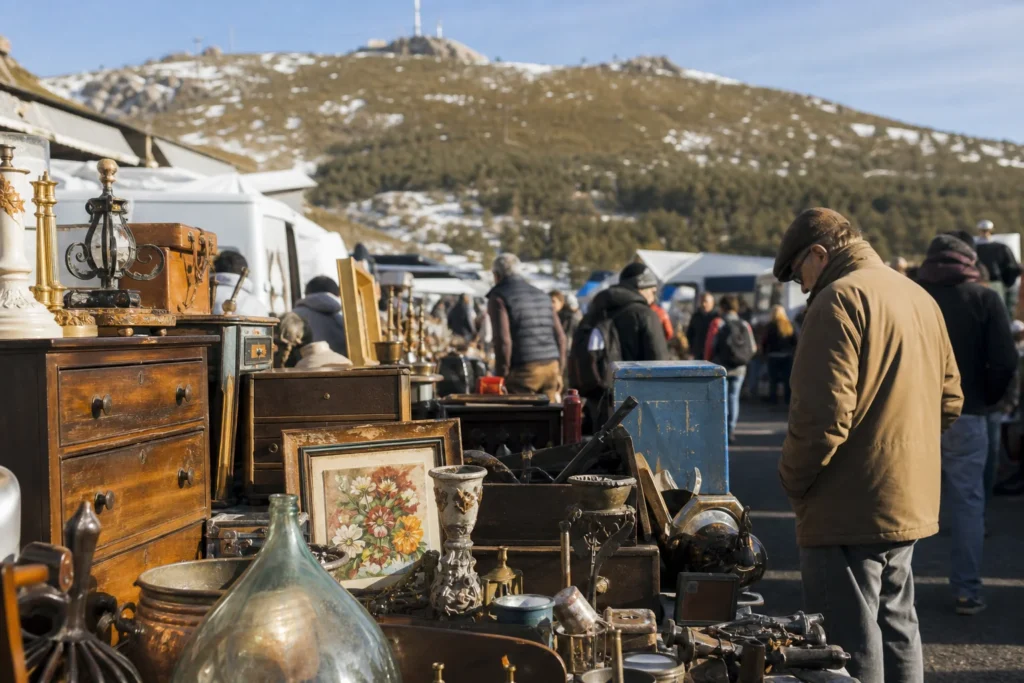

On the first Sunday of every month, something quietly remarkable happens near the top of the Sierra de Guadarrama. Dealers unpack crates of Civil War-era militaria, tarnished domestic objects and rural estate finds onto stalls that sit at nearly 1,900 metres above sea level. This is Rastro de Navacerrada — also known as the Mercadillo de Antigüedades de Navacerrada — and its combination of altitude, specialist stock and unhurried pace sets it apart from anything available closer to Madrid.
The town of Navacerrada perches around 50 kilometres north of the capital, near the entrance to the Valle de la Barranca. The drive up through pine-forested slopes is part of the experience. By the time the stalls come into view, the city already feels remote. The market runs from 10:00 to 15:00, giving visitors a full morning to work through the vendors before the mountain afternoon sets in.
What draws serious collectors here is the Civil War material. Objects from 1936 to 1939 surface with unusual regularity — militaria, period ephemera and everyday domestic pieces that emerge from rural storage rather than city auction rooms. The rural provenance matters. This is stock from local homes and farmsteads, not re-circulated city inventory, and it gives the market a specificity that general rastros rarely match.
Beyond the Civil War thread, the stalls carry a wide range of rural estate and household goods. Restorable furniture with genuinely solid bones sits alongside old farm tools and garden equipment. Crockery, second-hand books and cleared household items fill the gaps. Vendors occasionally bring pieces from neighbouring European countries, which keeps the range from feeling narrowly regional. With over 100 dealers typically setting up on market days, the choice runs deep.
Many stallholders carry real knowledge of their stock and of local history. Negotiating here is not just accepted — it is the normal way business gets done, and it often leads to the most interesting conversations of the day. The atmosphere stays relaxed enough to linger without pressure.
The market also has a pleasing knock-on effect for the rest of the town. Local shops that ordinarily stay closed on Sundays open their doors specifically when the rastro is running. That pattern turns the visit into something fuller — a chance to explore the small streets, eat well and absorb a mountain town that most day-trippers would otherwise pass through.
Rastro de Navacerrada suits collectors who find El Rastro or Madrid's larger markets too crowded and too diffuse. It works equally well for day-trippers who want fresh sierra air alongside focused vintage hunting. Buyers with a specific interest in Spanish Civil War material or rural estate stock will find few better monthly options within reach of the capital.
For those already in or near Navacerrada, bus lines 690, 691, 691 N and 696 stop at Av. Madrid / Paseo Españoles, approximately 45 metres from the market address. Most visitors making the trip from Madrid will find the drive up through the sierra the most practical approach, and it doubles as one of the better excuses to take that road.
Frequently Asked Questions
Q: When does Rastro de Navacerrada take place?
A: The market runs on the first Sunday of every month, from 10:00 to 15:00. That five-hour window gives you a full morning before the mountain afternoon sets in. Check the organizer's official channels before making the trip, as occasional exceptions can apply.
Q: What kind of stock does the market specialise in?
A: This is a genuine antiques and collectables market, not a general car-boot sale. The most distinctive thread is Spanish Civil War material — militaria, period ephemera and domestic objects from 1936 to 1939 that tend to surface from rural storage rather than city auction rooms. Beyond that, expect restorable furniture, old farm and garden tools, crockery, second-hand books and household estate pieces. Vendors occasionally bring goods from neighbouring European countries as well.
Q: Is negotiating on price normal here?
A: Yes — haggling is expected rather than tolerated. Many stallholders have deep knowledge of their stock and local history, and a conversation about a piece often leads naturally into a negotiation. It is one of the more rewarding aspects of buying here compared to a larger city rastro.
Q: How far is Navacerrada from Madrid, and how do you get there?
A: Navacerrada sits around 50 kilometres north of Madrid in the Sierra de Guadarrama, at close to 1,900 metres above sea level. The drive up through pine-forested slopes is part of the experience. Confirm current public transport options before travelling, as mountain routes can vary by season.
Q: Is there anything else to do in Navacerrada on market day?
A: The rastro has a useful knock-on effect for the town: local shops that ordinarily stay closed on Sundays open specifically on market weekends. That makes it easy to extend the visit beyond the stalls — explore the small streets, eat in the village and absorb a mountain setting that most Madrid day-trippers would otherwise pass through without stopping.
Marketplace Highlights









Add a review