



Featured
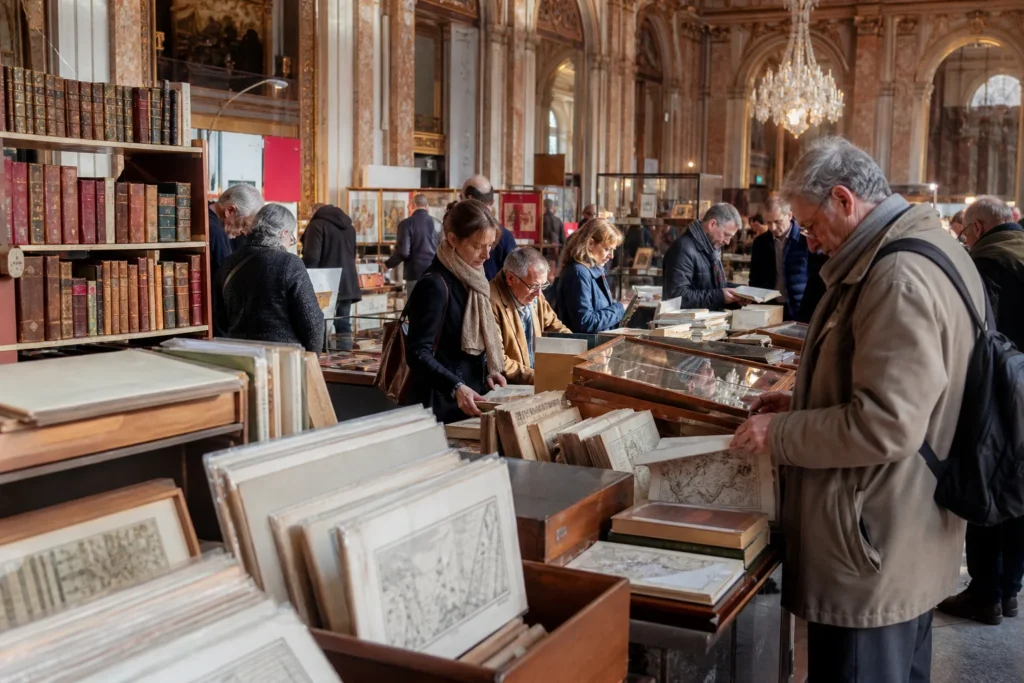
Since 1984, the Salon International du Livre Rare has been one of Paris's most focused annual gatherings — a fair built around a single, rigorous credential. Every exhibitor holds membership in the International League of Antiquarian Booksellers (ILAB), the global body that defines professional and ethical standards across the rare-book trade. French dealers additionally belong to the Syndicat de la Librairie Ancienne et Moderne. Together, those memberships mean that every item on display arrives with traceable provenance, honest attribution and a condition assessment that has met serious scrutiny.
That accreditation sets the Salon apart from general antique markets immediately. For collectors and curators, it removes much of the guesswork that open-market browsing usually demands. For first-time buyers stepping into the rare-book world, it provides a safe entry point — dealers here are invested in building long-term relationships, not quick sales.
Around 150 specialist dealers exhibit across the fair's three-day run. Their stock covers a genuinely wide range of material, and it rewards visitors with different collecting briefs. One stand might offer early printed books and illuminated manuscripts alongside autograph letters from historical correspondents. A neighbouring dealer might specialise in hand-coloured botanical prints, fashion plates, antique maps or fine etchings from the seventeenth and eighteenth centuries. Contemporary artists' books sit alongside vintage posters and watercolours. An eighteenth-century natural history atlas could hang next to a Surrealist artist's pamphlet, priced for very different pockets. That breadth makes the fair absorbing whether you arrive with a precise acquisition list or simply a serious interest in works on paper.
Conversations with dealers here tend to go well beyond price. Comparable examples, restoration history, binding condition, paper dating — this is the level at which the Salon operates. A focused afternoon can reshape a collection or open an entirely new collecting direction.
The programme adds further depth. Lectures and workshops run throughout the event, giving visitors direct access to specialists on topics ranging from manuscript dating to the history of bookbinding. These sessions suit experienced collectors and careful newcomers alike. They give the fair a genuine educational dimension that purely commercial antique events rarely match.
The fair takes place once a year, running for three days, typically in spring or autumn, with doors opening at 11:00 each day. The current-year schedule and confirmed exhibitor list are best checked through the official organiser website before booking travel.
The venue sits in the Champ de Mars area of Paris, close to the 7th arrondissement. Getting there by public transport is straightforward. École Militaire on metro line 8 is approximately 300 metres from the site — a practical choice for visitors arriving from central Paris or further afield. The same station also serves bus lines 28, 80, 82, 86 and 92, with the bus stop roughly 200 metres away. For visitors travelling from the wider Île-de-France, train line C stops at Champ de Mars – Tour Eiffel, approximately 1 kilometre from the venue.
The Salon suits serious bibliophiles, print and manuscript collectors, curators with acquisition briefs, and well-prepared buyers who want to enter the rare-book market under expert guidance. Its combination of ILAB accreditation, a strong specialist programme and around 150 international dealers makes it the European calendar event for the antiquarian-book world. Check the official organiser website for confirmed dates and this year's exhibitor information before planning your visit.
Frequently Asked Questions
Q: Who can exhibit at the Salon International du Livre Rare, and why does that matter for buyers?
A: Every dealer at the fair holds membership in the International League of Antiquarian Booksellers (ILAB), and French exhibitors also belong to the Syndicat de la Librairie Ancienne et Moderne. In practical terms, that means every item on display has met professional standards for attribution, condition and provenance — a level of assurance that open antique markets rarely provide.
Q: What kinds of material can visitors expect to find across the stands?
A: The range is genuinely wide. Exhibitors bring early printed books, illuminated manuscripts and autograph letters alongside works on paper such as hand-coloured botanical prints, fashion plates, antique maps and fine etchings. Contemporary artists' books and vintage posters appear alongside material from the seventeenth and eighteenth centuries, and price points vary enough to suit both seasoned collectors and first-time buyers.
Q: Is the fair worthwhile for someone new to rare books, or is it aimed mainly at experienced collectors?
A: Both are well served. Dealers here are accustomed to in-depth conversation — provenance, binding condition, comparable examples — which makes the fair a genuine learning environment. The programme of lectures and workshops running throughout the event adds a further educational layer that suits curious newcomers as much as established collectors.
Q: How often does the Salon take place, and how long does it run?
A: The fair is held once a year in Paris and runs for three days. Check the official organiser website for the confirmed dates and exhibitor list before booking travel, as the exact timing can vary between years.
Marketplace Highlights

Flea Market Trip Planner
Visiting Salon International du Livre Rare? Build your full flea market itinerary
Plan your route by date, distance and market type






Add a review