

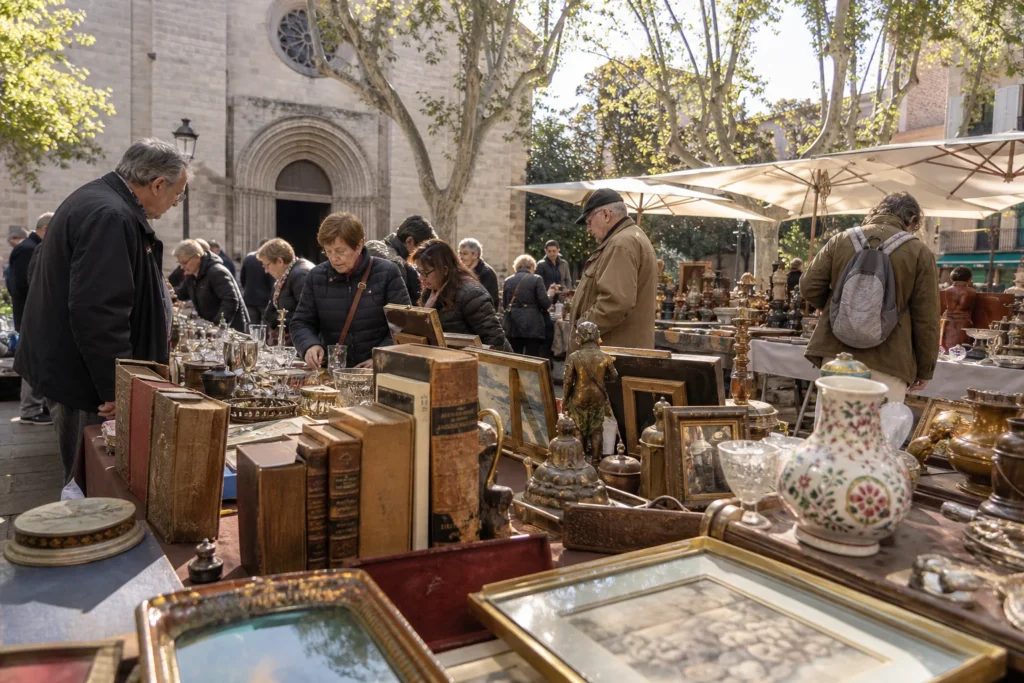

On Tuesday mornings, the square beside the church of Sant Vicenç in Barcelona's Sarrià district transforms into one of the city's quieter antiques markets. Stalls appear, dealers arrange their wares, and the neighbourhood takes on a different rhythm entirely. By Wednesday, the square shows no trace of any of it — which is part of the appeal for those who prefer their markets undiscovered.
The fair is organised by the Gremi de Brocanters, the antiques dealers' association behind several respected markets across Barcelona. That professional grounding shapes the mood here: stallholders tend to be regular faces, and they rotate their stock consistently. Repeat visitors rarely leave empty-handed, and rarely encounter the same selection twice.
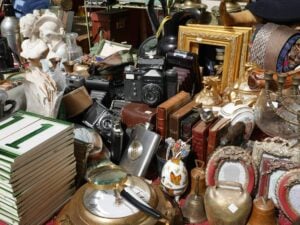
What the stalls offer covers a genuinely broad range. Printed ephemera — vintage books, old comics, decorative posters — appear alongside ceramics, medals and pocket watches. Jewellery and original artwork share table space with brass objects and assorted curios. Smaller pieces of furniture occasionally surface too, giving the whole thing the feel of a compact brocante rather than a specialist stand. Prices vary, and bargains do exist — but they reward patience and a careful eye rather than a quick pass through.
Most vendors work in Spanish or Catalan, and signage follows suit. Browsing needs no shared vocabulary, and cash transactions travel well across a language gap. A few basic phrases in either language, though, tend to warm the atmosphere noticeably.
Sarrià itself makes the trip worthwhile beyond the stalls. The district has not reorganised itself around tourism, and it shows. The architecture near Sant Vicenç carries genuine age, and the cafés that ring the square are frequented by locals rather than tour groups. After the market packs up, they offer a natural place to slow down, compare finds and watch the neighbourhood settle back into its ordinary Tuesday pace. The fair draws a loyal crowd of Barcelona residents alongside visitors who have done their research — and the mix of the two contributes something to its character that the larger city-centre markets don't quite replicate.
The market runs every Tuesday from 09:00 to 18:00, with a seasonal pause in July and August.
Sarrià station sits approximately 300 metres from the square and offers strong connectivity from across Barcelona, with metro lines L6, L9, L10 and L12 alongside FGC suburban trains S1 and S2. For those arriving by bus, the Pl de Sarrià stop — served by buses 68, H4 and N7 — is roughly 65 metres from the market. Visitors approaching from the Pedralbes direction can also use Reina Elisenda metro station, approximately 300 metres away on line L12.
Frequently Asked Questions
Q: When does the Sarrià Antiques Fair take place, and does it run all year?
A: The fair runs every Tuesday from 09:00 to 18:00 in the square beside the church of Sant Vicenç in the Sarrià district of Barcelona. It takes a seasonal break in July and August, so plan your visit outside those months.
Q: What kinds of items can shoppers expect to find?
A: Stock covers a genuinely broad range: vintage books, old comics and decorative posters sit alongside ceramics, pocket watches, medals and jewellery. Brass objects, original artwork and assorted curios are common too, and smaller pieces of furniture surface occasionally, giving the fair the feel of a compact brocante rather than a single-category stand.
Q: Is cash necessary, and does the language barrier cause any problems?
A: Cash is the practical choice for transactions here. Most vendors work in Spanish or Catalan, but browsing needs no shared vocabulary and cash purchases travel smoothly across any language gap. A few basic phrases in either language tend to warm things up noticeably.
Q: How easy is the fair to reach by public transport?
A: Access is straightforward. Sarrià station — metro lines L6, L9, L10 and L12 plus FGC suburban trains S1 and S2 — is around 300 metres from the square. The Pl de Sarrià bus stop, served by routes 68, H4 and N7, is approximately 65 metres away. Visitors coming from the Pedralbes direction can also use Reina Elisenda station on L12, roughly 300 metres from the market.
Q: Is this fair worth combining with time in the Sarrià neighbourhood itself?
A: Very much so. Sarrià has not reorganised itself around tourism, and the older architecture near Sant Vicenç and the local cafés ringing the square make for a rewarding morning beyond the stalls. After the market packs up, the neighbourhood settles back into its Tuesday rhythm at a pace that is genuinely different from central Barcelona.
Marketplace Highlights








Add a review