

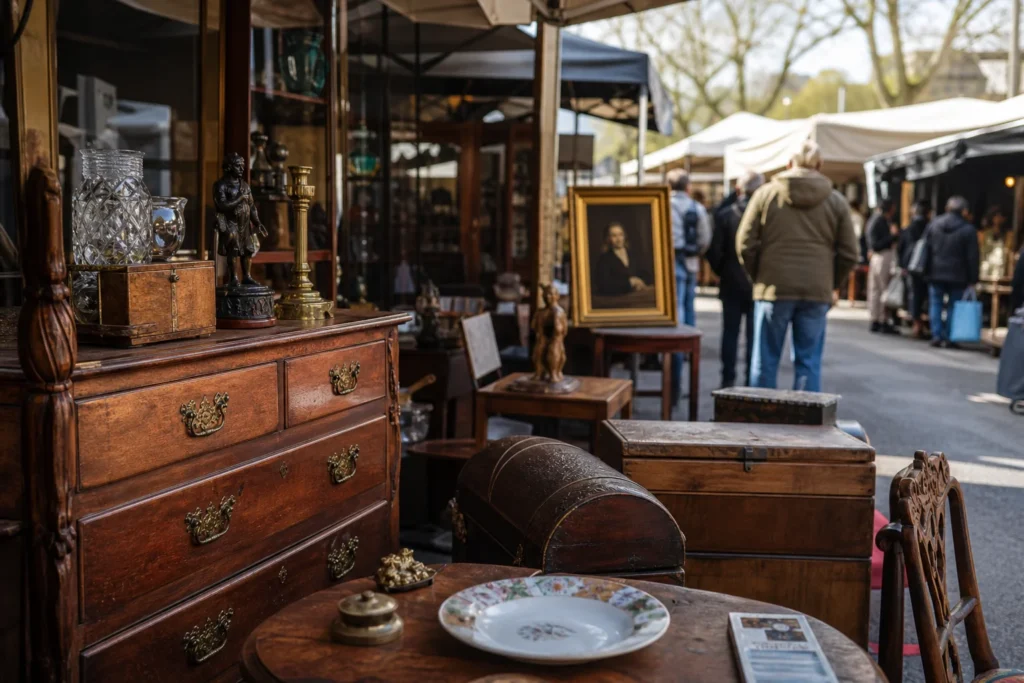

Since 2001, Selling Antiques has operated as a dedicated UK online marketplace for professional antique dealers and the buyers who want to reach them directly. That founding year matters in practical terms. A platform that has been vetting and listing trade dealers for more than two decades carries a different kind of credibility than a general secondhand site. Dealers on Selling Antiques are working professionals in the UK antique trade, not private sellers clearing a loft.
Antique furniture anchors the catalogue and draws the widest range of buyers. The price spread is genuine — modest pieces sit alongside serious investment-grade stock, which means the platform serves a first-time buyer as readily as an experienced collector. Beyond furniture, the inventory branches into decorative objects: ceramics, glass, lighting and vases. Wearable and portable items — jewellery and watches — feature alongside fine art, clocks, carpets and sculpture. The range is broad without feeling unfocused, because every category stays within the professional antiques trade.
Browsing tools keep navigation manageable. Category filters and a price filter let buyers narrow results quickly, without wading through irrelevant stock. A practical detail worth knowing: the homepage surfaces every item added within the last 48 hours. Returning visitors can scan fresh arrivals without searching the full catalogue. A live statistics dashboard on the homepage shows daily figures — new approvals, visitor numbers — giving both buyers and dealers a transparent view of the platform's current activity.
Individual listings carry manufacture dates alongside item photographs. This matters when a buyer needs to confirm the period of a piece before committing. It removes a step that often requires a separate dealer enquiry on less structured platforms. Where an item does not sell directly through the site, Selling Antiques puts buyers in contact with the relevant dealer to negotiate and complete the purchase. That direct contact model suits higher-value pieces particularly well — buyers can ask questions, and dealers can speak to serious enquiries before agreeing a price.
For dealers, the membership structure suits smaller and larger operations alike. Monthly fees scale with the volume of stock uploaded, so a dealer listing a handful of pieces pays less than one with extensive inventory. There is no long-term contract and no commission taken on sales. Dealers keep the full agreed price. For buyers, the no-commission model means listed prices are not inflated by platform fees — what a dealer asks is what a buyer pays.
These structural details quietly shape the buyer experience. Verified trade dealers, manufacture dates on listings, direct contact before purchase, and a pricing model that does not skim from the sale — together they give Selling Antiques a more considered feel than generalist resale platforms. Collectors who want authenticated British antiques from professional sources, and dealers who want a focused UK audience without a financial long-term commitment, both find a marketplace built around the same practical priorities.
Frequently Asked Questions
Q: Is Selling Antiques only for professional dealers, or can private sellers list too?
A: Selling Antiques is a trade-only platform. Every dealer listed is a working professional in the UK antiques trade, not a private seller. That vetting is part of what gives the catalogue its consistency.
Q: How do I find new stock without searching the whole catalogue?
A: The homepage surfaces every item added within the last 48 hours. Regular visitors can scan fresh arrivals in one pass rather than filtering through the full inventory each time.
Q: Do listed prices include platform commission on top of what the dealer is asking?
A: Selling Antiques does not take commission on sales. Dealers keep the full agreed price, so the figure shown on a listing is not inflated by platform fees.
Q: Can I speak to a dealer directly before buying a higher-value piece?
A: Yes. Where a purchase is not completed directly through the site, Selling Antiques puts buyers in contact with the relevant dealer to negotiate and agree terms. That direct contact model suits buyers who want to ask questions before committing.
Q: Do listings show when a piece was made?
A: Manufacture dates appear on individual listings alongside item photographs, which helps with period verification before you approach a dealer or make a decision.









Add a review