


Region
Stoneleigh Park Antiques Market is permanently closed. The market is retained as an editorial archive of the venue and its distinctive character.
For buyers who took their antiques seriously, the format at Stoneleigh Park Antiques Market was unlike almost anything else on the UK fair circuit. Every trader set their tables and arranged their shelves in advance, but not a single item went on show until the opening signal. When that moment came, every stall revealed itself simultaneously. No early-bird advantage, no quiet deal struck before the crowd arrived. The playing field was level by design, and it rewarded preparation over privilege.
This equal-access model — known in continental Europe as a déballage-style opening — was rare in Britain. It gave the event a charge that more conventional fairs simply could not manufacture. Buyers knew what the format demanded: knowledge, decisiveness and the ability to read a stall quickly. Those who arrived ready to move fast were the ones who left with the best finds.
Arthur Swallow Fairs organised the market, bringing a name already well regarded on the UK antiques and decorative arts circuit. The company ran a broader programme of events, and the standard of trader at Stoneleigh Park reflected that wider reputation. Sellers here were not generalists filling table space. They tended to know their stock well and were willing to discuss provenance, period and condition with anyone who asked. That quality of engagement raised the atmosphere from transactional to genuinely educational.
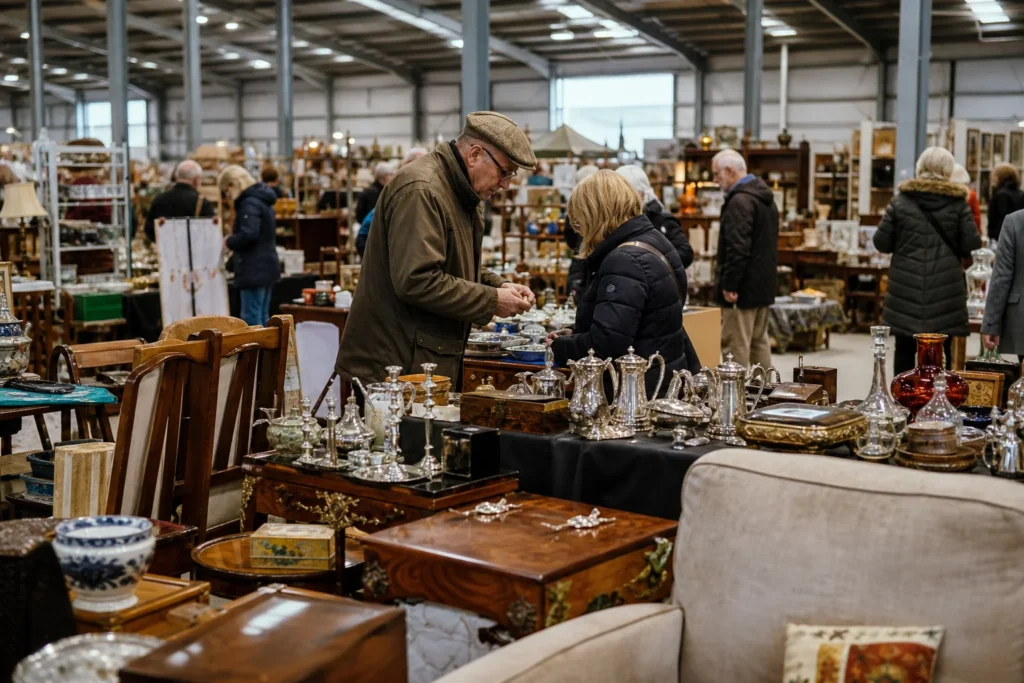
The Stoneleigh Park venue itself suited the event well. The fair ran undercover, which in the English Midlands was no small practical advantage. Weather could not slow the browsing or threaten fragile stock. The covered setting also gave the market a more composed, gallery-like feel than open-field fairs often managed. Collectors could take their time without one eye on the sky.
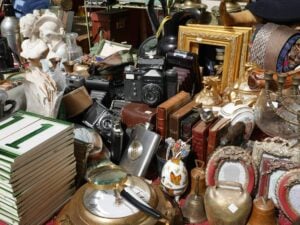
The merchandise spanned a broad and well-curated range. Silverware, vintage jewellery and glassware drew dedicated collectors. Antique books, china, cutlery and period kitchenware appeared regularly alongside furniture and textiles. Retro and nostalgic pieces attracted more casual visitors, giving the market a breadth that made it rewarding for different kinds of buyer. Refreshments were available among the stalls, so a long visit remained comfortable rather than tiring.
What made Stoneleigh Park editorially significant was not simply its stock or its setting, but the principle it embodied. The déballage format asked something of its visitors — attention, preparation, genuine enthusiasm for the hunt. It treated buyers as participants rather than browsers. In a UK antiques fair landscape that often favoured relaxed discovery over competitive access, Stoneleigh Park offered something more exacting, and for those who appreciated that, considerably more rewarding.
Frequently Asked Questions
Q: What made the opening format at Stoneleigh Park Antiques Market different from a typical UK antiques fair?
A: The market used a déballage-style opening: every trader arranged stock in advance but kept it concealed until a single opening signal was given. All stalls revealed themselves simultaneously, so no buyer had an advantage over another. The format rewarded preparation and quick decision-making rather than early-bird access or prior relationships with dealers.
Q: Who organised Stoneleigh Park Antiques Market, and what did that mean for the quality of traders?
A: Arthur Swallow Fairs organised the event, a company with a well-regarded reputation on the UK antiques and decorative arts circuit. That standing attracted dealers who knew their stock in depth and were willing to discuss provenance, period and condition — raising the atmosphere beyond a purely transactional buying experience.
Q: What kinds of antiques and collectables did the market typically carry?
A: Stock spanned a broad but well-curated range. Decorative and functional antiques — silverware, glassware, china and cutlery — drew dedicated collectors, while furniture and textiles attracted more specialist buyers. Vintage jewellery, antique books and retro or nostalgic pieces gave the market enough breadth to reward different kinds of visitor in the same visit.
Q: Was the market held indoors or outside, and did that affect the experience?
A: The fair ran undercover at the Stoneleigh Park venue in Warwickshire. That covered setting allowed traders to display fragile and delicate stock without concern about weather, and gave browsers the freedom to take their time. The indoor layout also produced a more composed, gallery-like atmosphere than open-field fairs typically managed.
Q: Is Stoneleigh Park Antiques Market still running?
A: The market is permanently closed. The market is maintained as an editorial archive of the venue and its format for collectors and researchers with an interest in the UK antiques fair circuit.
Marketplace Highlights







Add a review