

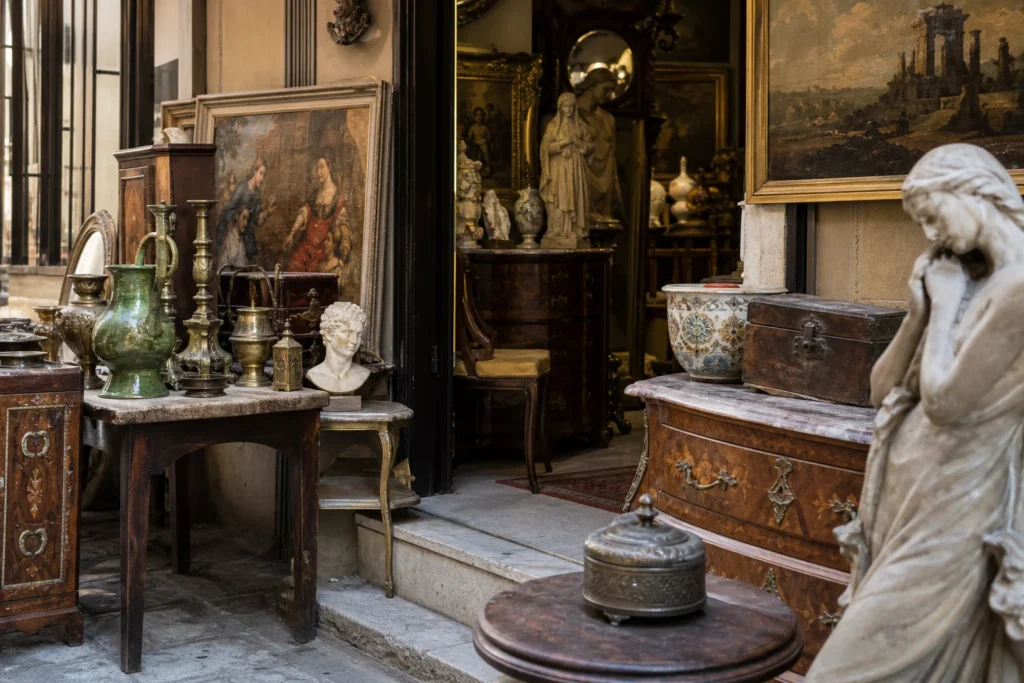

Since 1978, Angelos Vlastaris has run one of Athens' most focused antique operations from Mitseon 5, a short walk from the Acropolis Museum. The shop is not a sweep-everything emporium. It is a specialist practice built around one dealer's sustained and specific eye, and that distinction is clear the moment you step inside.
The inventory has three recognisable tiers. At its formal core sits furniture from the 17th and 18th centuries — pieces that reflect the full range of European baroque and neoclassical production. Alongside the furniture, Baroque sculptures and antique clocks establish a structural seriousness. The second tier brings in a regional dimension: 19th-century Philhellenic paintings and objects with Greek and Ottoman provenance give the collection a geographic depth that is rare in European antique dealing. That eastern Mediterranean focus sets Vlastaris apart from dealers who treat Greece as simply a selling location rather than a subject.
The shop's most personal signature sits in the third tier: clay pottery from Chios. Vlastaris has a deep connection to the island, where he spends the summer months, and the Chios pieces he sources carry a specificity that only direct, long-term engagement can produce. These are tactile objects with a clear story behind them — not decorative filler, but evidence of a collector's actual interests.
The seasonal schedule is operationally important and worth planning around. From October through June, the shop opens Monday to Saturday, evenings only, from 17:00 to 21:00. Sundays are closed. In July and September, Vlastaris relocates to Chios and operates by appointment only. These are unusual hours for an antique shop, and they suit the evening rhythms of central Athens well — but they do require a visitor to plan ahead rather than drop in during the afternoon.
Inside, the tone is quiet and knowledgeable. Vlastaris brings a collector's logic to the space rather than a retailer's urgency. Browsers move through the pieces without pressure, and the curation rewards attention. The shop feels observed rather than assembled.
the market suits a specific kind of visitor. Collectors tracking 18th-century European furniture, researchers with an interest in Philhellenic or Ottoman material culture, and anyone seeking something beyond the souvenir circuit will all find genuine substance here. The 1978 founding gives Vlastaris a depth of inventory and regional relationships that newer dealers cannot replicate.
Getting here is straightforward. The Akropoli metro station (line M2) sits approximately 250 metres away and offers the most direct transit connection. Bus 230 stops at the ΜΟΥΣΕΙΟ ΑΚΡΟΠΟΛΗΣ stop, roughly 50 metres from the door — essentially at the entrance. The Fix tram stop (line T6) provides an alternative option approximately 300 metres away. The neighbourhood is walkable from several central Athens districts, and the proximity to the Acropolis Museum makes it easy to combine a visit with other cultural stops in the area.
Frequently Asked Questions
Q: When is Angelos Vlastaris Antiques open?
A: The shop keeps evening-only hours — 17:00 to 21:00, Monday through Saturday — from October to June. It is closed on Sundays. In July and September, Vlastaris relocates to Chios and operates by appointment only. These are unusual hours, so plan around them rather than dropping in during the afternoon.
Q: What kind of antiques does the shop specialise in?
A: The core inventory runs to 17th- and 18th-century European furniture, Baroque sculptures and antique clocks. Alongside those, there is a strong regional layer of 19th-century Philhellenic paintings and objects with Greek and Ottoman provenance — a focus rare in European antique dealing. The shop's most personal signature is its clay pottery from Chios, sourced through Vlastaris's long direct connection to the island.
Q: How do I get to Mitseon 5 by public transport?
A: The Akropoli metro station (M2) is approximately 250 metres away and is the most direct transit option. Bus 230 stops at the ΜΟΥΣΕΙΟ ΑΚΡΟΠΟΛΗΣ stop roughly 50 metres from the door. The Fix tram stop (T6) is also within walking distance at around 300 metres.
Q: Is this shop suited to casual browsing, or is it strictly for serious buyers?
A: The atmosphere is unhurried and the curation rewards careful attention, so browsers move through the pieces without pressure. That said, the specialist depth — particularly the Ottoman and eastern Mediterranean material — is most useful to collectors tracking specific periods, researchers with a Philhellenic interest, or anyone who has already moved past the souvenir circuit.
Marketplace Highlights








Add a review