


Region
There is no sign on the door. Nothing on the facade of the house on Calle 2 in Vedado hints at what is inside. From the street it looks like any other residential building in this quiet part of Havana, and unless someone has already told you where to go, you will walk past it without a second thought. That difficulty in finding Casa Belkis is not an accident. The family that runs it has operated this antique business across generations and shows little interest in drawing casual foot traffic. The hunt to locate the place sets exactly the right mood for what follows.
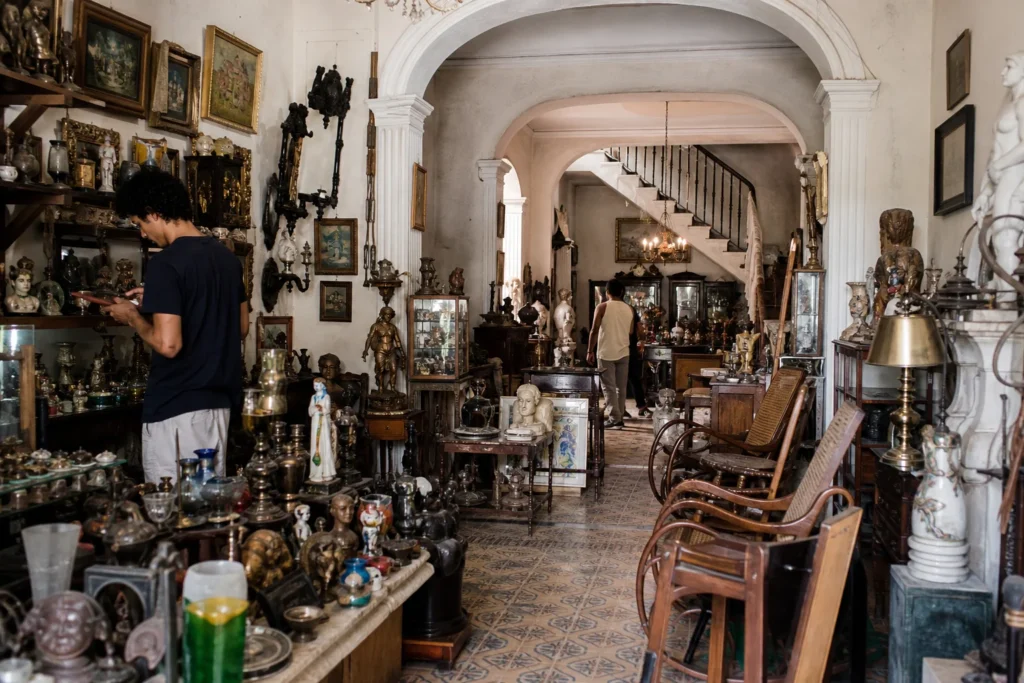
Once you step through the door, the scale is immediate and slightly overwhelming. Roughly 300 square metres spread across two floors hold tens of thousands of objects. Shelves overflow. Pieces stack toward the ceiling. Antiques crowd even the kitchen and bathrooms, filling every centimetre the family has been able to claim. Narrow corridors wind between the displays, and visitors who find tight spaces difficult should know that patience and care are genuinely required to move through the rooms.
The ground floor offers a broad sweep of smaller objects and larger furniture: glassware, silverware, miniatures, trinkets, jewellery and substantial colonial-era pieces that anchor the space. Upstairs the mood shifts toward finer things. Paintings and porcelain share space with ceramics, bronze sculptures, marble and alabaster busts, crystal, lamps and mirrors. What appears at first glance like organised chaos does follow an internal logic. Slowing down and looking carefully rewards you far more than trying to take in the whole room at once.
Nothing carries a price tag, but everything is for sale. Haggling is expected and treated as a normal part of the transaction. Buy more than one piece and the pricing tends to become noticeably more flexible. Arrive with genuine curiosity rather than fixed expectations, and approach each negotiation as its own conversation.
Cuba applies strict export rules to objects older than fifty years, and the owners will raise this with you directly. An export sticker is required for pieces of value, and buyers can seek clearance through the Office of the Historian of the City of Havana. Those regulations are worth confirming locally before committing to a significant purchase, as the rules can shift.
Casa Belkis suits the kind of traveller who treats discovery as part of the pleasure. It is not aimed at tourist markets or passing trade. The family's generations-deep knowledge of Cuban material culture, and their apparent indifference to conventional retail, make this one of the more genuine antique experiences the city offers. Few places in Havana come close to matching the depth and density of the collection.
For access, bus stop Zapata y Paseo sits approximately 175 metres from the address and serves bus lines 8, 34 and A33. An alternative stop at Paseo y 23, at roughly the same distance, also carries bus line 8. Both stops connect the Vedado neighbourhood to wider Havana and make the address reachable without a car. The venue is open daily from 09:00 to 18:00. As this is a private, family-run operation, calling ahead before visiting is sensible.
Frequently Asked Questions
Q: How do I find Casa Belkis — there's no sign outside?
A: The house on Calle 2 in Vedado looks like any other residential building from the street. There is no signage on the facade. Go with the address confirmed in advance, allow extra time to locate it, and treat finding the place as the opening chapter of the visit.
Q: Is everything actually for sale, and should I expect to haggle?
A: Yes, everything in the collection is available to buy, and nothing carries a price tag. Haggling is a normal, expected part of every transaction. Buying more than one piece at a time tends to make pricing noticeably more flexible, so it pays to browse both floors before committing.
Q: What kinds of antiques can I find here?
A: The ground floor holds furniture, glassware, silverware, jewellery, miniatures and trinkets. Upstairs the collection shifts toward finer objects: paintings, porcelain, ceramics, bronze sculptures, marble and alabaster busts, crystal, lamps and mirrors. The full interior runs across roughly 300 square metres on two floors, with objects filling every room including the kitchen and bathrooms.
Q: What do I need to know about exporting antiques from Cuba?
A: Cuba applies strict export rules to objects older than fifty years. An official export sticker is required for pieces of value, and buyers can seek clearance through the Office of the Historian of the City of Havana. The owners will raise this with you directly. Confirm current regulations locally before committing to any significant purchase, as the rules can shift.
Q: How do I get there by public transport?
A: Bus stops at Zapata y Paseo and Paseo y 23 are both within approximately 175 metres of the house. Lines 8, 34 and A33 serve the Zapata y Paseo stop; line 8 also serves Paseo y 23. Check current route information locally, as Havana bus schedules can vary.











Add a review