


Region
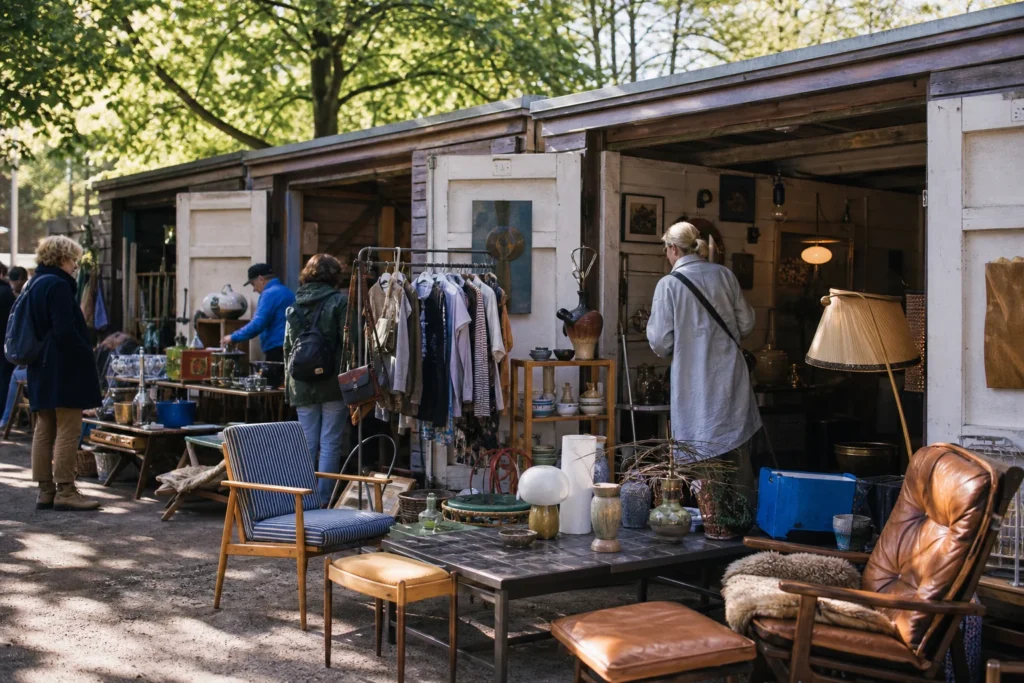
Five small wooden huts — converted from old garages — stand among mature maple trees in a quiet residential pocket of Emdrup. On Sunday mornings, folding tables fill the gaps between them, sellers arrange their finds, and the neighbourhood takes on the easy rhythm of a village market. This is Københavnstrup, and its scale is part of the point.
The name itself is a clue to the market's character. Københavnstrup" is a centuries-old rural nickname for Copenhagen, meaning roughly "small-town Copenhagen" — something like Copenhagenville in English. Locals chose it deliberately. The market wears that village-within-the-city identity honestly, from the unhurried pace to the mix of everyday sellers and curious browsers who turn up each Sunday.
Around fifty stalls spread across the site, most run by private sellers clearing personal belongings. Furniture, lamps, clothing and jewellery make up a large share of the stock. A smaller number of professional vendors focus on vintage pieces for buyers who prefer something more curated. Importantly, the market also stocks raw upcycling materials — things you can take home and transform yourself, not only finished goods. This makes it genuinely useful for makers and craft-minded shoppers, not just collectors.
The café is worth seeking out on its own terms. Every piece of furniture — tables, shelves, seating — is built from salvaged materials: pallets, an old ladder, surfboards. A tyre swing hangs nearby. It is one of those details that makes an ethos tangible rather than merely stated, and it gives the outdoor space a relaxed, inventive atmosphere that suits the market well.
Alongside the café, a handful of food trucks offer refreshments, so there is no reason to rush. The overall tempo at Københavnstrup rewards slow browsing over quick passes.
The organisers treat environmental awareness as a genuine part of the market's identity. Upcyclers and sustainability advocates are regularly invited to run small workshops on-site. The market actively promotes recycling culture rather than treating it as a backdrop slogan. For anyone interested in slow consumption or maker culture, this is not just a convenient Sunday outing — it is a market that reflects a point of view.
Københavnstrup runs on Sundays from the fourth Sunday of April through the last Sunday of September, opening at 10:00 and closing at 16:00. Note that the market closes through July, so check the schedule before making the trip in midsummer.
The Emdrup light rail stop, served by lines B and Bx, sits approximately 250 metres from the market — a short walk through the surrounding neighbourhood. For an even closer option, the Banebrinken bus stop (bus 18) is roughly 60 metres away. Buses 18, 21 and 185 also stop at Emdrup Søpark, around 280 metres from the site. Public transport makes the journey straightforward from central Copenhagen.
Frequently Asked Questions
Q: When does Københavnstrup run, and are there any gaps in the season?
A: The market runs on Sundays from the fourth Sunday of April through the last Sunday of September, 10:00 to 16:00. It closes through July, so check the organiser's schedule before making the trip in midsummer.
Q: What kind of sellers and stock should I expect to find?
A: Most stalls are run by private sellers clearing personal belongings — furniture, lamps, clothing and jewellery are the most common finds. A smaller number of professional vendors offer more curated vintage pieces. The market also stocks raw upcycling materials for buyers who want to transform something themselves, which makes it useful for makers as well as collectors.
Q: Is there food or somewhere to sit while I browse?
A: A handful of food trucks are on site, and the outdoor café is worth seeking out: every piece of furniture — tables, shelves, seating — is built from salvaged materials including pallets, an old ladder and surfboards, with a tyre swing nearby. The atmosphere is relaxed and suits the market's unhurried pace.
Q: How do I get there by public transport?
A: The Emdrup light rail stop (lines B and Bx) is around 250 metres from the market. Bus 18 stops even closer at Banebrinken, roughly 60 metres away. Buses 18, 21 and 185 also serve the nearby Emdrup Søpark stop.
Q: Does the market do anything beyond standard second-hand selling?
A: Yes — sustainability is a genuine part of the market's identity. Upcyclers and environmental advocates are regularly invited to run on-site workshops, and the market actively promotes recycling culture. If slow consumption or maker culture interests you, that ethos runs through the whole site rather than just appearing on a sign.
Marketplace Highlights








Add a review