

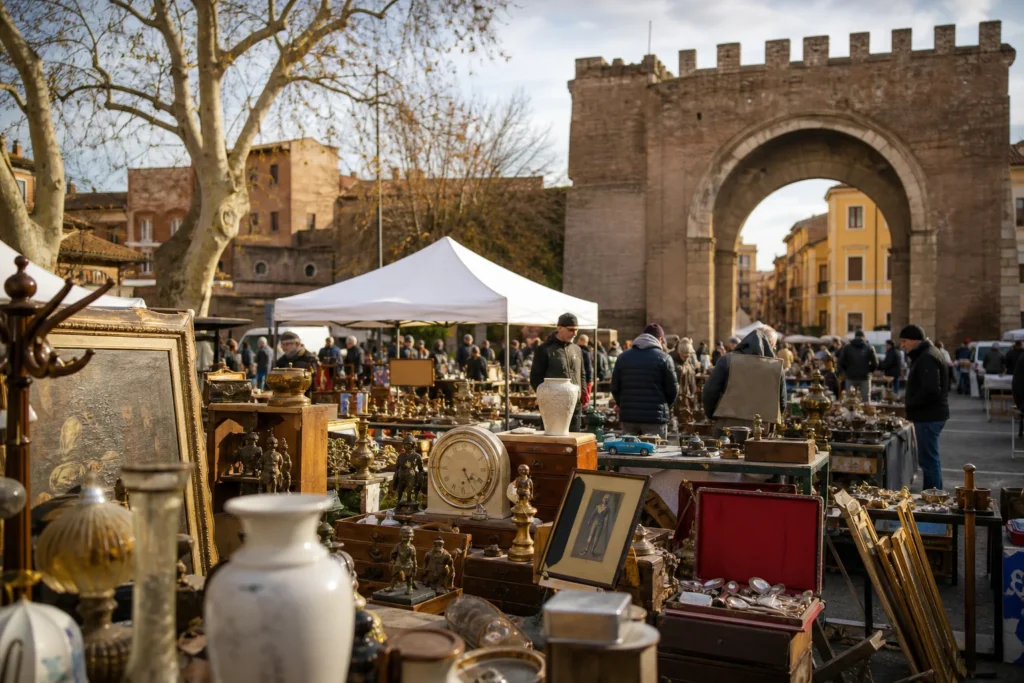

Every Sunday morning, as Rome is still waking up, the area behind the ancient Porta Portese gate in Trastevere transforms into one of the city's largest and most chaotic markets. Stalls stretch along the streets from 06:00, and the energy builds steadily until the market closes at 14:00. Getting there early is not just a tip — it is a genuine strategy.
Porta Portese covers an enormous amount of ground and an equally enormous range of stock. Vendors sell rare books, vintage telephones, chandeliers, spare bicycle parts, old DVDs and items that resist easy categorisation. The browsing experience is wide and genuinely unpredictable. Serious collectors and casual visitors move through the same crowded lanes, each looking for something different.
The antiques section exists, but it rewards honest expectations. Porta Portese does not rival Rome's dedicated antique markets for quality or curation. Shoppers who have browsed the finely curated dealers of Via dei Coronari will notice the difference. That said, an early arrival can surface brass objects, ornate old clocks and oil paintings that carry the texture of another Rome — it just takes patience and a willingness to look past a great deal of noise.
The merchandise thins and the crowds thicken as the morning progresses. Arriving at or close to 06:00 gives browsers the best chance of spotting something genuinely interesting before the best pieces move. By midday, the atmosphere tips into full Sunday chaos, which has its own appeal. The market closes by early afternoon, so a half-day is enough.
Haggling is not optional — it is the grammar of the place. Vendors expect offers, and engaging directly, even with a few words of Italian, shifts the dynamic in your favour. Commit to a price, hold your ground, and treat a counter-offer as an opening rather than a conclusion. The market rewards confidence more than it rewards a passive browser.
Porta Portese is not a polished experience. It suits visitors who want to see Rome functioning as a working city on a Sunday — locals hunting spare parts alongside tourists hunting vintage finds, vendors calling across narrow lanes, and the whole thing held loosely together by the particular logic of a Roman street market. That character is the real draw, whether or not anything comes home with you.
The Porta Portese tram and bus stop sits approximately 100 metres from the market. Trams 3 and 8 both stop there, making connections from much of the city straightforward. Bus lines 44, 75 and the night bus n3d also serve the same stop. The Induno stop, also served by trams 3 and 8, lies approximately 150 metres away and provides a useful secondary option. For a more scenic approach from the historic centre, the Battelli di Roma ferry calls at Isola Tiberina, roughly 700 metres away — a pleasant way to arrive if the river is running services.
Frequently Asked Questions
Q: When does Porta Portese run, and what are the opening hours?
A: The market runs every Sunday in Trastevere, with stalls setting up from 06:00 and trading continuing until around 14:00. A half-day visit is enough to cover the ground.
Q: Is Porta Portese worth visiting specifically for antiques?
A: It depends on your expectations. The antiques section exists but is not the market's strongest suit — if you have browsed Rome's dedicated antique dealers, the difference will be noticeable. That said, early arrivals can still surface brass objects, old clocks and oil paintings with genuine character. Patience and an early start help considerably.
Q: How do I get there by public transport?
A: The Porta Portese tram and bus stop is approximately 100 metres from the market. Trams 3 and 8 both serve it, as do bus lines 44 and 75. The nearby Induno stop, also on trams 3 and 8, is roughly 150 metres away and provides a useful alternative entry point.
Q: Should I expect to haggle, and how should I approach it?
A: Haggling is standard practice here — vendors expect offers and the market rewards confidence. Engaging directly, even with a few words of Italian, tends to shift negotiations in your favour. Treat any counter-offer as a starting point rather than a final word.
Q: What kind of goods will I actually find here?
A: The range is wide and genuinely unpredictable — rare books, vintage telephones, chandeliers, spare bicycle parts, old DVDs and plenty that resists easy categorisation. The browsing experience spans serious collectables through to everyday second-hand goods, so arriving without a fixed shopping list suits the market well.
Marketplace Highlights








Add a review