

Region
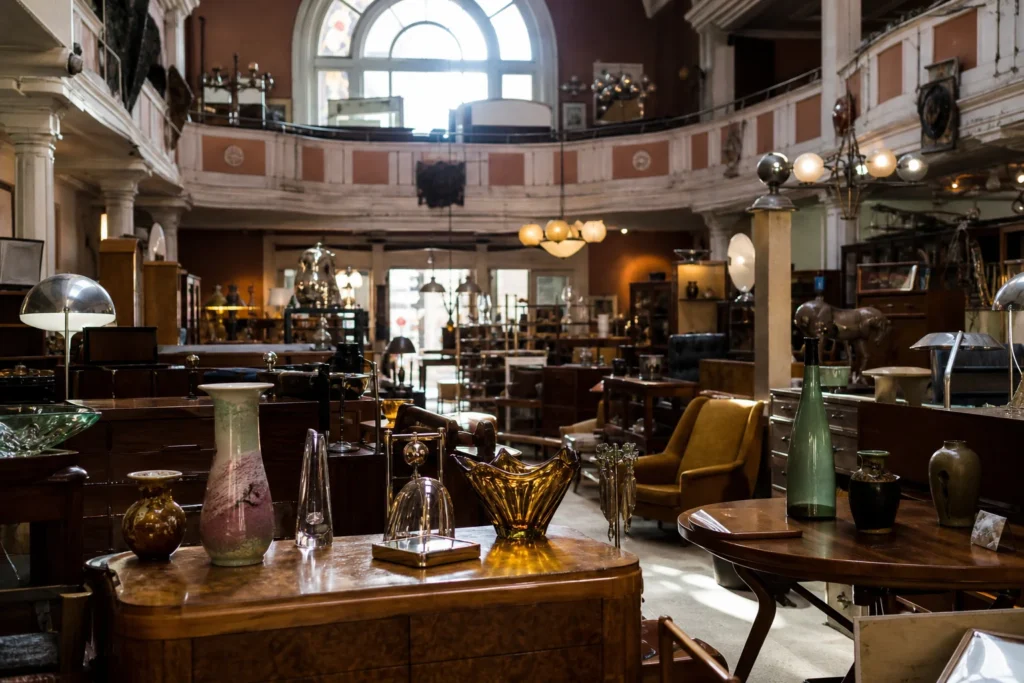
In 1979, two local antique dealers stepped in to save a crumbling Edwardian building on Chiswick High Road from demolition. That act of rescue created one of West London's most atmospheric antiques destinations. Today The Old Cinema occupies around 10,000 square feet across multiple floors, and the building earns its reputation the moment you cross the threshold.
The history layered into the structure is part of what makes it worth the visit. The building opened as an Edwardian cinema in the early 1900s and screened films until sometime in the 1930s. During the Second World War it reportedly served as a parachute storage facility. Victorian furniture trade followed in the 1950s before those two dealers intervened to give it permanent purpose. The lofty ceilings, ornate cornices and hidden stairwells are direct survivors of the original cinema design. Unexpected upper salons open off dim corridors, and the vertical flow of the building keeps drawing you further in.
Rather than a single curated floor plan, the space divides into distinct dealer zones. One area runs heavy with Art Deco mirrors and glassware. Elsewhere, colonial trunks sit alongside Indian wood carvings, Scandinavian minimalist pieces occupy their own quiet corner, and mid-century dressers share walls with 1970s pendant lighting. Vintage cinema posters, projector relics and velvet details appear throughout — quiet nods to the building's first life. The stock ranges across continents and centuries without any fixed editorial logic, and that unpredictability is deliberate. Discovery here feels earned rather than arranged for convenience.
What sets The Old Cinema apart from most antiques centres is the depth of dealer knowledge on the floor. The dealers here take provenance seriously. A piece might be traced to a Norfolk estate, a Paris apartment or a colonial bungalow — specific origins backed by proper sourcing rather than vague retail backstory. Ask about something and you are likely to receive a genuine account of where it has been and how it arrived. That level of detail adds real weight to the objects and justifies careful consideration before buying.
The shop opens Monday through Saturday from 10:00 to 18:00. On Sundays it runs a shorter session from 12:00 to 17:00 — still enough time for a considered browse if you arrive promptly. The building rewards slow movement, so a tight schedule works against you here regardless of the day.
Getting there is straightforward. Turnham Green Underground station is roughly 250 metres away and serves both the District and Piccadilly lines, making it the natural first choice for most visitors. For those arriving by bus, the Chardin Road stop is approximately 50 metres from the venue and is served by routes E3 and N11. South Acton station, about 1.3 kilometres away on the Mildmay line, offers a further alternative for those travelling from north or east London.
The Old Cinema suits collectors chasing a specific period, interior designers sourcing statement pieces, and curious browsers who simply want somewhere worth spending an afternoon. A single visit rarely reveals everything the building holds. Come with time and a loose agenda, and the layers tend to reward you.
Frequently Asked Questions
Q: Where is The Old Cinema and how do I get there by public transport?
A: The Old Cinema sits on Chiswick High Road in West London. Turnham Green Underground station is around 250 metres away, serving the District and Piccadilly lines, making it the most convenient approach for most visitors. By bus, the Chardin Road stop is approximately 50 metres from the venue and is served by routes E3 and N11.
Q: What are the opening hours?
A: The Old Cinema is open Monday through Saturday from 10:00 to 18:00. On Sundays it opens later, from 12:00 to 17:00. If you're visiting on a Sunday, arriving promptly gives you the best chance of a thorough browse — the building rewards slow movement rather than a rushed pass through.
Q: What kinds of antiques and vintage pieces will I find across the floors?
A: The stock spans continents and decades without a fixed editorial logic. Expect Art Deco mirrors, vintage cinema posters and projector relics alongside mid-century Scandinavian furniture, colonial trunks, Indian wood carvings, cast-iron garden pieces and 1970s lighting. Each dealer occupies a distinct zone within the 10,000 square feet, so the mix shifts noticeably as you move through the building.
Q: Can dealers tell me where a piece actually came from?
A: Provenance is taken seriously here. Dealers are typically able to trace pieces to specific origins — a Norfolk estate, a Paris apartment, a colonial bungalow — and can give a proper account of how something arrived rather than offering a vague retail backstory. It's worth asking directly about any piece that interests you.
Q: Is the building itself worth seeing, or is it purely about the stock?
A: Both. The Edwardian structure — which opened as a cinema in the early 1900s — still carries its original lofty ceilings, ornate cornices and unexpected stairwells. Hidden upper salons open off dim corridors, and details from the building's cinema past surface throughout the antiques floors. The atmosphere is genuinely distinctive and contributes as much to the experience as the objects on display.
Marketplace Highlights








Add a review